
Plants
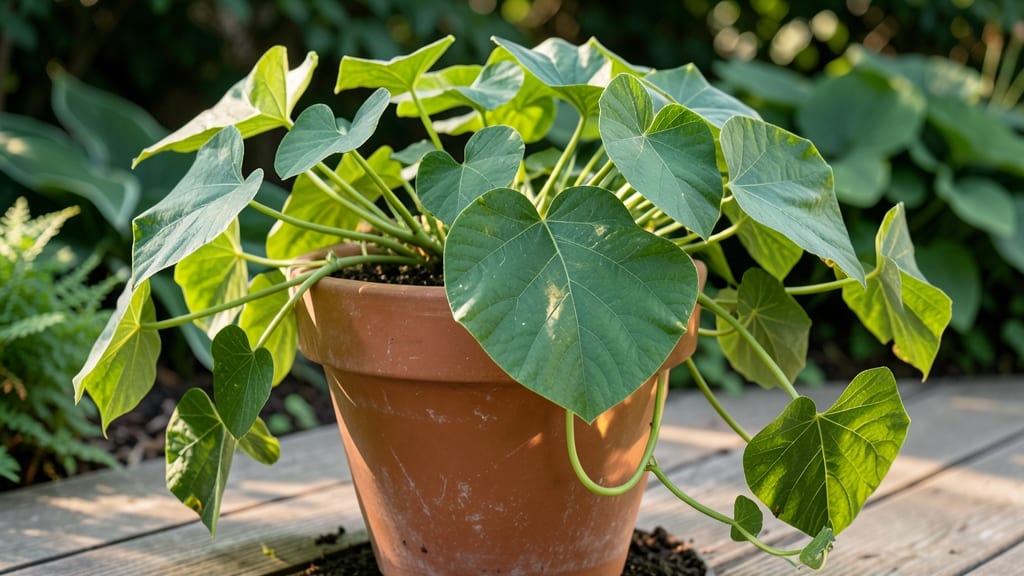
Sweet potato vine is a perennial in warm climates, regrowing from its tuberous roots each year despite dying back to the ground in winter. In colder zones, it behaves as an annual unless protected or dug up for overwintering. Its dieback cycle is key to identifying its true perennial nature.
This vine's perennial status depends entirely on climate and care. In frost-free zones (USDA 8+), its thick, starchy roots survive winter underground, sprouting fresh growth when temperatures rise. 🌱 The "dieback" you see in late fall isn't death—it's just the plant conserving energy until spring.
For cooler areas, treating it as a tender perennial means bringing pots indoors or insulating outdoor plantings with thick mulch.
What sets sweet potato vine apart is its adaptability. While the foliage may look dead, those roots remain dormant but alive beneath the soil. This survival strategy explains why gardeners in mild climates often see the same plants return year after year with minimal effort.
The key difference between perennial and annual behavior comes down to whether those roots get frozen solid or stay protected.
💡 In This Article
- How Sweet Potato Vine’s Root System Makes It a Perennial
- Protecting Sweet Potato Vine Over Winter for Year-Round Growth
How sweet potato vine’s root system makes it a perennial
The sweet potato vine's perennial nature stems from its specialized tuberous roots, which function like underground storage batteries. These roots store starches and nutrients year-round, allowing the plant to survive winter dormancy in frost-free zones (USDA 8+).
Unlike annuals that die completely, these roots remain alive beneath the soil, maintaining their cellular structure through a process called endodormancy—a deep rest state triggered by shortening daylight and cooler temperatures. 🌱
What makes this system fascinating is how these roots can regenerate entire plants from just a small piece. Each tuberous root segment contains meristematic cells—undifferentiated cells capable of growing into new shoots when conditions improve.
In spring, when soil temperatures reach 55-60°F, these roots detect moisture and warmth, signaling the meristems to activate. This explains why gardeners often see new growth emerging from the same spot year after year.
The dieback you observe in fall isn't death—it's an energy conservation strategy. The plant redirects nutrients from the foliage back into the roots, creating a survival reserve. This process, called senescence, ensures the roots remain stocked with 15-20% starch content by winter's end.
Compare this to annuals like basil, which have no such storage mechanism and must complete their entire life cycle within one season.
Temperature zones play a crucial role in determining perennial behavior. In USDA zones 9-11, sweet potato vine thrives as a true perennial with no intervention needed. However, in zones 7-8, even a light frost (28°F) can damage foliage, though the roots often survive if protected.
The critical threshold is -5°F—below this, root damage becomes likely without protection. This explains why gardeners in cooler areas must treat it as a tender perennial rather than a hardy one.
Consider the botanical parallel with potatoes—both belong to the Solanaceae family and use similar tuberous root systems. However, sweet potato vine's roots are more fibrous and less starchy (10-15% starch vs potatoes' 20-25%), making them less cold-hardy but perfectly adapted for warm-climate perennial growth.
The vine's ability to regenerate from just 2-inch root segments demonstrates its remarkable resilience.
What most gardeners overlook is how root depth affects survival. Sweet potato vine roots typically extend 12-18 inches deep, placing them below the frost line in most climates. This depth insulation explains why the plant often survives winters in zones 8-9 without additional protection.
The deeper the roots, the better insulated they are from temperature fluctuations at the soil surface. 💫