
Companion Plants
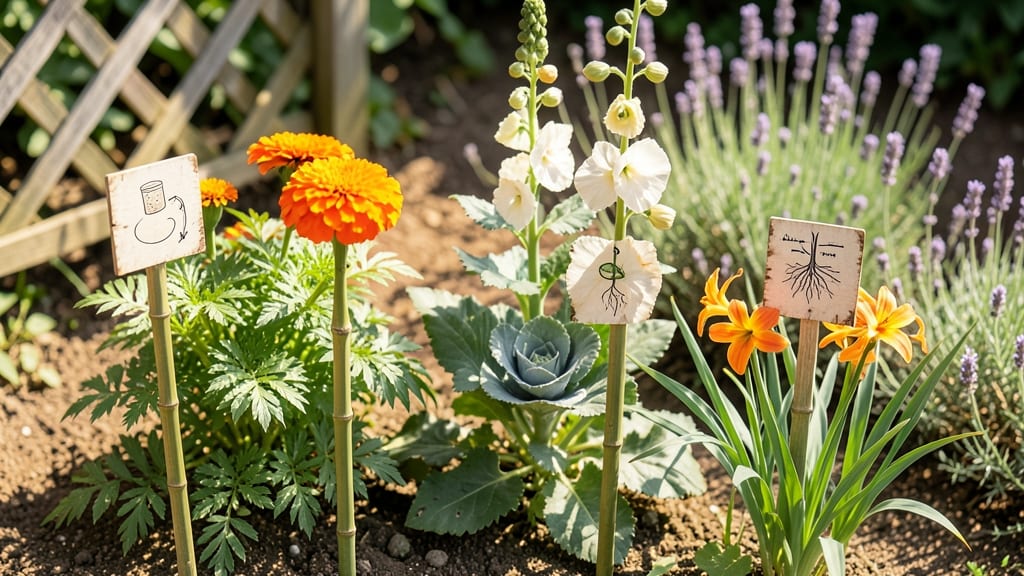
The difference between annual, biennial, and perennial plants is defined by their growth cycles: annuals grow, flower, and die in one season; biennials establish roots the first year and bloom the second; perennials return each year from the same root system. Understanding these cycles helps you plan gardens that thrive year after year.
The key difference isn't just how long they live—it's how they use that time.
Annuals like marigolds or zinnias focus all their energy on rapid growth and seed production in a single season, making them perfect for quick color bursts. 🌸 Biennials, such as carrots or onions, store energy underground their first year to fuel flowering and seed production the next, which is why they often need cold stratification.
Perennials like lavender or hostas invest in deep root systems that regenerate each spring, giving them staying power and lower maintenance needs once established.
This distinction directly impacts your garden strategy. Annuals need frequent replanting but offer seasonal variety, while perennials provide long-term structure with minimal effort. Biennials act as a bridge, requiring patience but rewarding you with two-year cycles of growth.
For example, planting biennials like foxgloves in early spring lets them establish roots while annuals give you instant summer blooms, and perennials like coneflowers fill in the gaps with reliable color for years.
💡 In This Article
- Life Cycles of Annual, Biennial, and Perennial Plants
- Planting and Care Strategies for Each Type
Life cycles of annual, biennial, and perennial plants
Annual plants follow a rapid, intense life cycle that mirrors their name—everything happens in one season. They begin with seed germination triggered by warmth and moisture, then focus all energy on producing leaves, stems, and flowers within 6-12 weeks.
The key biological process is called "bolting," where the plant rapidly elongates its stem to reach flowering stage. 🌱 This is why annuals like sunflowers grow from a tiny seed to 6-10 feet tall in just 3 months—their entire energy goes toward seed production before dying.
Temperature is the main environmental cue: most annuals germinate best at 60-75°F and flower when days lengthen in spring.
Biennials take a more strategic approach by splitting their energy between two years. During the first year, they focus on building a robust root system and storing energy in their taproots (like carrots or parsley).
The second year, when they detect longer daylight hours and cooler temperatures, they trigger flowering and seed production.
This two-stage process is called "vernalization"—a cold treatment that signals the plant it's time to flower. 🌿 For example, cabbage plants develop their full head only in their second year after surviving winter dormancy, which is why gardeners often plant biennial seeds in late summer for spring harvests.
Perennials have evolved a completely different survival strategy centered around their root systems. Instead of focusing on rapid growth or seasonal reproduction, they invest in deep, fibrous roots that store nutrients and moisture.
This root system can live for decades—some perennials like crepe myrtles produce flowers for 50+ years from the same root stock. 🌳 The key difference is their ability to enter dormancy during harsh seasons (cold winters or dry summers) and regrow from the same roots each spring.
Environmental cues like temperature shifts and day length trigger this dormancy cycle, allowing perennials to "pause" growth while still maintaining their structural integrity underground.
Here's how these cycles compare visually: annuals shoot straight up like a rocket, biennials grow low and leafy first year then bolt upward the second, while perennials spread outward with multiple stems emerging from a central crown.
This structural difference explains why annuals need frequent replanting, biennials require careful overwintering, and perennials establish themselves permanently in garden beds.
The most fascinating aspect is how these cycles interact with your garden's microclimate. In warm climates, some plants classified as biennials (like sweet peas) may act as annuals because they complete their life cycle before winter arrives.
Conversely, cold-hardy perennials like peonies can survive -20°F temperatures by going completely dormant, while tender perennials like bougainvillea need winter protection or must be dug up and stored. 🌡️ Understanding these biological processes lets you match plants to your specific growing conditions for maximum success.