
Planting
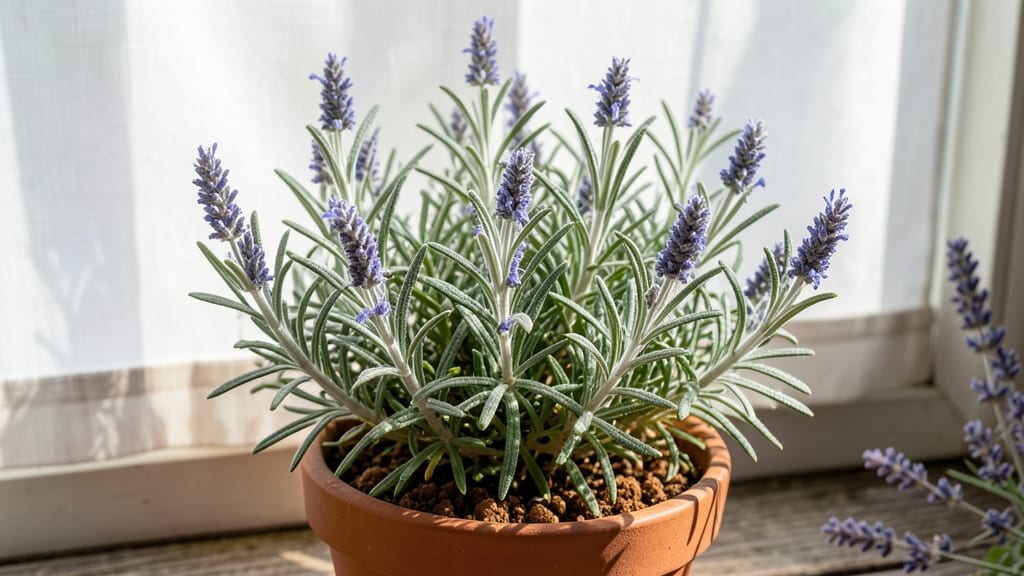
A rosemary plant behaves as a perennial in warm Mediterranean climates but becomes a tender perennial or annual in colder regions, where frost kills the top growth while the hardy root system survives underground for potential regrowth.
A rosemary plant's perennial status depends entirely on your climate zone. 🌿 In USDA zones 8-10, where winters rarely drop below 20°F, rosemary thrives as a true perennial, growing year-round with its woody stems and deep roots.
However, in colder zones (3-7), frost will blacken the foliage, but the roots often remain dormant until spring—if you protect them with mulch or move potted plants indoors.
The key difference lies in the plant's hardiness: Mediterranean rosemary evolved to handle dry heat, not freezing temperatures, which is why gardeners in colder areas often treat it as an annual or tender perennial.
What sets rosemary apart is its remarkable resilience. Even when the above-ground parts die back, the root crown can regenerate if kept alive through winter.
This makes it possible to revive rosemary plants year after year with proper care—whether by insulating the soil, using containers for mobility, or replanting from cuttings each spring. The plant's ability to bounce back from frost damage is what gives it that "perennial-like" behavior in colder climates.
💡 In This Article
- Rosemary’s Perennial Nature in Different Climates
- Cold-Weather Rosemary Care for Year-Round Growth
Rosemary’s perennial nature in different climates
Rosemary’s perennial behavior stems from its Mediterranean heritage, where it evolved to thrive in dry, warm conditions with minimal frost. In USDA zones 8-10, where winter temperatures rarely dip below 20°F, rosemary’s woody stems and deep root system allow it to grow continuously.
The plant’s hardiness comes from its ability to store water in thick, leathery leaves and produce a robust root crown that can regenerate even after damage.
This is why rosemary behaves like a true perennial in these climates—its growth cycle isn’t interrupted by cold, and it can live for decades with proper care.
The key difference in colder zones (3-7) is frost sensitivity. When temperatures drop below 25°F, the above-ground parts of rosemary blacken and die back, but the root system often survives if protected.
This is because rosemary’s roots are surprisingly resilient, capable of entering dormancy when exposed to cold. 🌱 What most people don’t realize is that rosemary’s survival strategy relies on its ability to regrow from the base—similar to how some perennials like asparagus or rhubarb regenerate after frost.
In warmer zones, this regeneration happens naturally, but in colder areas, gardeners must actively protect the roots to encourage perennial-like behavior.
Here’s what’s actually happening in the plant’s biology: rosemary’s hardiness zone (USDA 8-10) reflects its natural range, where it experiences mild winters. Outside this range, the plant’s growth slows dramatically as temperatures drop, triggering dormancy.
The root crown, which contains meristematic tissue (growth cells), remains alive even when the tops freeze. This is why rosemary can regrow in spring if the roots aren’t damaged—it’s not a true perennial in cold climates, but it can act like one with the right care.
Consider these survival strategies rosemary uses in different climates:
- Root resilience: Deep roots (up to 3 feet) store nutrients and water, allowing the plant to survive drought and light frost.
- Dormancy triggers: Cold temperatures below 32°F signal the plant to halt growth and conserve energy, similar to how bulbs like tulips prepare for winter.
- Regrowth potential: Even if the tops die back, the root crown can produce new shoots in spring if protected from extreme cold.
The science behind rosemary’s hardiness lies in its ability to produce secondary metabolites like rosmarinic acid, which act as natural antifreeze agents in the plant’s cells. This chemical adaptation helps protect its tissues from frost damage, much like how some cold-hardy plants produce antifreeze proteins.
However, these adaptations have limits—rosemary isn’t equipped to handle prolonged sub-zero temperatures or heavy snow cover, which is why gardeners in colder zones must take extra steps to mimic its Mediterranean growing conditions.
What this means for gardeners is that rosemary’s perennial status isn’t fixed—it’s a matter of climate adaptation. In warm zones, it grows like a classic perennial, while in colder areas, it behaves more like a tender perennial or annual unless actively protected.
The plant’s flexibility is what makes it so adaptable, but understanding these biological mechanisms helps explain why some rosemary plants thrive year-round while others need annual replanting. 🌿