
Flowers
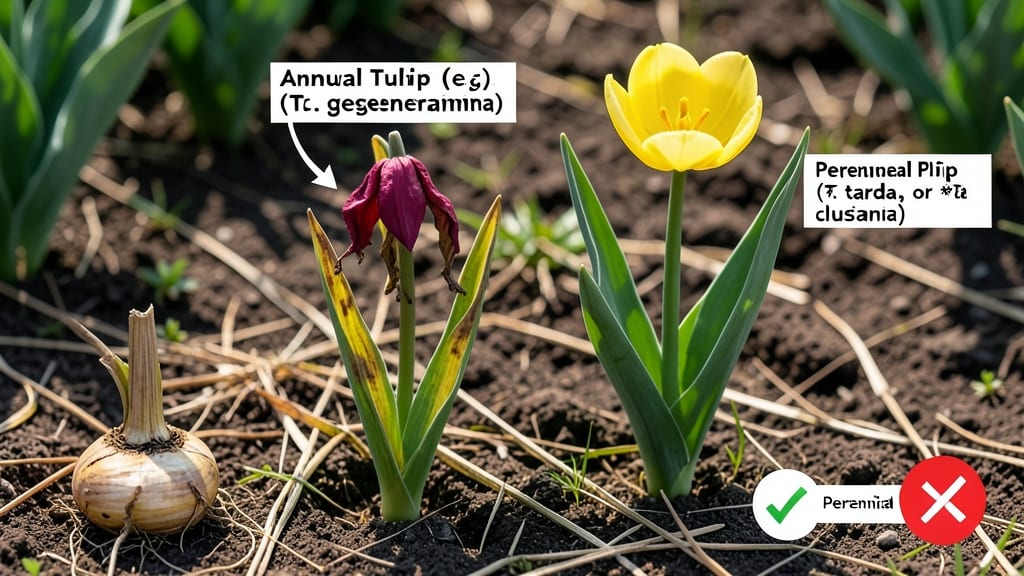
Not all tulips are perennials—most hybrid tulips die back after flowering and need replanting, while species tulips often return yearly. Cold climates help preserve bulbs, but many varieties require annual digging or division to thrive long-term.
Tulips are a tricky case because they're biologically perennials, but most gardeners treat them like annuals. 🌱 The confusion comes from how hybrid varieties deplete their energy after blooming, causing them to fade away until you replant.
Species tulips, like Tulipa tarda or Tulipa clusiana, are the exceptions—they naturally multiply and return year after year with proper care. Even then, their lifespan depends on factors like soil quality and winter protection.
Here's the key difference: hybrid tulips prioritize showy flowers over bulb longevity, while species tulips invest energy in both. That's why gardeners often dig up and store bulbs after flowering—it's not just about aesthetics, but survival.
Cold climates actually help by forcing bulbs into dormancy, but even then, most hybrids won't survive more than 2-3 years without intervention.
💡 In This Article
- Why Most Tulips Act Like Annuals Despite Being Perennials
- How to Extend Tulip Lifespan: Bulb Care and Replanting Tips
Why most tulips act like annuals despite being perennials
The biological reason behind tulips' annual-like behavior lies in their reproductive strategy. Hybrid tulips—like the popular Darwin Hybrid or Parrot Tulip varieties—prioritize producing large, showy flowers over investing energy in bulb storage.
After blooming, these bulbs deplete their reserves to 50-70% of their original energy, leaving them unable to sustain another flowering cycle without intervention. This is nature's trade-off: stunning blooms now or longevity later.
Species tulips, however, evolved differently. Varieties like Tulipa tarda (the late blooming species) or Tulipa clusiana (the Lady tulip) allocate 30-40% less energy to flowering and more to bulb reproduction. Their bulbs naturally produce offsets (small daughter bulbs) that mature over 2-3 years, creating colonies that return annually.
The key difference is in their genetic programming—hybrids are bred for floral impact, while species prioritize survival strategies.
Climate plays a surprising role in this cycle. In colder regions (USDA zones 3-6), the winter chill period (40-50°F for 6-8 weeks) forces bulbs into dormancy, preserving what little energy remains.
However, even with perfect dormancy, hybrid bulbs rarely survive more than 2-3 years without being dug up and refreshed. Warmer climates (zones 7+) accelerate this depletion, as bulbs struggle to enter proper dormancy.
What most gardeners don't realize is the role of tulip fire—a fungal disease that thrives in crowded, undisturbed bulb beds. Hybrid tulips planted year after year become prime targets because their weakened bulbs can't fight infections.
Species tulips, with their natural offset production, create more air circulation between bulbs, reducing disease pressure. This is why wild tulip populations in Central Asia (their native habitat) often persist for decades without human intervention.
The breeding process itself creates this paradox. When horticulturists cross tulips for larger flowers or unique colors, they select for traits that don't favor bulb longevity. A 12-inch hybrid tulip flower might require 40% more energy to produce than a 6-inch species tulip, leaving nothing for future growth.
This is why your double blooming tulips (like 'Queen of Night') often fade faster—their complex flower forms demand even more energy reserves.
Consider this comparison: A hybrid tulip bulb might produce 1 spectacular bloom before collapsing, while a species tulip might yield 3-5 smaller blooms over its lifetime with natural offsets.
The trade-off is built into their genetic code—something to remember when choosing between showy hybrids and hardy species for your garden. 🌸