
Planting
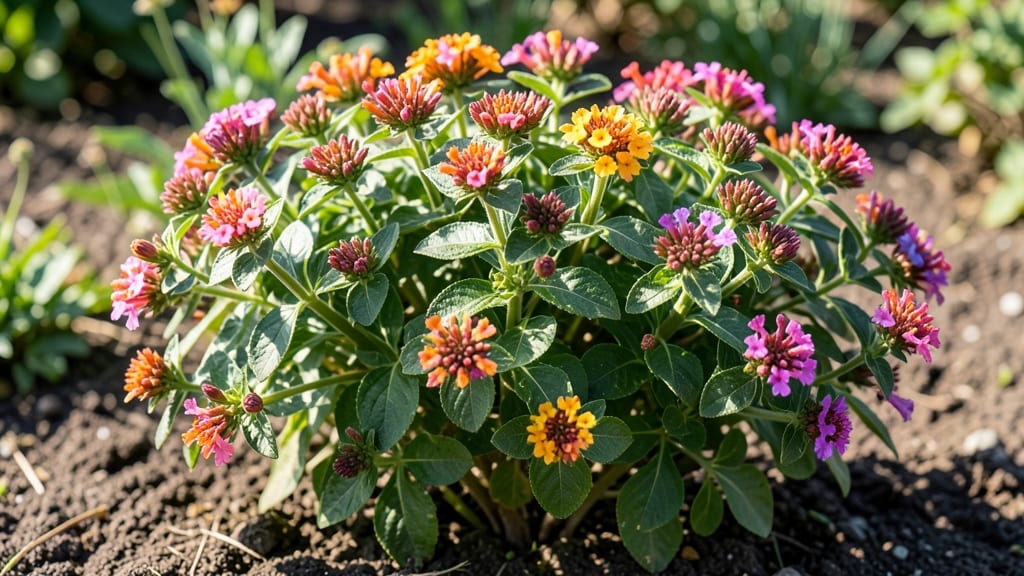
Lantana is not a perennial in Zone 6 because its tropical nature makes it highly sensitive to frost, causing it to die back completely in winter. While it may resprout from roots or self-seed in spring, it thrives best as an annual or with careful winter protection in cooler climates.
Lantana's struggle in Zone 6 comes from its origins in warm climates—it simply can't handle temperatures below 25°F. 🌱 Unlike hardy perennials that survive winter dormancy, lantana's stems freeze solid, forcing gardeners to treat it as an annual or take extra steps.
I've seen it bounce back from roots in milder winters, but consistent freezing will kill it to the ground every time. For those eager to grow lantana in cooler zones, container gardening or heavy mulching can extend its lifespan, though it'll never behave like a true perennial.
What's fascinating is how lantana compensates for its fragility—it often self-seeds aggressively in spring, creating new plants from last year's fallen seeds.
This makes it feel like a perennial even when it isn't one. 🌿 If you're committed to keeping lantana in Zone 6, I recommend choosing cold-tolerant varieties like 'Bandana Series' and starting fresh each spring from cuttings or nursery plants.
💡 In This Article
- Lantana Cold Hardiness: Why It Struggles in Zone 6 Winters
- Zone 6 Lantana Workarounds: Planting and Overwintering Tips
Lantana cold hardiness: why it struggles in Zone 6 winters
Lantana's tropical roots explain why it can't survive Zone 6 winters—its native range spans Central and South America, where temperatures rarely drop below 50°F. This heat-loving shrub lacks the cold-hardy adaptations of perennials like coneflowers or black-eyed Susans.
Its woody stems contain little protective tissue, making them vulnerable to frost damage below 25°F. When temperatures hit -5°F or lower, the entire plant freezes solid, turning stems brittle and leaves blackened.
The real science lies in its cellular structure. Lantana cells lack antifreeze proteins found in hardy perennials, which prevent ice crystal formation.
Instead, its thin bark and shallow root system offer minimal insulation. 🌡️ Compare this to peonies (Zone 3 hardy), which have thick, insulating root crowns and can survive -30°F—lantana simply can't compete.
Even its leaves, which produce protective pigments in cooler climates, fail to adapt when exposed to prolonged frost.
What keeps lantana going in Zone 6 is its aggressive regeneration strategy. While the above-ground parts die, the root system often survives if protected by 6-12 inches of mulch. Some gardeners report seeing new shoots emerge in spring from these protected roots, though this isn't reliable in harsh winters.
The plant's true survival tactic is self-seeding—each flower cluster produces 100-200 seeds that lie dormant until warm soil triggers germination.
Another factor is lantana's growth habit. Unlike perennials that develop woody bases over years, lantana grows primarily from soft, herbaceous stems that can't withstand freeze-thaw cycles.
This is why even established plants in Zone 6 will die back completely when winter temperatures drop below 20°F for more than a few hours. The only "perennial" behavior comes from its seed bank—new plants appear each spring from last year's fallen seeds.
For visual comparison, imagine planting a lemon tree in Minnesota. Both require warm climates to thrive, and both will die back to the ground when frost hits. The key difference?
Lemon trees can be grown in containers and moved indoors, while lantana requires similar protective measures to survive Zone 6 winters. 🍋 The botanical reality is that lantana's survival mechanisms are designed for tropical conditions, not temperate zone challenges.
The coldest temperatures lantana can tolerate are around 25°F for brief periods, but prolonged exposure to 20°F or lower will kill it. This is why gardeners in Zone 6 must treat it as an annual or take special overwintering precautions.
Even then, there's no guarantee—lantana's cold sensitivity makes it one of the least hardy landscape plants for northern climates.