
Diseases
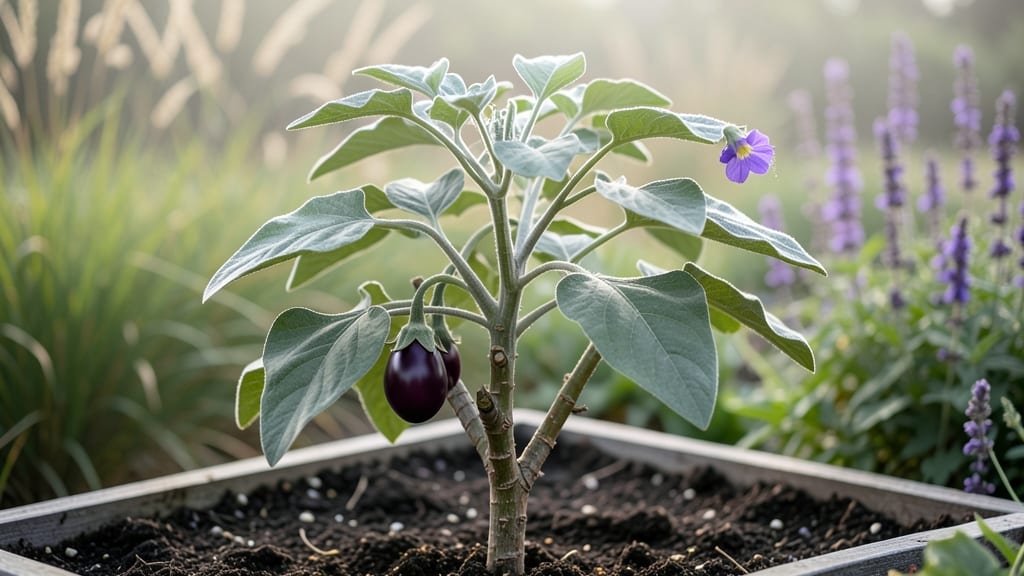
Eggplant behaves as a tender perennial in warm climates (USDA zones 10-12), where it naturally dies back each year but can regrow from its root system if protected from frost. In cooler regions, it’s treated as an annual because cold temperatures kill the plant entirely.
This behavior stems from eggplant's tropical origins—it thrives in heat but struggles with anything below 50°F. 🌱 In frost-free zones, the roots often survive winter dormancy, allowing regrowth when temperatures rise again.
However, in most U.S. gardens, the plant simply won't survive freezing temperatures, which is why gardeners typically replant seeds each spring. The key difference lies in how cold-hardy the variety is and whether you can provide winter protection through mulching or container growing.
For gardeners in marginal zones (like USDA 8-9), overwintering becomes possible with careful planning. Many growers use thick mulch or move potted plants indoors during cold snaps. This approach lets you enjoy eggplant's longer harvest windows and potentially get a head start on the next season's crop.
💡 In This Article
- Why Eggplant Dies Back Annually in Most Gardens
- How to Overwinter Eggplant in Cold Climates
Why eggplant dies back annually in most gardens
Eggplant's annual dieback stems from its tropical heritage—it evolved in regions where temperatures rarely dip below 50°F. When exposed to frost (32°F or lower), the plant's aboveground growth freezes and dies because its cells lack the antifreeze proteins found in true perennials like asparagus.
However, the roots often survive in frost-free zones because they can enter a dormant state similar to how sweet potatoes behave in warm climates.
The critical threshold is 40°F nighttime temperatures—below this, even the roots struggle to survive. In USDA zones 10-12, eggplants naturally die back each winter but regrow from their root crowns when temperatures rise again.
This makes them "tender perennials"—they persist through the year but require protection from cold snaps. The root system stores energy in starches, much like how rhubarb survives winter in colder climates.
What most gardeners don't realize is that eggplant's dormancy isn't true hibernation like peonies. Instead, it's a survival mechanism where the plant conserves energy in its roots while waiting for warmer conditions. In cooler zones, this process fails because the roots can't withstand prolonged cold, leading to complete plant death.
The difference between annual and perennial behavior comes down to whether the roots can regenerate growth when temperatures return to 70°F+.
Consider this comparison: In Florida (zone 10), eggplants might die back to the ground in winter but resprout from the same roots in spring. Meanwhile, in Ohio (zone 6), the entire plant—roots and all—will freeze and die without protection.
The key factor is whether your winter lows stay above 45°F consistently. Even a single frost event can determine whether your eggplant behaves as a perennial or annual.
Another fascinating aspect is how eggplant's growth habit changes with temperature. During warm seasons, it grows vigorously with large leaves and rapid vine expansion. But as temperatures drop toward 60°F, growth slows dramatically, signaling the plant's shift toward dormancy.
This temperature sensitivity explains why eggplants are typically grown as annuals in most U.S. gardens—gardeners simply can't provide the consistent warmth needed for perennial behavior.
For those in marginal zones (like zone 9), the difference between annual and perennial behavior often comes down to microclimate. A well-mulched eggplant in a sheltered spot might survive winters just above freezing, while one in an exposed location will die completely.
The mulch acts like a thermal blanket, maintaining soil temperatures above 40°F during cold snaps—a critical threshold for root survival.
Understanding this biological response helps explain why eggplant varieties differ in their cold tolerance. Some modern hybrids (like 'Ichiban') have been bred to handle slightly cooler temperatures, but none can truly survive freezing conditions.
The perennial behavior you see in warm climates is nature's way of adapting to seasonal temperature shifts without complete plant death—a survival strategy eggplant shares with other tropical vegetables like tomatoes and peppers.