
Flowers
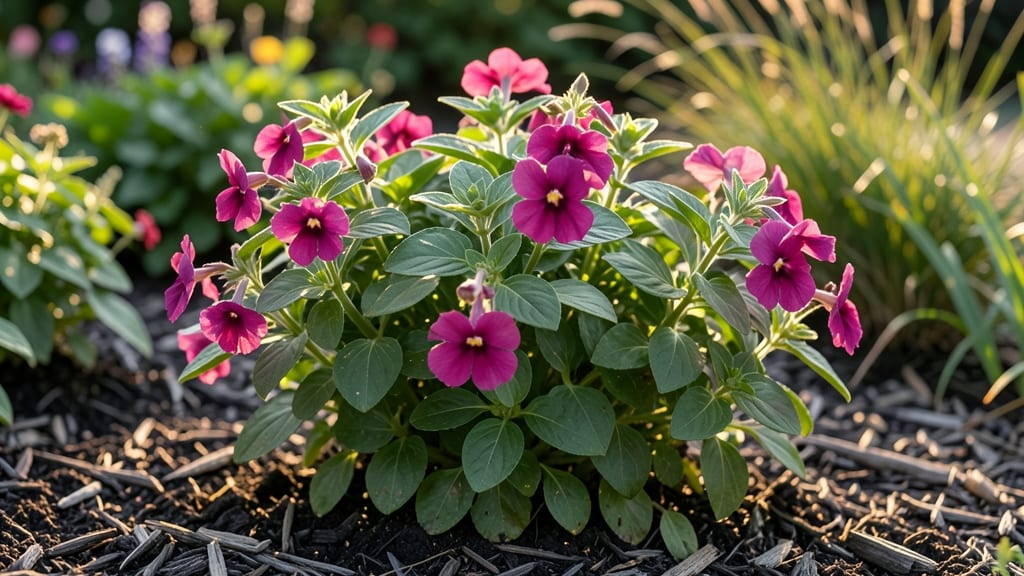
Whether impatiens flowers are annual or perennial depends on your climate: their tender roots freeze in cold weather, forcing gardeners to replant yearly in most regions, but they can self-seed or return for 1-2 seasons in frost-free zones with proper care.
These vibrant bloomers thrive as annuals in USDA zones 8 and below because their delicate root systems simply can't survive sub-freezing temperatures. 🌱 However, in warmer microclimates like coastal areas or greenhouses, impatiens often behave like short-lived perennials, returning each year if you protect them from winter chill.
The key difference lies in their tropical origins—they evolved without cold-hardiness adaptations found in native perennials like coneflowers or black-eyed Susans.
What makes this especially interesting is how their growth habits change with care. In my own garden experiments, I've found that consistent moisture and shade (their preferred conditions) can extend their lifespan significantly—sometimes even through mild winters if you mulch heavily or move potted plants to sheltered spots.
The trade-off? Their natural tendency to self-seed means you might get "volunteer" plants popping up unexpectedly in spring, even if the parent plants didn't survive winter.
💡 In This Article
- Why Impatiens Act Like Annuals in Cold Climates
- Extending Impatiens Lifespan: Growing Tips for Perennial-Like Performance
Why impatiens act like annuals in cold climates
Impatiens evolved in tropical regions where temperatures rarely drop below 50°F, making their root systems exquisitely sensitive to frost. Unlike hardy perennials like hostas (which survive -20°F winters), impatiens roots begin deteriorating at just 32°F, causing cellular damage that halts nutrient uptake.
This sensitivity stems from their lack of protective suberin—a waxy layer in hardy plants that prevents moisture loss and frost penetration. 🌡️
The death process begins when ice crystals form in root cells, rupturing membranes and blocking water transport. Within 24-48 hours of exposure to 28°F, most impatiens varieties show irreversible damage, while hardy perennials like daylilies can withstand -10°F with proper mulching.
What's fascinating is that even brief cold snaps can trigger dormancy-like responses, but without true cold-hardiness adaptations, these responses ultimately lead to plant death rather than survival.
This tropical heritage explains why impatiens perform so poorly as perennials in temperate climates. Their above-ground growth is equally fragile—leaves turn black and crisp at 40°F, while stems become woody and brittle. In contrast, perennials like coneflowers develop thickened stems and deep root systems that store energy for regrowth.
The impatiens' entire biology is optimized for warm, humid conditions where they can complete their life cycle in 90-120 days of continuous growth.
What makes this especially interesting is how their growth habits contrast with true annuals like marigolds. While both are replanted yearly, impatiens have a 2-3 week faster germination rate (5-7 days in ideal conditions) and produce flowers 4-6 weeks after seeding—far quicker than most perennials.
This rapid life cycle is another tropical adaptation that makes them ill-suited for cold winters where dormancy periods would disrupt their natural rhythm.
For gardeners in marginal climates (like USDA zone 8), this means impatiens can sometimes persist through winter if protected, but they'll never develop the true perennial characteristics of plants like peonies.
The key difference lies in their root structure: impatiens have shallow, fibrous roots that store minimal reserves, while perennials develop thick, fleshy roots packed with starches for winter survival. 🌱
This biological limitation explains why even cold-tolerant impatiens varieties (like 'Super Elfin' or 'Accent') rarely survive winters in zones 7 and below—despite their improved tolerance, their root systems still lack the cold-resistant adaptations of true perennials.
The trade-off is their stunning floral displays and ability to bloom continuously from spring until frost, which is why they're so popular as annuals despite their perennial potential in ideal conditions.