
Flowers
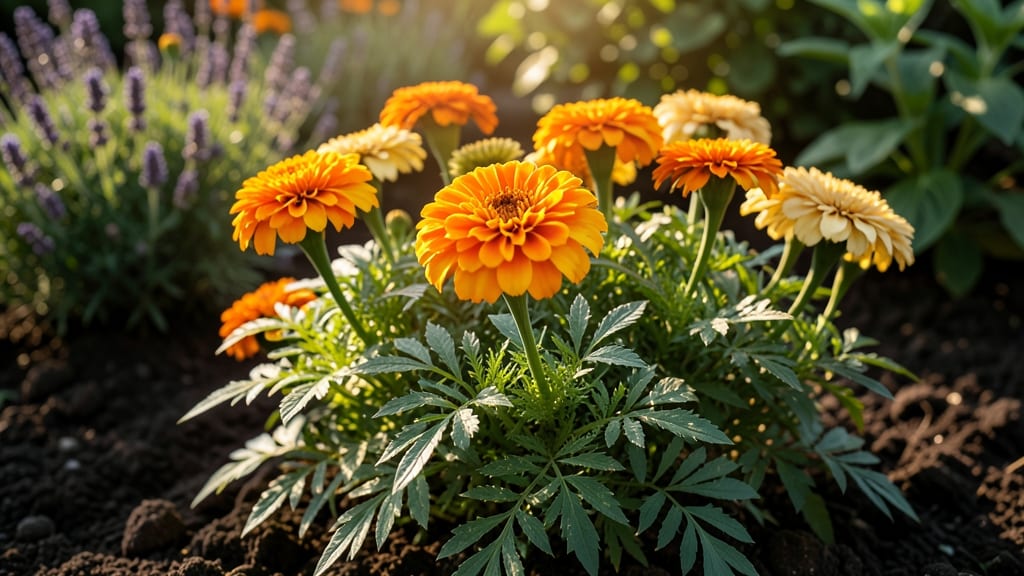
Marigolds are not true perennial flowers in most climates, though they regrow yearly in warm zones (USDA 9-11) where frost never occurs. In colder regions, they die back annually but self-seed prolifically, creating the illusion of perennial behavior.
Marigolds are actually tender perennials, meaning they thrive as annuals in most regions because they can't survive freezing temperatures. 🌱 Their tropical origins make them sensitive to frost, which is why they die back completely in cooler climates.
The good news? Many varieties self-sow aggressively, so you'll often see them popping up year after year without any effort on your part.
What makes them interesting is how they adapt to different growing conditions. In warmer climates like Florida or Southern California, marigolds can live for multiple years, but in colder areas, they'll only last until the first frost hits.
This is why gardeners in colder zones often treat them as annuals while still benefiting from their continuous presence through natural reseeding.
💡 In This Article
- Marigold Lifespan: Why They Die in Cold Climates
- How to Extend Marigold Growth Beyond One Season
Marigold lifespan: why they die in cold climates
Marigolds trace their origins to tropical and subtropical regions of Central and South America, where temperatures rarely drop below 50°F. Their delicate foliage and stems contain high moisture content, making them particularly vulnerable to frost damage.
When temperatures fall to 32°F or lower, the plant cells rupture due to ice crystal formation, causing irreversible damage to the stems and leaves. This is why marigolds behave as annuals in most U.S. climates—even a light frost can kill them to the ground.
The key difference between marigolds and true perennials like lavender lies in their cold tolerance thresholds. Lavender, for example, can withstand temperatures as low as -15°F thanks to specialized woody stems and deep root systems that store nutrients. Marigolds, however, lack these adaptations.
Their shallow root systems (6-12 inches deep) and non-woody stems make them unable to regenerate after frost exposure. 🌡️ In contrast, hardy perennials like coneflowers or black-eyed Susans have fibrous root networks that survive winter dormancy.
What's fascinating is how marigolds compensate for their frost sensitivity through their reproductive strategy. While they may die back annually in colder climates, their seeds remain viable in the soil for up to 3 years.
When spring temperatures rise above 60°F, these seeds germinate en masse, creating dense patches of marigolds that give the illusion of perennial behavior. This self-seeding habit is a survival mechanism that ensures the species persists even when individual plants don't survive winter.
The botanical term for marigolds' behavior is "tender perennial"—they would be true perennials if grown in frost-free zones (USDA 9-11). In these climates, marigolds can live for 2-3 years or longer, producing flowers continuously.
The difference becomes clear when comparing their growth cycles: true perennials like hostas regrow from the same root system each year, while marigolds must rely entirely on new growth from seeds or cuttings in colder regions.
Gardeners often notice marigolds' resilience in their ability to thrive in poor soil conditions—a trait that compensates for their short lifespan. Their deep green, fern-like foliage contains natural pesticides that deter pests, while their bright orange and yellow blooms attract pollinators.
This dual functionality makes them valuable garden companions even when they don't survive winter. The trade-off is clear: marigolds offer immediate beauty and practical benefits but require annual replanting in most climates.
Understanding this lifecycle helps explain why marigolds are often recommended for container gardening in colder regions. Their compact growth habit (12-24 inches tall) and ability to thrive in pots make them easier to protect during winter months.
When moved to sheltered locations before frost, some gardeners successfully overwinter marigolds, though this requires careful temperature monitoring and protection from freezing winds. 🌿