
Flowers
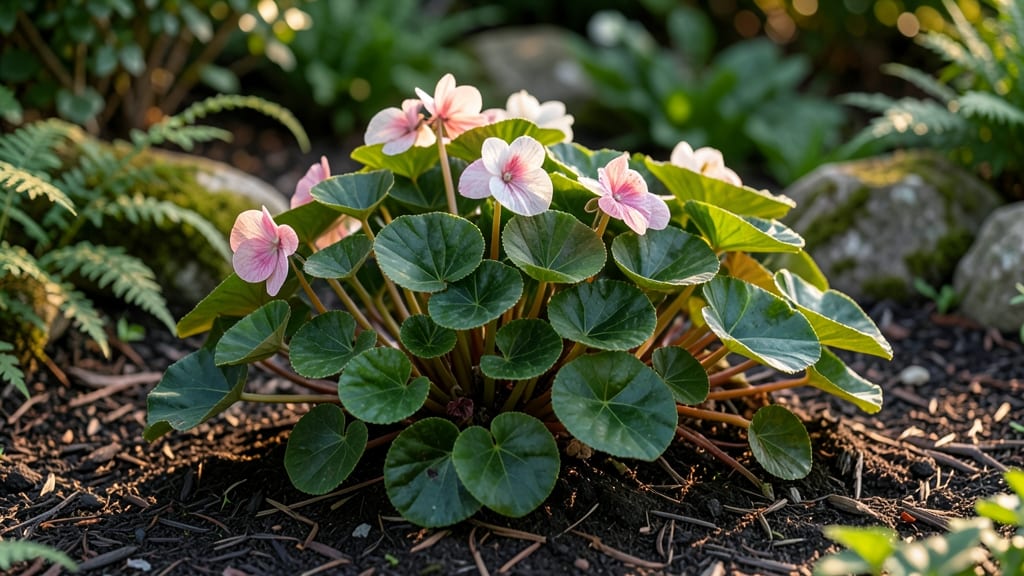
Begonias aren't true perennial flowers in most regions—they act as annuals or tender perennials, surviving outdoors only in USDA Zones 10-12. Gardeners in colder areas must either bring them inside for winter or replant from tubers each spring.
Begonias' perennial status depends entirely on your climate. 🌱 In frost-free zones (like Southern California or Florida), they naturally return year after year, but even a light freeze will kill most varieties.
The key difference lies in their growth habits: while some species develop thick tubers that store energy for regrowth, others simply can't survive below 30°F.
I've seen gardeners in Zone 8 successfully overwinter Begonia grandis by digging tubers and storing them in dry peat moss—this is how they extend their lifespan beyond a single season.
What makes this tricky is that many begonia types—like the popular wax begonias—don't produce tubers at all. These varieties require complete replanting each spring, which is why they're classified as annuals in colder climates.
The USDA zone system acts as your guide: if you're in Zone 9 or below, plan for winter care unless you're growing frost-resistant species like Begonia semperflorens, which can sometimes handle 28°F temperatures with protection.
💡 In This Article
- How USDA Hardiness Zones Define Begonia Survival
- Overwintering Begonias in Cold Climates: Step-by-Step Guide
How USDA hardiness zones define Begonia survival
The survival of begonias hinges on their biological response to cold, particularly how their cells handle frost. When temperatures drop below 30°F, the delicate cell membranes in begonia leaves and stems rupture from ice crystal formation, causing irreversible damage.
This is why even a single light freeze (28-32°F) can kill most varieties—unlike hardy perennials that can tolerate -10°F or lower. In USDA Zones 10-12, where winter temperatures rarely fall below 30°F, begonias naturally overwinter outdoors by entering a dormant state in their tubers or rhizomes.
The tuber system acts like a biological battery, storing starches and nutrients that fuel regrowth when temperatures warm. For example, Begonia grandis develops thick, corm-like tubers that can survive 28°F with protection, while fibrous-rooted types like Begonia rex lack this adaptation.
This explains why gardeners in Zone 9 must either dig up tubers or provide heavy mulch—without these measures, the roots absorb moisture and freeze solid, killing the plant. The USDA zone boundaries essentially map where begonias can safely remain dormant outdoors versus needing human intervention.
Moisture absorption is the silent killer. Begonia tubers absorb water through their porous surfaces, and when frozen, this water expands by 9%—enough to burst cell walls. This is why overwintering protocols emphasize dry storage (40-50°F with 50% humidity or less).
In contrast, Zone 10-12 begonias experience minimal moisture stress because their dormant period coincides with dry winter conditions. The science here mirrors how desert plants survive—by avoiding water uptake during cold snaps.
Not all begonias behave the same. Fibrous-rooted types (like Begonia boliviensis) lack tuber storage and must be treated as annuals in cold climates, while tuberous begonias can persist for years with proper care.
This biological diversity is why gardeners must match varieties to their zone—planting a non-tuberous begonia in Zone 7 guarantees it won't return the next spring. The USDA zone system becomes your climate calculator for predicting which begonias will naturally persist versus requiring human effort to survive.
Consider this real-world example: In Zone 8a (where winters average 10-15°F), Begonia grandis tubers buried 6 inches deep in dry sand often survive unprotected, while Begonia semperflorens (wax begonia) will die back unless dug up.
The 10°F difference between these zones explains why some begonias thrive as perennials in one location but fail in another just 200 miles north. This precision is what makes USDA zones indispensable for begonia gardeners.
What most people overlook is how begonia growth habits change with latitude. In frost-free zones, begonias grow continuously, while in colder areas, they enter a 6-8 month dormancy—a survival strategy that requires energy reserves.
This is why tuberous begonias produce 2-3 inch thick tubers: they're nature's way of storing enough calories to restart growth in spring. Without this adaptation, begonias would disappear entirely from cold climates.