
Plants
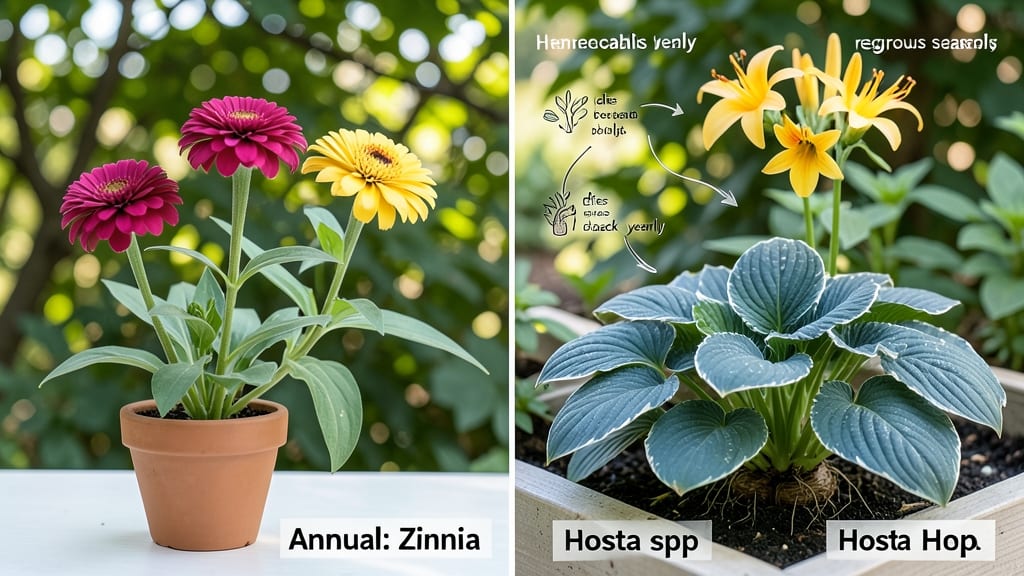
The difference between annual and perennial plants lies in their growth cycles, root systems, and lifespan—annuals bloom, set seed, and die in one season, while perennials return year after year from deep root systems that store nutrients and water.
The key distinction starts underground: annuals develop shallow, fibrous roots that focus energy on rapid growth and seed production, while perennials invest in deep taproots or rhizomes that anchor them through droughts and cold. 🌱 This root difference explains why perennials like lavender or coneflowers dominate garden borders for decades, while annuals like marigolds or zinnias deliver quick color but fade after their single growing season.
For gardeners, this means planning ahead: annuals let you experiment with bold seasonal displays, while perennials build a low-maintenance foundation. I always dedicate the back of my garden to perennials—once established, they require minimal care and return every year with less watering and fewer replacements.
Think of annuals as the fast-food restaurants of the plant world—quick, flashy, and gone by autumn—while perennials are the sit-down meals: they take time to prepare but keep coming back with better flavor each year.
💡 In This Article
- Root Systems: How Annual vs Perennial Roots Affect Plant Survival
- Gardening Strategies: When to Plant Annuals vs Perennials
Root systems: how annual vs perennial roots affect plant survival
Annual plants develop shallow, fibrous root systems that spread horizontally just beneath the soil surface. These roots grow rapidly—often within 4-6 weeks—to maximize water and nutrient absorption during their brief lifespan. The trade-off?
Without deep anchoring, annuals like sunflowers or cosmos rely on quick reproduction to complete their life cycle before winter. Their roots typically reach depths of only 6-12 inches, making them vulnerable to drought or frost once their above-ground growth is established. 🌱
Perennials, on the other hand, invest heavily in deep root structures like taproots or rhizomes that can extend 3-5 feet underground. For example, peonies develop thick, fleshy roots that store starches for regrowth, while daylilies spread via horizontal rhizomes that create new shoots each spring.
These systems allow perennials to access water from deep soil layers during droughts and store nutrients year-round. The result? Plants like lavender or hostas return stronger each season, even after harsh winters or dry spells.
This root difference explains why perennials dominate long-term gardens. Their deep systems create a natural drought resistance, while annuals require consistent moisture to thrive. I’ve seen marigolds (annuals) wilt within days of missed watering, while established coneflowers (perennials) remain vibrant through summer heat.
The trade-off? Annuals offer faster color payoffs, while perennials build garden resilience over time. 💛
Another key factor is how these roots interact with soil microbes. Perennial roots form symbiotic relationships with fungi (mycorrhizae) that extend their reach even further, creating a network that improves soil health.
Annuals, with their short lifespans, don’t benefit from these long-term partnerships. This microbial connection helps perennials like asparagus or rhubarb thrive for decades with minimal fertilizer.
Consider the texture contrast: annual roots are fine and delicate, while perennial roots are often thick and woody. For example, a dandelion’s taproot can grow 12-18 inches deep, making it nearly impossible to remove completely—unlike an annual like basil, whose roots break away easily when pulled.
This physical difference affects everything from weeding to garden planning. 🌿
In extreme climates, these root structures become survival tools. Perennial roots like those of Russian sage can withstand -30°F temperatures by storing energy underground, while annuals like impatiens die back completely when frost hits.
The choice between the two often comes down to your garden’s climate and your patience for long-term rewards. ✨