
Companion Plants
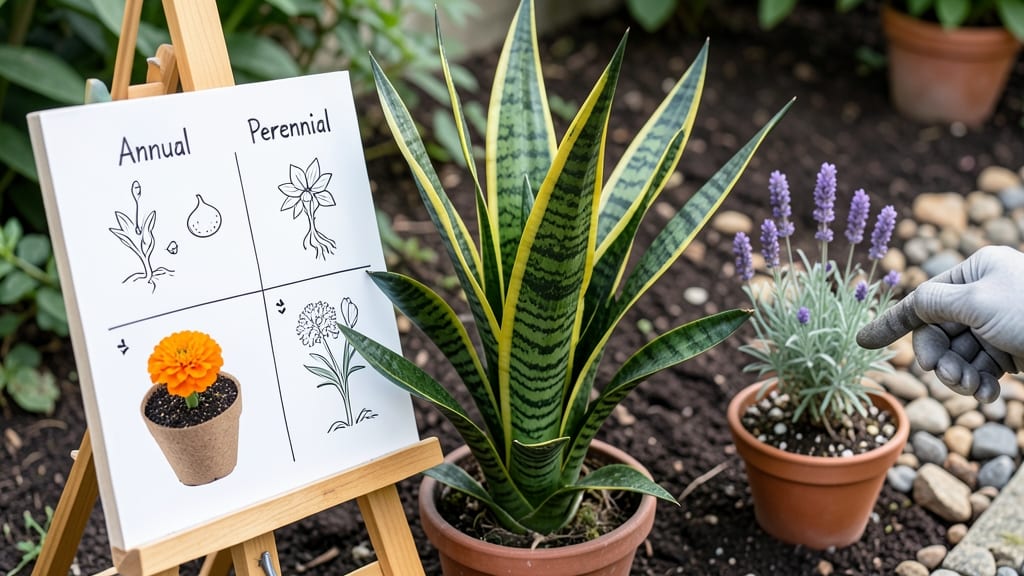
What does annual and perennial plants mean? These terms describe their life cycles: annuals bloom, produce seeds, and die within a single growing season, while perennials regrow each year from established roots, often thriving for multiple years with proper care.
Understanding these terms helps gardeners plan their landscapes more effectively.
Annual plants like marigolds or zinnias deliver vibrant color quickly but require replanting each year, making them perfect for seasonal displays or filling gaps between perennials. 🌸 Perennials, such as lavender or coneflowers, establish deep root systems that store nutrients, allowing them to bounce back year after year with minimal effort once established.
The trade-off? Perennials often take time to mature and may need winter protection in colder climates, while annuals offer instant gratification with their rapid growth cycles.
For gardeners with limited time, annuals provide flexibility—swap out varieties each season to keep the garden fresh without long-term commitments. On the other hand, perennials build soil health over time and reduce annual planting costs, making them ideal for low-maintenance landscapes or pollinator-friendly gardens.
The choice often comes down to your priorities: quick impact versus long-term investment.
💡 In This Article
- Lifespan and Growth Cycle Differences Between Annuals and Perennials
- Choosing Annual vs Perennial Plants for Your Garden
Lifespan and growth cycle differences between annuals and perennials
Annual plants have evolved a rapid life cycle strategy that maximizes seed production in a single growing season. Their entire lifecycle—from seed germination to seed dispersal—typically spans just 90-180 days, depending on the species and climate.
The key biological trigger is photoperiodism: many annuals detect shortening daylight hours in late summer, signaling them to shift energy from leaf growth to flower and seed production.
This explains why plants like sunflowers or cosmos grow so quickly—they're literally racing against time to complete their reproductive cycle before frost kills them. 🌱
Perennials, in contrast, invest heavily in developing robust root systems that store carbohydrates and nutrients over winter. These underground structures can live for 3-10 years (or even centuries in some cases, like creosote bushes), allowing the plant to regrow above ground each spring.
The trade-off is that perennials often take 1-3 years to reach full maturity, during which they focus on building their root network rather than producing flowers.
For example, peonies may take two years to establish before their first significant bloom, but once mature, they'll return year after year with minimal care.
The difference in growth patterns creates distinct gardening experiences. Annuals like zinnias or marigolds deliver instant gratification with their vibrant blooms appearing within weeks of planting, while perennials like hostas or black-eyed Susans reward patience with long-term beauty.
This biological distinction also explains why annuals often have more delicate stems and foliage—they don't need to survive multiple seasons, so they can allocate resources to rapid growth and reproduction instead. 🌿
Another fascinating difference lies in their seed production strategies. Annuals typically produce thousands of tiny seeds that can remain viable in the soil for years, waiting for optimal conditions to germinate. Perennials, however, often produce fewer but more robust seeds that require specific conditions (like cold stratification) to break dormancy.
This explains why you might see annuals like chickweed popping up unpredictably in garden beds—those seeds have been patiently waiting for their chance to grow!
The environmental conditions that trigger these different growth patterns vary dramatically. Annuals often originate from regions with unpredictable growing seasons, where they've evolved to complete their life cycle quickly when conditions are favorable.
Perennials, on the other hand, typically come from more stable climates where they can afford to take their time establishing. This is why many perennial species have deep taproots that can access water deep underground—a strategy that wouldn't be necessary for plants that only live for one season. 💧
Understanding these biological mechanisms helps explain why gardeners often combine both types of plants. Annuals provide seasonal color and variety, while perennials create a stable framework that comes back year after year.
The interaction between these different growth strategies actually creates more diverse and resilient ecosystems in gardens, as each type plays a different role in the plant community.