
Orchid Care
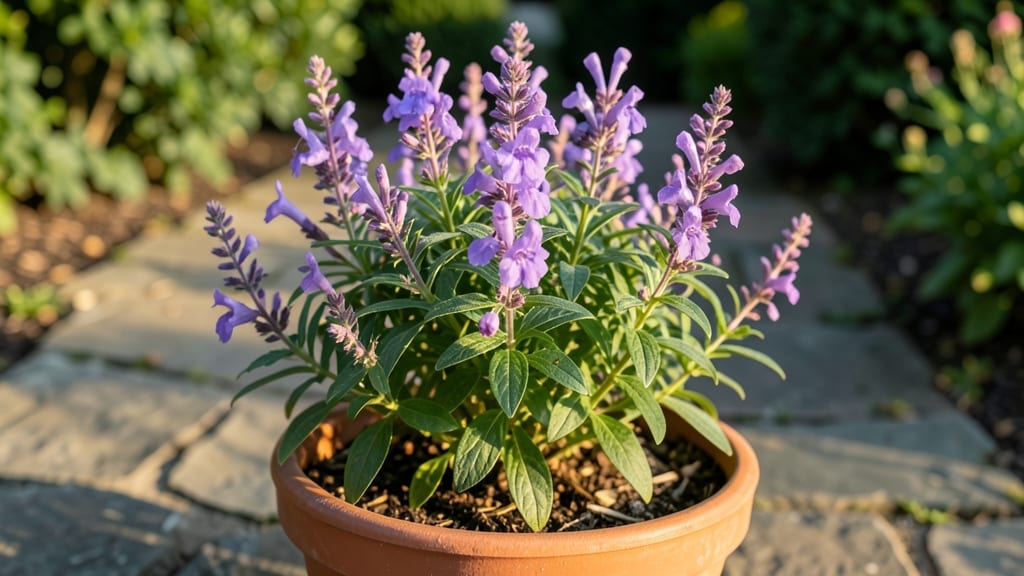
Deciding whether angelonia is annual or perennial depends on your climate: in most regions, it's treated as an annual due to its frost-sensitive roots, but in USDA zones 9-11, it can overwinter as a perennial with careful winter protection.
Angelonia's tropical roots are the key factor here—they simply can't handle freezing temperatures. 🌱 In colder zones, the plant's delicate root system shuts down when temps drop below 30°F, which is why gardeners typically replant from seed each spring.
However, in warmer climates like Southern California or Florida, those same roots can survive winter with proper mulching and protection, turning angelonia into a long-lived perennial. The difference comes down to how well you can shield its roots from cold snaps.
For those in frost-prone areas, propagation becomes essential. Taking cuttings in late summer or early fall lets you preserve your favorite varieties until next season. Even in mild climates, overwintering requires monitoring—watch for signs of stress like yellowing leaves or stunted growth, which often signal root damage.
The plant's ability to bounce back depends entirely on protecting that root zone.
💡 In This Article
- Why Angelonia Dies in Cold Climates: Root System and Freeze Sensitivity
- How to Extend Angelonia’s Lifespan: Winter Care and Propagation Tips
Why angelonia dies in cold climates: root system and freeze sensitivity
Angelonia's tropical heritage explains why it struggles in cold climates. Native to South America, this plant evolved in warm, humid environments where temperatures rarely drop below 50°F.
Its root system, while fibrous and spreading, remains shallow—typically only 6-12 inches deep—and lacks the protective insulation found in hardy perennials like lavender or coneflowers. When temperatures fall below 30°F, these delicate roots begin to freeze, disrupting water and nutrient transport to the plant's stems and leaves.
The damage occurs at a cellular level: ice crystals form within root cells, rupturing their membranes and killing the tissue. Unlike woody perennials that can survive winter dormancy, angelonia's tender roots lack the protective bark or insulating underground structures.
This makes it behave more like other frost-sensitive annuals such as coleus or impatiens, which also originate from tropical regions. The key difference? Angelonia's roots can sometimes recover if protected, while coleus and impatiens typically die completely when exposed to frost.
What makes angelonia particularly vulnerable is its rapid growth habit. In warm climates, it can reach 12-24 inches tall in just 8-10 weeks, producing energy that requires constant root activity. When cold sets in, this growth energy becomes a liability—the plant can't slow down quickly enough to protect itself.
The roots' high water content (around 85% moisture) also makes them prime targets for freeze damage, as water expands when it crystallizes into ice.
Interestingly, angelonia's flowers actually help it survive brief cold snaps. The dense clusters of tubular blooms create microclimates that trap heat near the plant's base, providing 2-3°F of additional protection to the roots.
However, this effect is minimal during prolonged freezes. In contrast, hardy perennials like Russian sage develop woody stems that act as thermal buffers, insulating their roots year-round.
For gardeners in marginal zones (like USDA zone 8), the difference between annual and perennial treatment often comes down to timing.
A single late frost can kill angelonia's roots, but if you're able to protect the plant through two consecutive winters (which is possible in zone 8b with heavy mulching), it may establish itself as a short-lived perennial.
The plant's ability to self-seed also plays a role—some gardeners report finding volunteer plants the following year, suggesting the roots survived in sheltered microclimates.
Understanding these botanical limitations helps explain why angelonia thrives as an annual in most gardens. Its tropical nature isn't just about aesthetics—it's a fundamental aspect of its biology that determines how we must care for it.
The plant's sensitivity to cold serves as a reminder that even beautiful, fast-growing species have specific environmental requirements that we must respect to keep them flourishing.