
Companion Plants
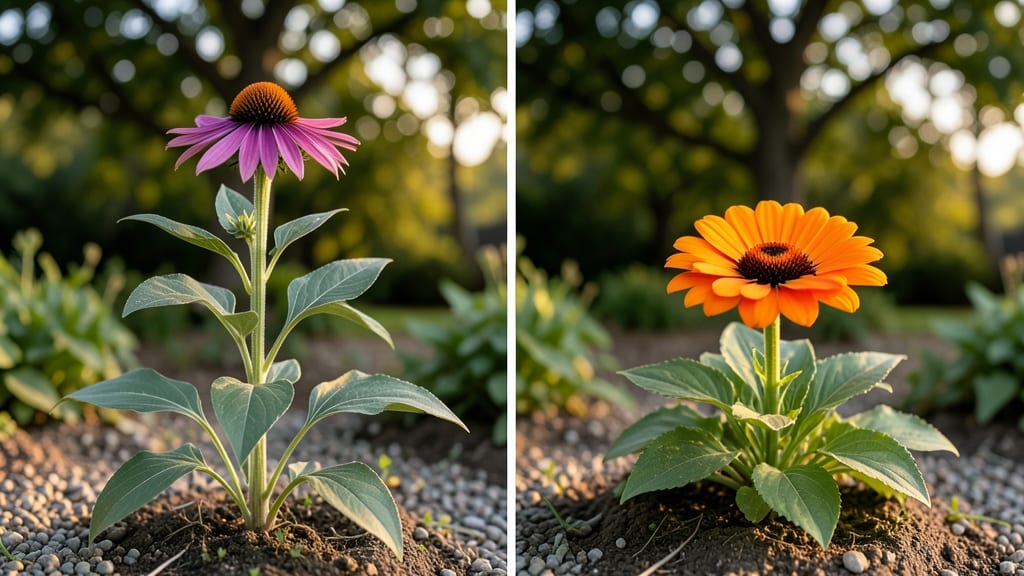
Perennials are the plants that come back every year, while annuals complete their life cycle in one growing season and die. Perennials regrow from underground structures like roots or tubers, while annuals must be replanted each year.
If you're wondering which plants will return year after year, the answer lies in their growth habits.
Perennials thrive because they store energy in their roots or bulbs during winter, allowing them to sprout fresh growth when conditions improve. 🌱 This makes them perfect for low-maintenance gardens, as they establish themselves over time.
Annuals, on the other hand, focus all their energy on producing flowers, seeds, or edible parts within a single season before dying off completely. Many gardeners choose annuals for their vibrant blooms and quick results, while perennials reward patience with long-term beauty and reduced replanting work.
One quick way to tell them apart is by observing their life cycle: perennials often show signs of regrowth in early spring, while annuals must be planted fresh each year. Even experienced gardeners sometimes mix them up—especially when dealing with biennials, which take two years to complete their cycle.
The key difference is persistence: perennials keep coming back, while annuals offer seasonal variety.
💡 In This Article
- How Perennial Plants Survive Year After Year
- Identifying Perennials vs Annuals in Your Garden
How perennial plants survive year after year
The secret behind perennials' ability to return annually lies in their specialized underground storage systems. Unlike annuals that allocate all energy to above-ground growth, perennials develop rhizomes, tubers, or deep root systems that store nutrients and energy during dormancy.
For example, peony roots contain starch reserves that can sustain the plant for years, while asparagus crowns store enough energy to produce new shoots each spring. 🌱 These storage organs can survive temperatures as low as -20°F in some hardy species, thanks to antifreeze proteins that prevent cell damage.
Perennials also employ a clever survival strategy called dormancy, where metabolic activity slows dramatically during winter. This allows them to conserve energy while waiting for favorable conditions. The timing of dormancy varies by species—some like hostas enter dormancy in early fall, while others like lavender wait until late winter.
Annuals, by contrast, lack these storage mechanisms and complete their entire life cycle in 60-180 days, depending on the species, with no ability to regenerate from dormant structures.
Seasonal adaptation gives perennials another advantage. Many develop woody stems or basal rosettes that protect their growing points from freezing temperatures. Consider daylilies, which grow from thick, fleshy roots that can regenerate even after being cut back to the ground.
This resilience means perennials often require less maintenance—no replanting needed—while annuals demand complete seasonal replacement for continuous blooms or harvests.
What most gardeners don't realize is that perennials actually improve with age. As they establish deeper root systems over years, they become more drought-tolerant and resistant to pests.
For instance, a three-year-old coneflower plant will produce 2-3 times more blooms than a first-year specimen, while an annual like marigold must be replanted annually to maintain its display. This long-term investment makes perennials ideal for creating low-maintenance garden foundations.
Even the flowering patterns differ significantly. Perennials often produce multiple bloom cycles throughout the season (like black-eyed Susans), while annuals typically flower heavily just once before setting seed. The trade-off?
Perennials may take 1-2 years to reach full maturity, whereas annuals deliver instant color—this is why many gardeners combine both types for seasonal variety and long-term structure.