
Flowers
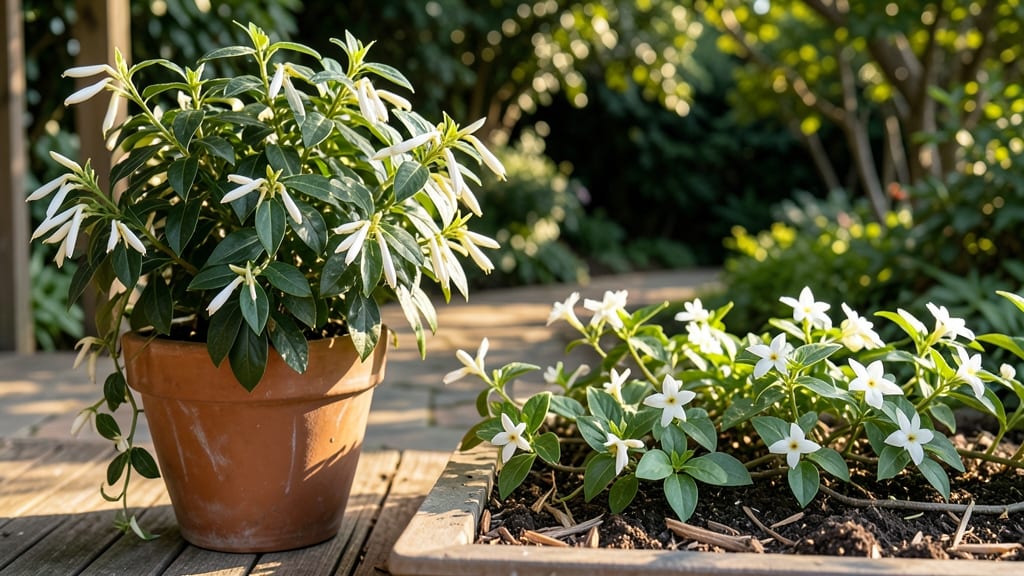
Determining whether jasmine is annual or perennial depends on your climate: it grows as a perennial in frost-free zones (USDA 8-11), but acts like an annual in colder areas (Zones 7 and below), where freezing temperatures kill above-ground growth each winter.
This shift happens because jasmine's roots survive winter in colder climates, storing energy to regrow when temperatures rise. 🌱 In warmer regions, the plant continues flowering year-round without dormancy, while northern growers often replant each spring.
The key difference lies in how well the variety tolerates frost—some cold-hardy types like winter jasmine (Jasminum nudiflorum) thrive in Zone 5, while others need protection or die back completely.
For gardeners in transitional zones (like Zone 7), mulching heavily in fall can help protect roots during light freezes. Even if the stems blacken, the plant often recovers surprisingly well once spring arrives.
This resilience makes jasmine a rewarding choice for both annual and perennial gardeners, depending on where you live.
💡 In This Article
- How Cold Hardiness Affects Jasmine’s Lifespan
- Best Jasmine Varieties for Different Climates
How cold hardiness affects jasmine’s lifespan
Jasmine’s shift between annual and perennial behavior comes down to its root system’s ability to survive freezing temperatures. In USDA Zones 8-11, where winter lows rarely drop below 20°F, jasmine’s roots remain active year-round, allowing the plant to regrow continuously.
This evergreen growth pattern is why it behaves as a true perennial in warm climates—its above-ground stems may brown in cold snaps, but the roots stay alive and push out new growth within weeks of warmer weather. 🌿
The turning point occurs in Zones 7 and below, where sustained freezing (below 15°F) damages or kills above-ground growth. However, the roots often survive if protected by mulch or soil insulation, storing energy in their rhizomes (underground stems) like a natural battery.
This dormancy strategy is similar to how peonies or daylilies survive winter—jasmine’s roots enter a state of suspended animation, waiting for spring’s warmth to trigger regrowth. The key difference is that in colder climates, gardeners frequently replant each year because the above-ground structure rarely survives intact.
What makes this fascinating is how jasmine’s frost sensitivity varies by species. For example, Jasminum nudiflorum (winter jasmine) thrives in Zone 5, its woody stems surviving -20°F with proper mulching, while Jasminum officinale (common jasmine) struggles in anything below Zone 7.
This variation explains why some gardeners in marginal zones (like Zone 7) treat jasmine as an annual—it may not reliably regrow from roots each spring, especially if winters are harsh or inconsistent. 🥶
Dormancy cycles also play a role. In colder climates, jasmine often stops flowering in late summer as a survival mechanism, redirecting energy to root growth. This explains why northern jasmine plants may appear "dead" in winter but bounce back with vigorous new shoots in spring.
The plant’s ability to delay flowering until after the last frost is another adaptation that blurs the line between annual and perennial behavior—it’s not just about surviving winter, but timing regrowth perfectly with seasonal cues.
For gardeners in transitional zones (like Zone 7), the solution often lies in protection strategies. Heavy mulching with straw or leaves can raise soil temperatures by 5-10°F, while wrapping stems in burlap adds an extra layer of insulation.
Even if the plant looks lifeless after a freeze, the roots may still be viable—simply prune back dead growth in early spring and watch for new shoots within 2-4 weeks.
This resilience is why jasmine remains popular even in colder regions, despite its technical classification as annual in those areas.
Here’s the science behind the survival: Jasmine roots contain high levels of soluble sugars and antifreeze proteins, which prevent ice crystals from forming in their cells. This natural cold tolerance explains why some varieties can regrow from roots even after stems have been killed by frost.
The trade-off? In colder climates, these same protective mechanisms often result in slower initial spring growth compared to their perennial cousins in warm zones. 🌱