
Planting
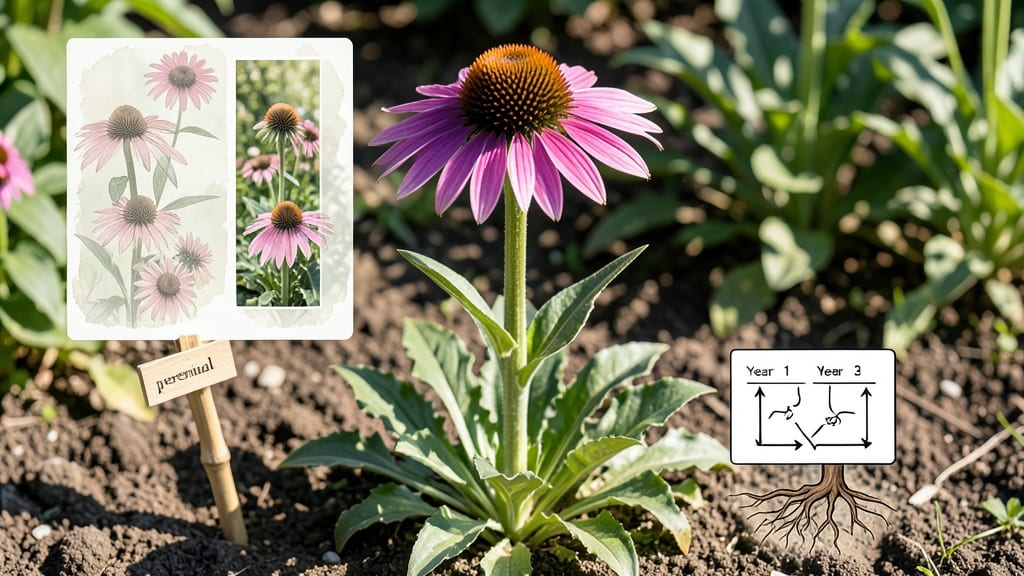
Perennial plants mean they regrow each year from the same root system, surviving winter dormancy to return stronger in spring—unlike annuals that complete their life cycle in one season. Their longevity makes them ideal for low-maintenance gardens and pollinator habitats.
Perennials thrive because their deep root systems store energy underground, allowing them to push through soil year after year. 🌱 Unlike annuals that sprout, bloom, and die in one season, perennials enter dormancy during cold months but keep their roots alive—ready to burst back with leaves and flowers when conditions improve.
This built-in resilience means less replanting for gardeners, and many perennials also attract pollinators like bees and butterflies throughout the growing season.
Think of them as the reliable workhorses of your garden: once established, they require minimal effort while delivering continuous color, texture, and ecological benefits. For example, coneflowers return every spring with vibrant blooms, while hostas provide lush foliage that thrives in shade.
Their ability to spread naturally also helps fill empty spaces over time, creating a self-sustaining landscape.
💡 In This Article
- How Perennial Plants Survive Year After Year
- Best Perennial Plants for Gardens by Climate Zone
How perennial plants survive year after year
The secret to a perennial's longevity lies in its sophisticated underground architecture. Unlike annuals that rely on seeds to reproduce, perennials develop specialized root structures like rhizomes (horizontal stems), tubers (thickened roots), or corms that store nutrients and energy.
For example, daylilies use rhizomes to spread horizontally, creating a network that can regenerate shoots each spring, while peonies store energy in thick, fleshy roots that survive harsh winters. These structures can remain dormant for months, with some species like trilliums able to survive 10+ years underground before flowering again.
Dormancy is another critical adaptation that sets perennials apart. During winter, their aboveground growth dies back, but the roots remain metabolically active at reduced levels. This process, called endodormancy, is triggered by shorter daylight hours and cooler temperatures.
The plant essentially enters a state of suspended animation, conserving energy while waiting for warmer conditions. Some perennials, like heucheras, even produce antifreeze proteins that prevent ice crystal formation in their cells—similar to how some fish survive Arctic winters.
This biological mechanism allows them to withstand -20°F temperatures without permanent damage.
Seasonal adaptation extends beyond winter survival. Many perennials exhibit phenological plasticity, adjusting their growth cycles based on environmental cues. For instance, black-eyed Susans may delay flowering until late summer if early-season conditions are unfavorable, ensuring they produce seeds before frost.
This flexibility contrasts sharply with annuals, which follow a rigid one-season life cycle—germinating, flowering, setting seed, and dying within months. The perennial's ability to "remember" its optimal growth patterns through stored energy gives it a competitive edge in stable ecosystems.
Consider the case of aspen trees, which are technically perennials with a life span of 100-150 years. Their extensive root systems create a shared nutrient network called a clonal colony, where individual trees can support each other through underground connections.
This interconnectedness is why aspen groves often appear as a single organism. In contrast, annuals like marigolds complete their entire life cycle in 60-90 days, relying entirely on seed production for the next generation.
The perennial's deep root systems also improve soil structure over time, creating a more hospitable environment for future growth.
What most gardeners don't realize is how perennials optimize their energy use. During their first year, they focus on building robust roots rather than producing flowers—a strategy called juvenile phase. This explains why many perennials, like lavender, take 2-3 years to reach full bloom.
Once established, they allocate energy to both roots and flowers, creating a self-sustaining cycle. This delayed gratification pays off with minimal maintenance: once planted, perennials often require only annual division every 3-5 years to prevent overcrowding, unlike annuals that need complete replanting each season.
The biological mechanisms behind perennial growth also explain why they're more drought-tolerant. Deep roots access water from lower soil layers, while some species like sedum develop succulent leaves to store moisture. This adaptability makes perennials ideal for xeriscaping (water-efficient landscaping) and low-maintenance gardens.
For example, Russian sage thrives with only 12 inches of annual rainfall, making it perfect for arid climates where annuals would struggle to survive.