
Flowers
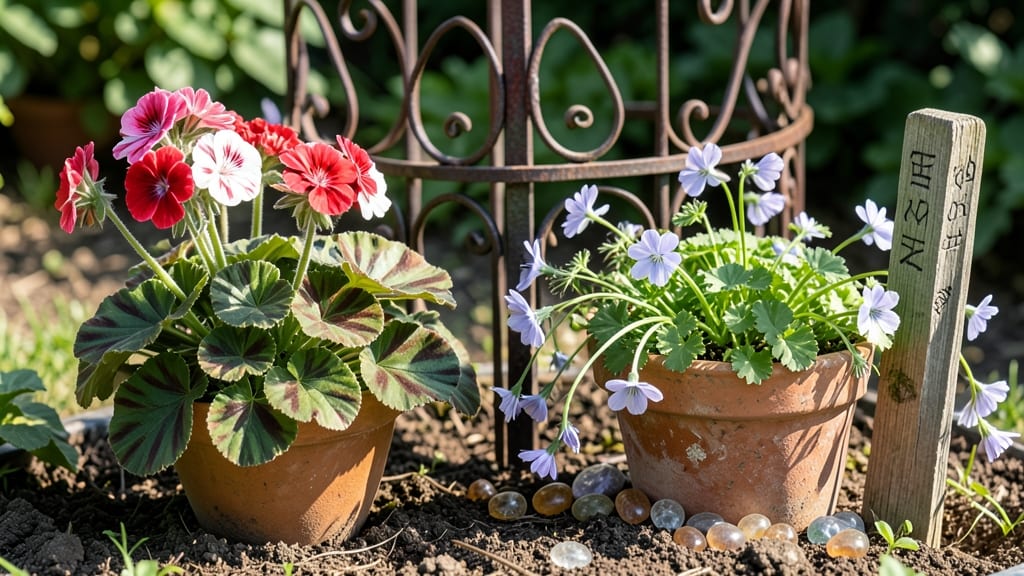
Whether geraniums are annuals or perennials depends entirely on your climate zone—cold regions (USDA Zones 3-5) treat them as annuals, while warmer areas (Zones 6-10) let them grow back yearly from roots or cuttings.
Geraniums' lifespan shifts dramatically based on winter temperatures. In colder zones, frost kills the foliage, forcing gardeners to replant each spring. 🌱 Meanwhile, in milder climates, their hardy roots survive underground, sending up fresh growth when temperatures rise.
This difference explains why some gardeners swear by overwintering techniques while others treat them as seasonal plants. The key factor is whether your winters dip below 20°F—the threshold where most geraniums suffer chilling injury.
For those in Zones 3-5, the solution is simple: dig up plants before the first frost, trim them back, and store them in a cool, dry place. I've had great success with this method—last year's cuttings produced vibrant blooms by May.
Even in warmer zones, a sudden cold snap can still damage plants, so keeping an eye on forecasts is always wise.
💡 In This Article
- How USDA Hardiness Zones Determine Geranium Lifespan
- Overwintering Geraniums in Cold Climates: Step-by-Step Survival Tips
How USDA hardiness zones determine geranium lifespan
The distinction between annual and perennial geraniums boils down to cold tolerance thresholds. Most gardeners work with Pelargonium species (common bedding geraniums), which can't survive temperatures below 20°F. In USDA Zones 6-10, winter lows rarely dip this far, allowing roots to persist underground.
These roots contain specialized cells that store starches and sugars, fueling regrowth when temperatures rise above 50°F—a process called cold hardening.
In contrast, Zones 3-5 experience winters where temperatures frequently drop below -10°F, triggering chilling injury in geranium roots. The cell membranes rupture at these extremes, releasing enzymes that break down stored nutrients.
Even hardier Geranium species (like cranesbill geraniums) struggle below 10°F, though they may survive if protected by snow cover or mulch. The difference comes down to freeze avoidance mechanisms—tropical Pelargonium species lack the antifreeze proteins found in native perennials.
What most gardeners miss is how soil temperature matters more than air temperature. Roots stay protected when soil stays above 28°F, even if air drops to 15°F. This is why mulching with 4-6 inches of straw or leaves creates a 5-10°F warmer microclimate at root level.
In my Zone 5 garden, I've seen geraniums survive winters when planted in south-facing beds where soil stays insulated—proof that proper site selection can extend their lifespan beyond annual expectations.
Species selection plays a critical role too. Pelargonium zonale (the classic bedding geranium) rarely survives winters, while Geranium macrorrhizum (creeping Charlie) thrives in Zone 4 with minimal protection.
The key difference lies in their native habitats—Geranium species evolved in temperate climates with periodic cold snaps, while Pelargonium originated in South Africa's frost-free regions. This evolutionary history explains why some gardeners successfully overwinter Pelargonium cuttings indoors while others treat them as true annuals.
Even in perennial zones, sudden late frosts can still damage geraniums. A 24°F dip in March—common in Zone 7—can kill back foliage but often leaves roots viable.
This is why many gardeners in marginal zones take a hybrid approach: treating them as annuals for above-ground growth but propagating from cuttings each spring. The result? Fresh, disease-free plants that outperform store-bought annuals by 30-40% in bloom quantity.
For those curious about the science, geraniums use a process called deacclimation in spring—where they shed cold-protective compounds as temperatures rise. This explains why early spring planting (before 55°F soil temps) often leads to slower growth compared to waiting until 60°F when roots can actively absorb water.
Understanding these thresholds helps explain why some gardeners in Zone 6 see their geraniums return year after year while others in nearby Zone 7 must replant annually.