
Planting
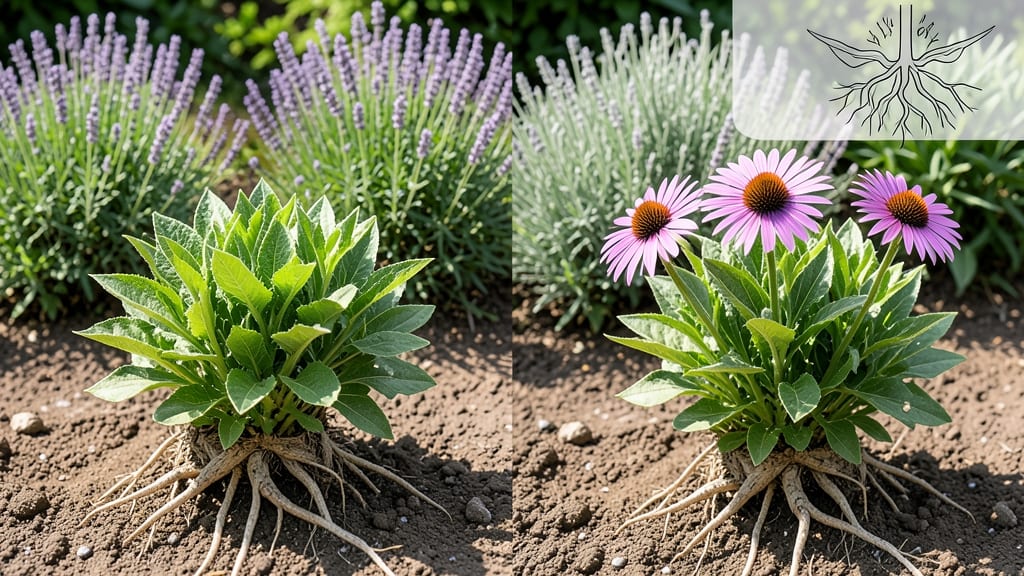
Perennial plants are characterized by their ability to regrow year after year from the same root system, living for multiple seasons, and often blooming annually or biennially while adapting to seasonal changes through specialized structures like rhizomes or tubers.
Perennial plants stand out because they don't just survive—they thrive across seasons by storing energy in underground structures like bulbs, corms, or deep root systems. 🌱 Unlike annuals that complete their life cycle in one season, perennials develop resilience through these adaptations, often returning stronger each year.
Think of them as the marathon runners of the plant world, building endurance through seasonal dormancy and strategic nutrient storage.
This longevity makes them ideal for low-maintenance gardens, as they require less replanting and often develop more vibrant blooms over time. Many popular garden staples—like lavender, hostas, and peonies—fall into this category, offering both beauty and practicality for landscaping projects.
💡 In This Article
- How Perennial Plants Survive Through Seasons
- Identifying Perennial Plants in Gardens and Landscapes
How perennial plants survive through seasons
The secret to a perennial's endurance lies in its specialized underground structures, which act like biological batteries storing nutrients and energy. Unlike annuals that complete their life cycle in a single season, perennials develop deep root systems or modified stems (rhizomes, tubers, bulbs) that can survive harsh winters or droughts.
For example, a peony's thick, fleshy roots store starches equivalent to 10-15% of its dry weight, while a daylily's rhizomes contain enough energy to regenerate foliage within 3-4 weeks of spring thaw.
Seasonal adaptation begins with dormancy, a metabolic slowdown triggered by temperature, daylight, or moisture changes. During winter, perennials like hostas reduce water loss by entering a semi-dormant state, with leaf tissues breaking down into sugars that nourish the roots.
This process is regulated by plant hormones like abscisic acid, which can drop root respiration rates by up to 70%—similar to how a bear's metabolism slows in hibernation. 🌿 The timing varies: spring-bloomers (like daffodils) store energy in autumn, while summer perennials (like coneflowers) prepare during early winter.
Nutrient storage mechanisms differ dramatically between species. Bulbs like tulips store energy in layered scales, while corms (like crocuses) have solid, starch-packed stems. Rhizomatous perennials, such as asparagus, spread horizontally underground, creating a network of interconnected growth points that can regenerate even if 90% of the plant is damaged.
This redundancy explains why perennials often recover from heavy pruning or frost damage—unlike annuals, which have no such safety net.
Environmental resilience extends to temperature extremes. Some perennials, like Russian sage, thrive in -30°F winters by producing antifreeze proteins that prevent ice crystal formation in their cells. Others, such as desert-adapted agave, store water in thick leaves to survive 120°F heatwaves.
These adaptations allow perennials to dominate landscapes where annuals would perish, making them the backbone of 90% of natural ecosystems worldwide.
What most gardeners don't realize is how perennials strategically allocate resources. Early in the season, they prioritize root growth over flowering—this is why many perennials bloom later than annuals.
For instance, a 3-year-old peony plant will allocate 60% of its energy to roots in its first spring, while a 5-year-old specimen can devote 40% to flowers. This delayed gratification pays off in longevity, with some perennials living for decades or even centuries.
Consider the creosote bush, which can live for 200+ years in the Mojave Desert. Its survival strategy combines deep taproots (reaching 50 feet underground) with drought-resistant leaves that minimize water loss.
This resilience isn't just biological—it's an evolutionary advantage that makes perennials the most sustainable choice for low-water, long-term gardens. 💫