
Flowers
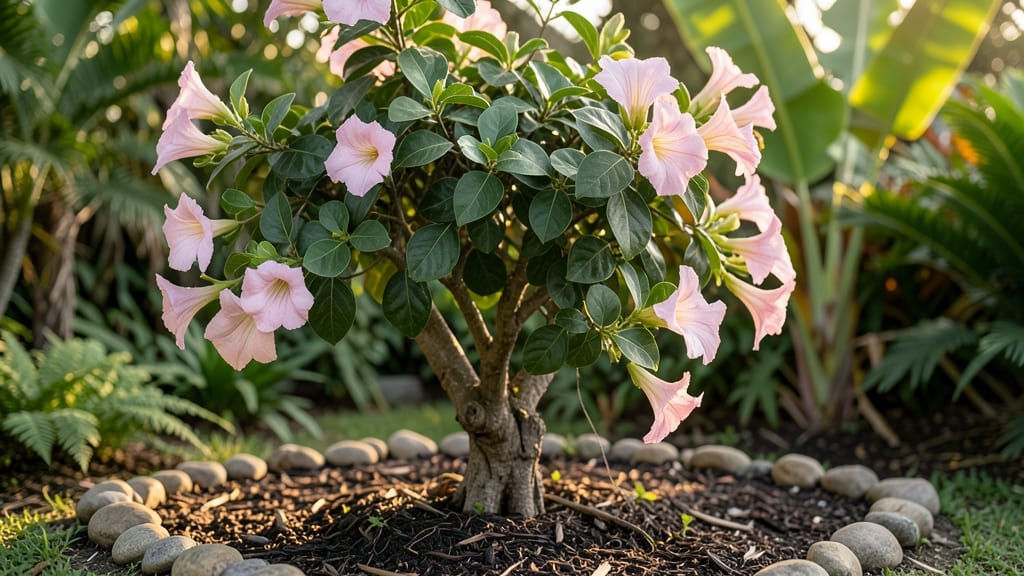
Whether mandevilla flowers are annual or perennial depends on your climate: they thrive as perennials in USDA Zones 10-12 where frost never occurs, but freeze-sensitive gardeners in colder zones must treat them as annuals. Indoor overwintering or tuber storage lets you keep them alive across multiple growing seasons.
Mandevilla's hardiness hinges on temperature—anything below 32°F will kill the plant's delicate foliage and roots. 🌡️ In frost-free zones, these tropical beauties grow back reliably each spring, but gardeners in colder areas face tough choices: either dig up tubers before winter or risk losing the plant entirely.
I've seen mandevillas survive winters in Zone 9 with careful protection, but most varieties won't tolerate prolonged cold snaps. The key difference comes down to whether you're willing to put in the effort for overwintering versus starting fresh each year.
For those in Zones 7-9, overwintering indoors with proper light and humidity can extend your mandevilla's lifespan for years. 🌱 The process involves pruning back the plant, repotting it in a smaller container, and providing consistent warmth—ideally between 50-60°F.
Some gardeners even store tubers in peat moss or perlite, mimicking their natural dormancy period. This approach turns what would be a one-season plant into a long-term garden investment.
💡 In This Article
- Mandevilla Flower Cold Tolerance and USDA Growing Zones
- How to Overwinter Mandevilla Flowers in Non-Tropical Climates
Mandevilla flower cold tolerance and USDA growing Zones
The mandevilla's tropical origins explain why it behaves as a perennial only in frost-free climates. These plants evolved in South America's warm, humid regions where temperatures rarely dip below 60°F.
Their cells lack the antifreeze proteins found in cold-hardy plants, making them vulnerable to frost damage at 32°F—the point where ice crystals form in plant tissues, rupturing cell walls and causing irreversible damage. 🌡️ Even brief exposure to temperatures below 40°F triggers metabolic shutdown, leading to dormancy or death in most varieties.
USDA Zones 10-12 provide the ideal conditions for mandevillas to thrive year-round. In these areas, winter temperatures stay above 40°F, allowing the plants to maintain active growth without stress. The roots, while more resilient than the foliage, still suffer when soil temperatures drop below 50°F for extended periods.
This explains why mandevillas in Zone 10 may survive winters with minimal protection, while those in Zone 9 often require careful overwintering strategies to prevent root rot from persistent dampness.
What most gardeners don't realize is that mandevilla's growth cycle is directly tied to temperature thresholds. When nighttime temperatures consistently drop below 65°F, the plant enters a state of slowed growth, conserving energy until warmer conditions return.
This natural dormancy isn't true hibernation like bulbs experience, but rather a survival mechanism that explains why mandevillas bloom most prolifically during summer months in cooler climates. The contrast between tropical origins and temperate gardening creates this perennial/annual dichotomy.
The key difference between roots and foliage becomes critical in borderline zones. While the above-ground parts die back at 32°F, the tuberous roots can survive down to 28°F if protected from moisture and insulated.
This is why container-grown mandevillas often fare better in cold snaps—they can be moved indoors before temperatures drop, preserving both roots and foliage. In-ground plants, however, face higher risks as soil insulation breaks down during prolonged cold periods.
Consider these hardiness variations by variety: 'Alice du Pont' handles Zone 10 winters better than 'Annabel Houghton', which shows more cold sensitivity.
The difference comes down to breeding history—some varieties have been selectively grown for slightly better cold tolerance, though none approach true hardiness. 🌸 For gardeners in Zones 8-9, understanding these thresholds helps determine whether to attempt overwintering or accept the annual cycle.
The science behind this sensitivity lies in the plant's cellular structure. Mandevilla cells contain high concentrations of water, which expands when frozen, causing membrane rupture. Unlike deciduous trees that can regrow from protected buds, mandevillas lack this adaptive mechanism, making them completely dependent on frost-free conditions for perennial growth.
This biological limitation explains why even "cold-hardy" mandevilla claims often require artificial protection rather than true outdoor survival.