
Flowers
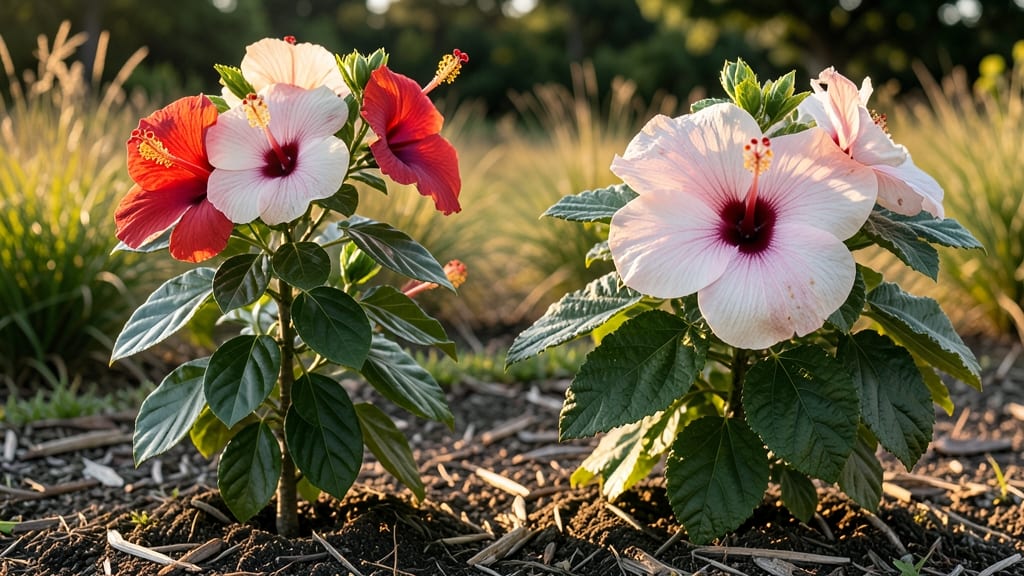
Whether hibiscus flowers are annual or perennial depends on your climate: they thrive as perennials in USDA Zones 5-11 with proper winter care, but are typically grown as annuals in colder regions where they can't survive freezing temperatures without protection.
Most gardeners in colder regions treat hibiscus as annuals because they can't withstand prolonged freezing—even a single hard frost can kill tropical varieties. 🌱 However, hardy hibiscus species like Hibiscus moscheutos (swamp hibiscus) or Hibiscus syriacus (rose of Sharon) can survive Zone 5 winters if given proper insulation.
The key difference lies in their natural origins: tropical hibiscus evolved in warm climates, while hardy types developed in temperate zones and can enter dormancy when temperatures drop.
For those in marginal zones (like Zone 5), overwintering strategies like wrapping the base with burlap or moving potted plants indoors can extend their lifespan.
I've seen hibiscus bounce back beautifully after winter with just a little extra care—it's all about understanding your specific variety's tolerance and acting before the first frost hits.
💡 In This Article
- Hibiscus Cold Hardiness by Variety and Zone
- How to Overwinter Hibiscus in Cold Climates
Hibiscus cold hardiness by variety and Zone
The distinction between annual and perennial hibiscus comes down to their natural cold tolerance, which varies dramatically between species. Tropical hibiscus varieties—like the showy Hibiscus rosa-sinensis—evolved in warm climates where temperatures rarely dip below 40°F.
These types are highly sensitive to frost, with cell membranes rupturing at 32°F or lower, causing irreversible damage. In contrast, hardy hibiscus species like Hibiscus moscheutos (swamp hibiscus) can tolerate temperatures as low as -10°F when properly dormant.
USDA Zones 5-11 represent the sweet spot for hibiscus growth, but even within this range, not all varieties thrive equally.
Tropical hibiscus need Zone 10+ conditions to survive outdoors year-round, while hardy types like Hibiscus syriacus (rose of Sharon) can handle Zone 5 winters with 10-12 inches of mulch around the base.
The key difference lies in their growth habits: tropical hibiscus grow continuously, while hardy types enter a dormant state in winter, shedding leaves and conserving energy until spring.
What most gardeners don't realize is how quickly frost damage occurs—even a single night below 32°F can kill tender hibiscus varieties. The damage starts at the cellular level, where ice crystals form in plant tissues, rupturing cell walls and blocking water transport.
This is why hibiscus in colder zones often need protective coverings or indoor relocation before the first frost, not just after it hits.
For those in marginal zones like Zone 6, the solution often involves a combination of mulching and selecting cold-hardy varieties. Swamp hibiscus, for example, can handle occasional dips to 10°F when the ground is insulated with 6+ inches of organic mulch.
The mulch acts as a thermal blanket, moderating soil temperature fluctuations that would otherwise stress the plant's roots.
Another critical factor is the plant's age—young hibiscus are far more vulnerable to cold than mature specimens. This is because younger plants haven't developed the same level of root mass or stored carbohydrates needed to survive winter stress.
That's why gardeners in colder regions often recommend waiting until plants are at least 2-3 years old before attempting overwintering strategies.
Consider these key hardiness distinctions when choosing hibiscus:
- Tropical hibiscus: Needs Zone 10+ for outdoor survival; dies back to ground in frost
- Hardy hibiscus: Survives Zone 5-9 with proper winter care; enters dormancy
- Hybrid varieties: Often fall in between, requiring Zone 7-10 with protection
The science behind this involves a plant's ability to supercool—a process where water in plant tissues remains liquid below freezing until a nucleation point triggers ice formation. Hardy hibiscus have evolved mechanisms to delay this process, while tropical varieties lack these adaptations. 🌿