
Orchid Care
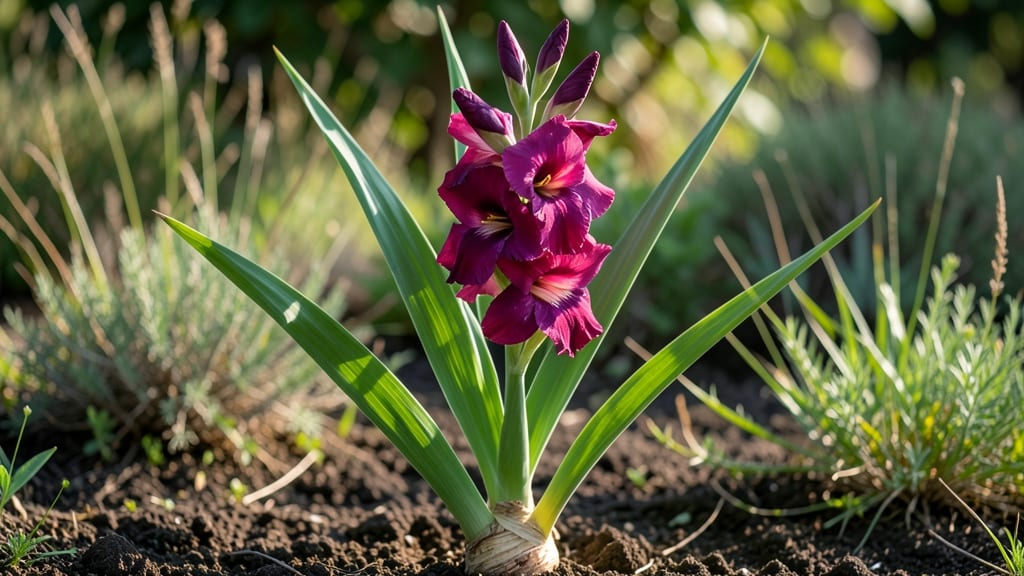
Gladiolus bulbs are technically perennial but are often grown as annuals in colder climates because they struggle to survive freezing winters. In frost-free zones, they can regrow yearly from the same bulbs with proper care.
Gladiolus bulbs thrive as perennials in warm climates where winters stay above freezing, but their delicate nature makes them more practical as annuals in most U.S. gardens. 🌱 The key difference lies in their cold sensitivity—these bulbs lack the hardy protective layers of true perennials like daffodils, which can withstand subfreezing temperatures.
When grown as annuals, gardeners replant fresh bulbs each spring, ensuring vibrant blooms without the overwintering challenges.
In frost-prone areas, treating gladiolus as perennials requires careful storage and seasonal management. Digging up bulbs before the first frost and storing them in a cool, dry place until spring mimics their natural dormancy cycle.
This method preserves their energy for next year's growth, though it demands more effort than simply tossing out old bulbs. The trade-off? Fewer surprises when your garden comes back to life each spring.
💡 In This Article
- Why Gladiolus Bulbs Die Back in Winter (And How to Extend Their Life)
- How to Treat Gladiolus Like Perennials in Cold Climates
Why gladiolus bulbs die back in winter (and how to extend their life)
Gladiolus bulbs lack the natural frost resistance of true perennials like daffodils because their corms (the thickened underground stems) contain minimal protective starch reserves. When temperatures drop below 25°F, the cell walls rupture from ice crystal formation, causing irreversible damage.
Unlike daffodils, which store energy in thick, scaly bulbs that can tolerate -10°F conditions, gladiolus corms have a moisture content of about 60-70%—making them highly susceptible to freezing.
The real issue isn't just cold tolerance but the timing of dormancy. Gladiolus enter dormancy in late fall, but their corms remain metabolically active until soil temperatures consistently stay below 50°F for 2-3 weeks.
This delayed shutdown means they're vulnerable to early frosts. In Zone 5-7 gardens, this translates to a 60-80% failure rate if left in the ground, while daffodils would survive with minimal damage. 🌡️
What makes this worse is their shallow root system—gladiolus roots rarely extend deeper than 6-8 inches, leaving them exposed to temperature fluctuations near the surface. Compare this to peonies, which develop deep taproots that anchor them below the frost line.
The solution lies in mimicking their natural African savanna habitat where they experience dry winters, not freezing ones.
Here's the science: Gladiolus corms contain high levels of soluble sugars that act as natural antifreeze agents, but only up to 28°F. Below that, these sugars crystallize and pierce cell membranes.
The key to extending their life is replicating their native dormancy conditions—cool (40-50°F) and dry storage—rather than forcing them to endure winter in the ground.
Consider this regional comparison: In Miami (Zone 10), gladiolus thrive as true perennials because winters rarely drop below 35°F. But in Minneapolis (Zone 4), even well-mulched bulbs face a 90% mortality rate. The difference isn't just about temperature but about consistent growing conditions that match their evolutionary adaptations.
What most gardeners don't realize is that gladiolus bulbs actually regenerate from their basal plate (the bottom of the corm) if given the right conditions. This means even "dead" bulbs might produce new shoots if stored properly at 50-60°F humidity with 40-50% airflow.
The challenge is maintaining these precise conditions through winter.
For those in transitional zones (like Zone 8), the secret weapon is double mulching: first with 6 inches of straw after the first frost, then adding 4 inches of leaves when temperatures drop below 35°F.
This creates an insulating layer that can raise soil temps by 5-10°F, often enough to protect the corms until spring.