
Orchid Care
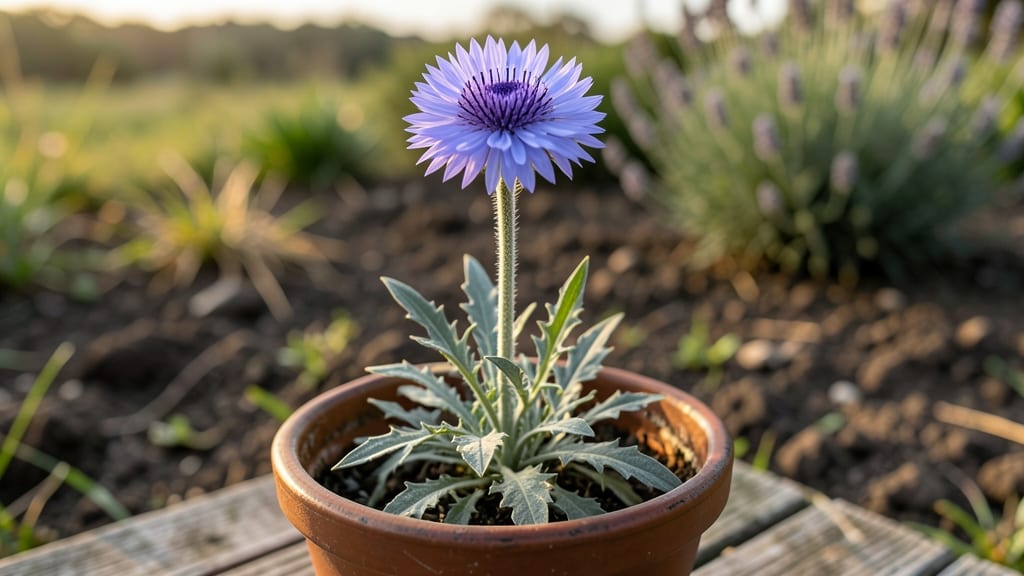
Cornflowers are annual plants that complete their lifecycle in one growing season, though many varieties self-seed aggressively, creating perennial-like displays. Their hardiness spans USDA zones 3-9, where they thrive as short-lived perennials or persistent annuals.
Technically classified as annuals, cornflowers fool many gardeners into thinking they're perennials because their seeds germinate reliably year after year. 🌱 This self-sowing habit makes them excellent for naturalizing in wildflower meadows or cottage gardens, where they'll return annually without replanting.
The key difference lies in their root system—annuals die back completely after flowering, but their prolific seed production ensures new plants emerge each spring.
What truly determines their persistence is your growing conditions. In colder zones (3-5), cornflowers may struggle to self-seed reliably, while in warmer zones (7-9), they become almost weedy in their persistence. The secret to encouraging this behavior is providing well-drained soil and full sun—both critical for seed maturation and germination.
💡 In This Article
- Cornflower Growth Cycle: Annual vs. Self-Seeding Perennial Behavior
- Optimal Cornflower Planting Strategies for Year-Round Blooms
Cornflower growth cycle: annual vs. self-seeding perennial behavior
Cornflowers (Centaurea cyanus) follow a classic annual growth cycle, germinating from seed, flowering in 60-90 days, and completing their lifecycle within a single season. The key to their "perennial-like" persistence lies in their prolific seed production—each plant can release 500-1,500 seeds per stem!
These seeds remain dormant in the soil until conditions are ideal, typically germinating in spring when soil temperatures reach 50-60°F. This delayed germination creates the illusion of perennial behavior, as new plants emerge year after year without human intervention. 🌱
The botanical mechanism behind this involves two critical phases: seed maturation and dormancy breaking. Cornflower seeds require 30-60 days of warm, dry conditions to fully mature and develop hard seed coats.
This protective coating prevents premature germination and allows seeds to survive in the soil for 2-5 years under ideal conditions. The hardiness of these seeds explains why cornflowers often return in the same location for multiple seasons, even though the parent plants die back completely each winter.
Environmental factors dramatically influence this cycle. In USDA zones 7-9, cornflowers typically self-seed more reliably due to milder winters and longer growing seasons, while in colder zones (3-5), seed viability may decline if winter conditions are too harsh.
The soil's moisture content also plays a role—well-drained soil prevents seed rot during germination, while heavy clay can suffocate emerging seedlings. This is why cornflowers thrive in cottage gardens and meadows where they've established naturalized populations over centuries. 💫
Genetic variations further explain why some cornflower varieties appear more "perennial" than others. For example, the 'Black Ball' cultivar produces 20% more seeds per plant than standard blue varieties, while 'Moulin Rouge' has a shorter stem structure that protects seeds from being washed away by rain.
These traits make certain varieties better suited for long-term naturalization projects. The trade-off? More aggressive reseeding can lead to overcrowding if not managed properly.
What most gardeners don't realize is that cornflowers employ a clever survival strategy called stratification. While many seeds need cold treatment to break dormancy, cornflower seeds actually benefit from alternating temperature cycles—warm days (75°F) followed by cool nights (50°F)—which mimics natural seasonal changes.
This explains why they often germinate more reliably in garden beds than in controlled indoor sowing conditions, where temperature fluctuations are minimal. 🌿
For those aiming to create a true perennial display, the solution lies in strategic planting. By sowing cornflower seeds in early spring and late summer, you create overlapping generations that ensure continuous blooms.
The late-summer sowing takes advantage of the 60-day flowering window to produce seeds that will germinate the following spring, while early spring sowings provide immediate color. This two-phase approach mimics how cornflowers would naturally establish in wildflower meadows.