
Flowers
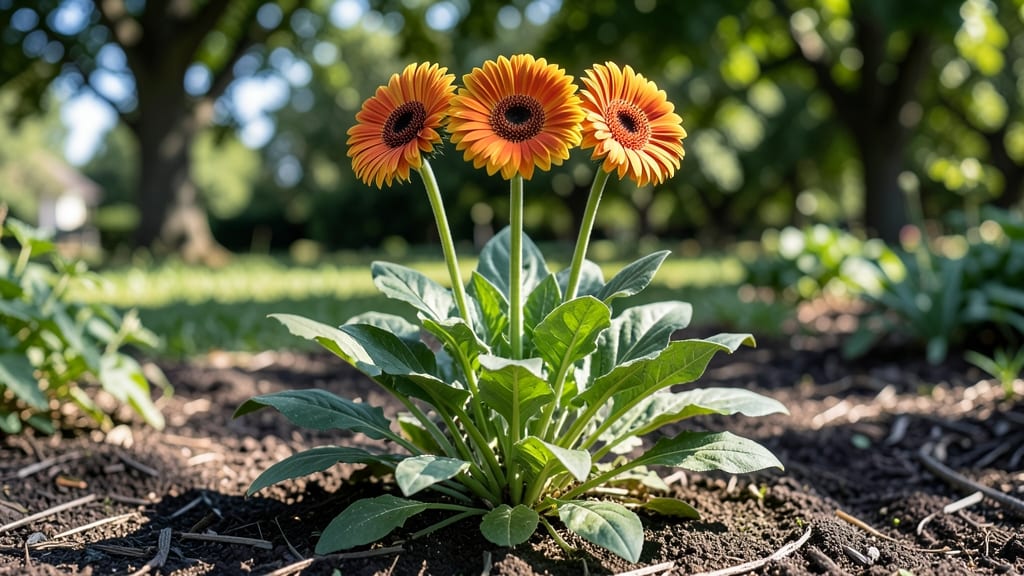
Whether gerbera daisies are annuals or perennials depends entirely on your climate: they die back annually in cold regions but can regrow seasonally in frost-free zones, thanks to their hardy tuberous roots. With the right winter care, you can coax perennial behavior even in marginal climates.
This distinction comes down to the daisy's underground storage system—thick, tuberous roots that store energy for regrowth.
In warmer zones, these roots stay active year-round, allowing the plant to bloom again each season. 🌱 However, in colder areas where frost penetrates the soil, the roots often perish without protection, forcing gardeners to replant annually.
The key difference lies in how well your local winter conditions preserve those roots.
For gardeners in transitional climates, the solution often involves strategic overwintering. Digging up tubers and storing them in dry, cool conditions can trick gerbera daisies into behaving perennially.
Mulching heavily or moving potted plants to sheltered locations also helps. The result? A plant that might otherwise behave like an annual can surprise you with spring regrowth.
💡 In This Article
- How Gerbera Daisy Roots Survive Winter Conditions
- Extending Gerbera Daisy Lifespan Through Winter Care
How gerbera daisy roots survive winter conditions
Gerbera daisies store energy in thick, tuberous roots that resemble small, irregular potatoes. These roots contain starch reserves that fuel regrowth when conditions improve—similar to how dahlias or cannas survive winter. In frost-free zones (USDA zones 10-11), these roots remain active year-round, allowing the plant to bloom repeatedly.
The critical threshold is soil temperature: roots begin to die when exposed to 32°F or below for extended periods, as frost disrupts cellular membranes and causes dehydration.
The root system's depth matters too. Most gerbera tubers sit just 4-6 inches below soil, making them vulnerable to shallow freezes. Varieties like 'Mammoth' or 'Double Classic' have slightly larger tubers (about 2-3 inches in diameter) that store more reserves, giving them a survival advantage in marginal climates.
The roots also produce protective compounds that slow decay during mild winters, but these defenses fail when temperatures drop below 20°F for more than a few hours. 🌡️
What most gardeners overlook is the root's dormancy cycle. Even in warm climates, gerbera roots enter a semi-dormant state during dry seasons, conserving moisture. This natural pause explains why some plants regrow weakly after winter—limited stored energy.
In colder regions, this dormancy becomes permanent without intervention, as the roots lack the time to replenish reserves before the next freeze. The key difference between annual and perennial behavior lies in whether these roots can recover enough stored energy to push new shoots by spring.
Soil type plays a surprising role too. Sandy soils drain quickly, exposing roots to rapid temperature swings, while loamy soils provide insulation. I've seen gerbera tubers survive 15°F nights in well-mulched loam but fail in the same conditions with mulch alone on sandy soil.
The root's ability to maintain moisture balance is just as critical as temperature tolerance. In wet climates, fungal rot from poor drainage can be more damaging than frost itself, as roots suffocate rather than freeze.
Here's what happens at the cellular level: frost causes ice crystals to form in root tissues, rupturing cell walls. Gerbera roots produce antifreeze proteins (similar to those in winter wheat) that lower the freezing point by 2-3°F, but these proteins degrade over time without consistent cold acclimation.
This explains why gerbera tubers dug up in fall and stored properly can regrow perennially—artificial dormancy preserves their cellular integrity until spring planting. 🧬
Consider this comparison: a gerbera tuber left in 50°F soil over winter may lose 30-50% of its stored starches, while one protected at 40°F retains 70-80%. That lost starch translates directly to weaker regrowth or no return at all.
The science shows that even a 10°F difference in winter soil temperature can mean the difference between annual and perennial behavior.