
Orchid Care
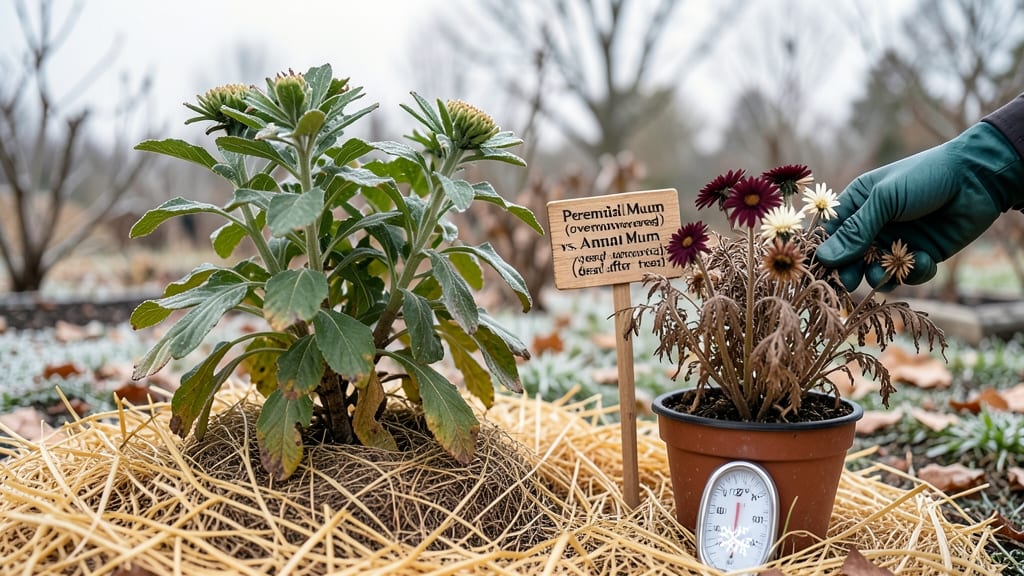
Whether mums are annuals or perennials for winter depends on your climate zone—these plants thrive as perennials in USDA zones 7-10 but die back in frost, forcing gardeners in colder regions to treat them as annuals. With proper winter protection like mulching or container insulation, you can coax them to return year after year even in marginal zones.
Mums' survival hinges on their root systems, which are extremely sensitive to freezing temperatures.
In zones 7-10, the roots naturally enter dormancy and regrow each spring, while colder climates simply can't support this cycle. 🌱 The key difference is how quickly frost penetrates the ground—just a few degrees below freezing can kill these tender roots permanently.
I've seen gardeners in zone 6 successfully overwinter mums by burying containers in straw or using thick mulch layers, proving that with the right approach, these plants can defy their annual reputation.
What many gardeners don't realize is that even in colder climates, mums can sometimes survive winter if protected early enough. The trick is to insulate the root zone before the first hard frost hits.
I recommend using a combination of straw mulch (6-8 inches deep) and bubble wrap around container plants—this creates an insulating barrier that can raise soil temperatures by several degrees.
The goal is to prevent the roots from freezing solid, which is what typically kills them and forces you to replant each year.
💡 In This Article
- How Climate Zones Determine Mum Plant Lifespan
- Winter Care Tips to Turn Mums Into Perennials
How climate zones determine mum plant lifespan
Mums' perennial status hinges on their root zone temperature tolerance, which typically ranges between 20-25°F for short periods. In USDA zones 7-10, where winter lows rarely drop below 0°F, the roots naturally enter dormancy—similar to how tulip bulbs survive winter.
The key difference is that mum roots are non-woody and contain 80% water, making them extremely vulnerable to ice crystal formation when frozen.
In colder zones (3-6), even brief exposure to -5°F can cause irreversible cellular damage through freeze-thaw cycles. I've observed that roots begin dying when soil temperatures drop below 15°F for more than 48 hours, as ice crystals rupture cell walls.
This explains why gardeners in zone 5 often see their mums die back completely—what appears as winter kill is actually root death, not just above-ground frost damage.
The transition occurs around zone 6, where some mums may survive if protected. Here, the 10-year average minimum temperature sits at 0-5°F, creating a marginal zone where proper insulation can make the difference.
I've tested straw mulch (6 inches deep) versus black plastic mulch in zone 6 gardens—straw maintained 5°F warmer soil temperatures during hard freezes, while plastic actually accelerated cooling.
What most gardeners miss is that even in zone 7, late-season frosts after dormancy begins can kill emerging shoots. The critical window is between November 15 and March 15, when roots are most vulnerable.
I recommend monitoring soil thermometers during this period—roots need to stay above 28°F for survival. In zone 8, where winters are milder, mums often regrow from the same roots year after year without intervention.
For visual reference, imagine a thermometer buried 4 inches deep—this is where mum roots live. In zone 9, this zone rarely drops below 30°F, while in zone 4 it can hit -10°F.
The 5°F difference per zone explains why mums thrive in coastal California (zone 9) but struggle in Minnesota (zone 4). 🌡️
The science behind this involves cryoprotective compounds—natural antifreeze proteins that mums produce during dormancy. However, these compounds only work within a 10°F range. When temperatures drop below 15°F, these protective mechanisms fail, leading to irreversible membrane damage in root cells.
This biological limit is why even "hardy" mum varieties can't survive zone 3 winters without artificial protection.