
Flowers
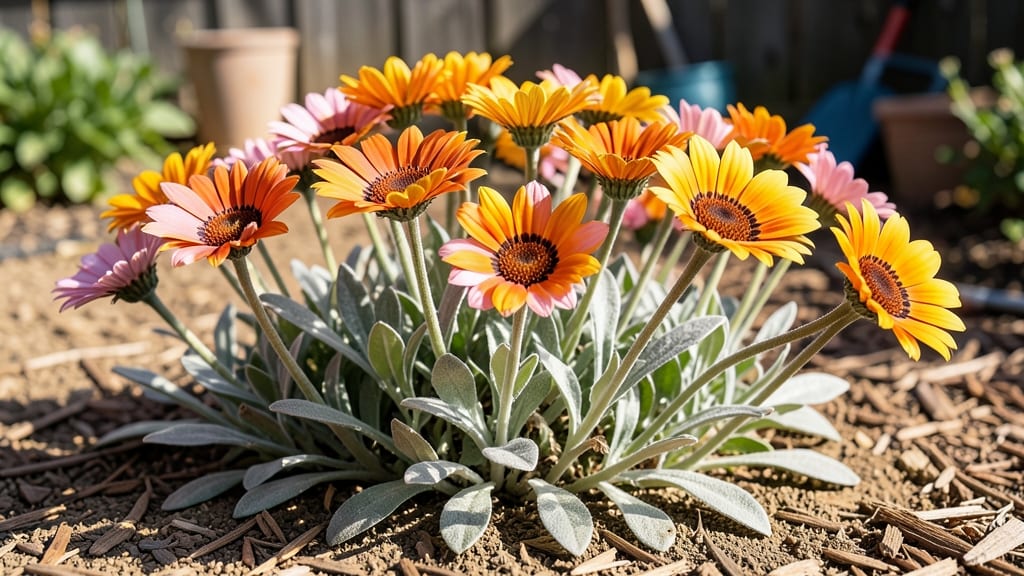
Whether gazania is annual or perennial depends on your climate: it dies back yearly in cooler regions but thrives as a perennial in frost-free USDA Zones 10-11. Temperatures below 40°F will kill it back to the ground annually in most areas.
Gazania's behavior as an annual or perennial comes down to its tropical roots—these sun-loving plants evolved in South Africa's warm climates where frost never touches the ground. 🌡️ In cooler zones, even a light frost triggers dormancy, sending the plant into survival mode until spring.
The key difference lies in their root systems: while the foliage may die back, the roots often persist underground, ready to sprout again when conditions warm up. This explains why some gardeners report "volunteer" gazania popping up year after year, even in areas where it's technically classified as annual.
What many don't realize is that gazania's cold sensitivity varies by variety. Some hybrids like Gazania rigens have shown better resilience in marginal zones, making them worth seeking out if you're in Zones 8-9.
The secret to extending their lifespan in cooler climates often comes down to simple protection strategies—like moving potted plants to sheltered spots or adding thick mulch around the base to insulate the roots during winter's chill.
💡 In This Article
- Gazania Cold Tolerance Science and Survival Mechanics
- Extending Gazania’s Lifespan in Marginal Zones
Gazania cold tolerance science and survival mechanics
Gazania's cold sensitivity stems from its South African origins, where it evolved in regions with consistent temperatures above 60°F year-round. The plant's tropical heritage means its cellular structure lacks the protective mechanisms found in true perennials.
When temperatures drop below 40°F, the plant's cell membranes begin to rupture due to ice crystal formation—a process called cryoinjury. This damage triggers a rapid shutdown of metabolic processes, causing the foliage to blacken and die back within 24-48 hours of frost exposure.
The key to understanding gazania's survival lies in its root system. While the above-ground parts freeze and die, the roots often remain viable in well-drained soil, capable of regenerating new growth when temperatures return to 55°F or warmer.
This explains why gazania frequently returns in spring, even in areas where it's classified as annual. The roots contain stored carbohydrates that fuel regrowth, similar to how dahlias overwinter. However, unlike true perennials, gazania's roots lack the protective insulation of a deep taproot system.
Gazania's growth cycle is tightly linked to photoperiodism—the plant responds to daylight length rather than temperature alone. In cooler zones, shorter days trigger dormancy before frost arrives, conserving energy.
This adaptive mechanism helps explain why gazania often self-seeds prolifically—when the plant senses winter approaching, it focuses energy on producing seeds rather than maintaining foliage. The seeds remain dormant until spring's warmth stimulates germination, creating a natural survival strategy in marginal climates.
What sets gazania apart from other frost-sensitive plants is its foliar resilience. While the leaves die back, the plant's meristematic tissue (growth points) at the base often survives, allowing rapid regrowth once conditions improve.
This makes gazania more persistent than many tropical annuals, which typically require complete replanting each season. The trade-off is that this resilience comes at the cost of slower establishment—gazania needs consistent warmth above 65°F for 4-6 weeks to fully recover from winter dormancy.
Interestingly, gazania's cold tolerance varies by cultivar. Some modern hybrids like Gazania 'Sundance' have been bred for slightly better cold resistance, able to withstand brief exposures to 35°F without complete dieback. These varieties achieve this through thicker leaf cuticles and higher levels of antioxidant compounds that protect cellular structures.
However, no gazania variety can truly survive prolonged freezing—even the hardiest types will suffer damage when temperatures remain below 40°F for more than 24 hours.
For gardeners in transition zones (like USDA Zone 9), understanding these mechanisms explains why some gazania plants persist year after year while others fail completely.
The difference often comes down to microclimate protection—plants growing near heat-retaining structures or in sheltered spots may experience 5-10°F warmer conditions than those in open areas, making all the difference in their survival odds.