
Flowers
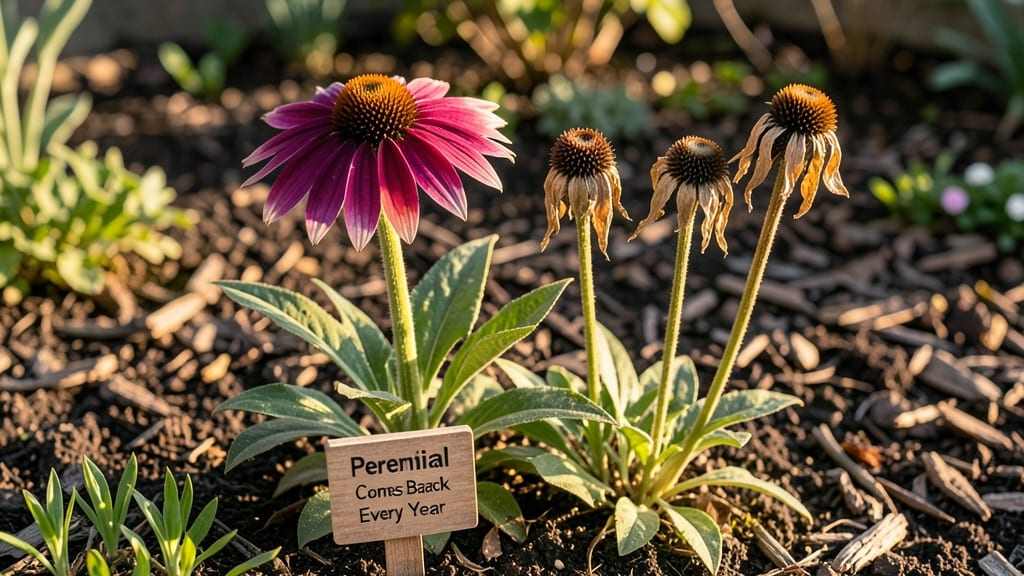
Perennial flowers do come up every year, but their foliage often dies back in winter, leaving only roots or underground stems (rhizomes/corms) to regrow when conditions improve. Cold hardiness determines their survival across seasons.
Yes, perennial flowers reappear annually because they store energy in underground structures like rhizomes or tubers. 🌱 Unlike annuals that complete their life cycle in one season, perennials enter dormancy during cold months, preserving their root systems to sprout fresh growth in spring.
This natural cycle explains why your garden may look bare in winter but bursts back to life when temperatures rise.
What sets perennials apart is their adaptability to seasonal changes. Many varieties, such as coneflowers or black-eyed Susans, develop thickened roots that act like natural batteries, storing carbohydrates to fuel regrowth.
The key factor? Cold hardiness—plants in colder zones (like zone 4) may need extra winter protection, while those in milder climates (zone 7+) often survive with minimal care.
💡 In This Article
- How Perennial Flowers Survive Winter Through Root Systems
- Caring for Perennials During Winter Dieback and Spring Revival
How perennial flowers survive winter through root systems
Perennial flowers rely on specialized underground structures to survive winter's harsh conditions. These include rhizomes (horizontal stems like in daylilies), tubers (thickened roots like peonies), and crowns (compact growth points). Each structure stores carbohydrates produced during the growing season, effectively acting as a biological battery.
For example, a peony's tuber can store enough energy to produce 50-100 buds in spring, while daylily rhizomes develop nodes that become new plants each year. 🌿
The survival mechanism involves three key processes: energy storage, temperature adaptation, and dormancy. During fall, plants convert excess sugars into starches stored in these underground structures. Some species, like hostas, even produce antifreeze proteins that prevent cellular damage at temperatures as low as -20°F.
The crown, where leaves meet roots, often remains active year-round in mild climates, while deeper rhizomes can survive -30°F with proper mulching. This explains why your garden may appear dead in winter but regrows vigorously when soil temperatures reach 50°F.
Not all perennials use the same storage method, which affects their hardiness. Peonies, for instance, have thick, fleshy roots that store water and nutrients, making them ideal for colder zones (3-8).
In contrast, daylilies use fibrous rhizomes that spread horizontally, allowing them to regenerate even if parts are damaged by frost. The texture difference matters too—rhizomes feel woody and segmented, while tubers are smooth and bulb-like, each adapted to their growing environment. 🌱
Spring revival begins when soil temperatures consistently stay above 40°F for 2-3 weeks. The stored energy triggers cell division in the crown or rhizomes, pushing new shoots upward. This is why early spring care—like removing old mulch—can accelerate regrowth.
The timing varies by species: bearded iris shoots emerge when soil hits 55°F, while bleeding heart perennials wait until 60°F to break dormancy.
One fascinating adaptation is how some perennials, like hellebores, bloom in early spring before leaves appear. Their flowers develop from buds formed the previous summer, using stored energy to bloom when competition for sunlight is minimal.
This strategy highlights the precision of their survival mechanisms, where every underground structure plays a role in the plant's annual cycle. 💫
Understanding these root systems helps explain why some perennials thrive in your climate while others struggle. For example, Russian sage (zone 4-8) survives harsh winters through its deep, woody roots, while impatiens (zone 10-11) relies on tender stems that die back completely in frost.
The key takeaway? Perennials don't just "come back"—they've been preparing underground all along. ✨