
Orchid Care
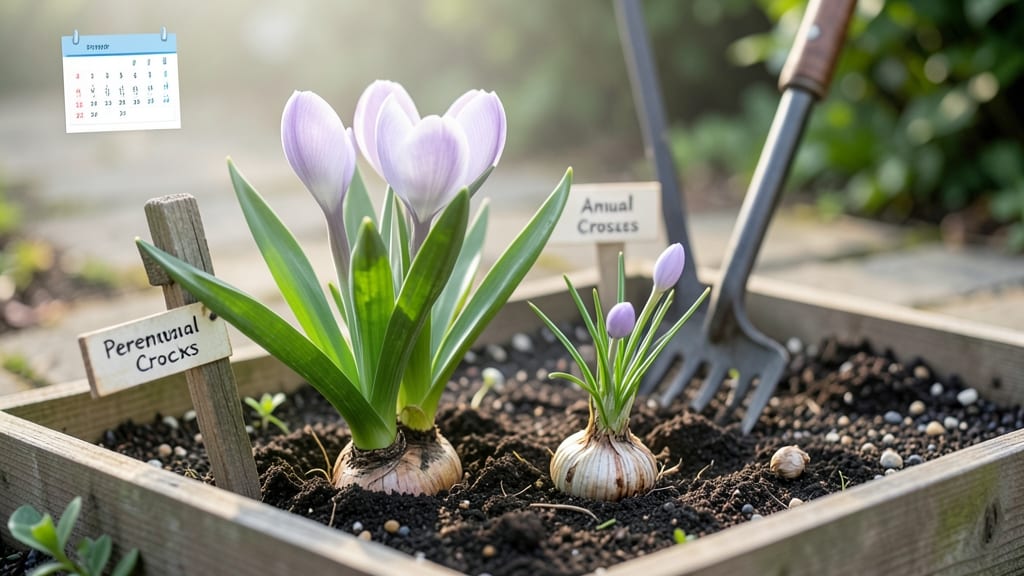
Crocus plants are perennial, not annual, because their corms—thick underground stems—survive winter dormancy and regrow each spring, though some varieties may bloom less vigorously over time without division or care.
Crocus plants stay alive year after year because their corms act like natural storage units, packed with nutrients to fuel regrowth.
Unlike true annuals that die after flowering, these underground bulbs go dormant in winter but wake up when temperatures rise. 🌱 The secret lies in their layered structure—each corm produces new shoots while the old one shrivels, creating a cycle that keeps them blooming for years.
Even in colder climates, proper soil drainage and mulching help protect them through harsh winters.
This perennial nature means you’ll see those cheerful blooms return annually with minimal effort. Just remember to divide overcrowded clumps every few years to keep flowers vibrant.
The key is patience—some varieties may take a year or two to fully establish, but once they do, they’ll reward you with early spring color for decades.
💡 In This Article
- How Crocus Corms Enable Perennial Growth
- Caring for Perennial Crocus to Maximize Blooms
How crocus corms enable perennial growth
Crocus plants thrive as perennials thanks to their unique corms—thick, layered underground stems that function like nature's energy banks. Unlike true annuals that complete their life cycle in one season, crocus corms store nutrients and moisture during dormancy, allowing them to regenerate each spring.
These corms grow in concentric layers, with each new layer forming around the previous one, creating a structure that can last for years.
The magic happens in their dormancy cycle. When temperatures drop below 50°F, the corms enter a state of suspended animation, halting growth but maintaining viability. This adaptation lets them survive freezing conditions in many climates.
What's fascinating is how they "wake up" when soil temperatures reach around 45-50°F—before most spring bulbs like tulips (50-55°F), which is why crocuses often bloom first in early spring. 🌱
This perennial behavior differs from annuals because crocus plants don't rely on seeds for regeneration. Instead, they produce new shoots directly from the corm's basal plate, where growth hormones activate. The old corm often shrinks and dies back, while the new one grows larger, creating a self-sustaining cycle.
This process explains why established crocus plants can bloom reliably for 5-10 years or more with proper care.
One key difference from true bulbs (like daffodils) is that crocus corms don't have papery tunics for protection. Instead, they develop a tough outer layer that prevents rot in wet conditions. This adaptation helps them thrive in rocky, well-drained soils where other bulbs might struggle.
The corm's ability to regenerate from just a small piece—even a single scale—makes them remarkably resilient garden plants.
Consider this: A single crocus corm planted in autumn can produce 3-5 new corms by next summer, creating a natural colony. This vegetative reproduction is what allows crocuses to spread slowly but steadily over time.
The plant's ability to delay flowering until it's fully established (often taking 2-3 years) ensures it has enough stored energy to produce vibrant blooms year after year.
What most gardeners don't realize is how this perennial nature affects bloom performance. While the corms themselves are long-lived, their flowering energy diminishes over time without proper care.
This is why you'll often see crocuses bloom less vigorously after 5-7 years—their energy reserves get depleted without division to refresh the corms. This biological mechanism explains why gardeners often recommend dividing clumps every 3-5 years to maintain optimal blooming.