
How To
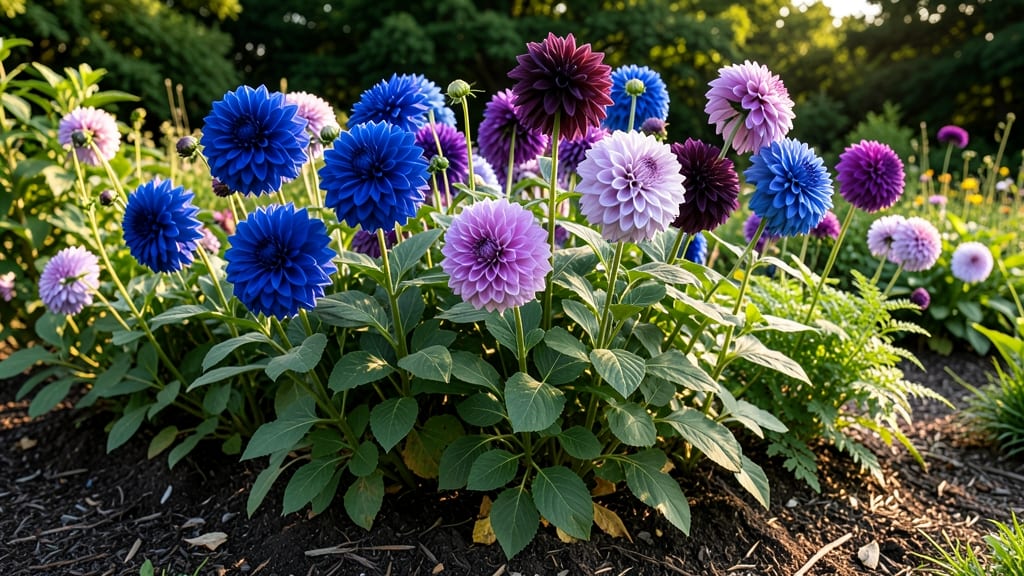
Bluestone Perennials dahlias thrive in cold climates by selecting hardy varieties like 'Café au Lait' or 'Karma Choc', planting tubers deep, and using mulch to insulate roots. Choose early-blooming types and prune aggressively to prolong fall color before winter dormancy.
Cold-hardy dahlias from Bluestone Perennials are bred to withstand chilly temperatures by developing thick, woody tubers that store energy for regrowth. 🌱 The key is selecting varieties labeled for USDA zones 3-5, where winter temperatures can drop below 0°F.
These plants also benefit from late-summer pruning to redirect energy into root development before frost, ensuring stronger regrowth next spring.
For best results, plant tubers 6-8 inches deep in well-draining soil and apply a 4-6 inch layer of mulch after the first frost. This insulation protects roots from extreme temperature swings, while early-blooming varieties like 'Café au Lait' provide vibrant color before winter sets in.
The secret? Start pruning back stems in late summer to encourage new growth and extend the blooming season into fall.
💡 In This Article
- How Cold-Hardy Dahlia Varieties Survive Winter
- Step-by-Step Guide to Planting and Mulching for Extended Blooms
How cold-hardy dahlia varieties survive winter
Cold-hardy dahlias from Bluestone Perennials rely on a combination of biological adaptations to endure freezing temperatures. Their tubers develop a thick, cork-like exterior that acts as natural insulation, similar to how a tree trunk protects its core.
Varieties like 'Café au Lait' and 'Karma Choc' produce tubers that can survive down to -20°F when properly protected, thanks to their ability to convert stored starches into sugars that act as antifreeze within their cells. This process, called cold acclimation, prevents ice crystals from forming and damaging vital tissues.
The leaf structure also plays a critical role. Hardy dahlias develop smaller, more compact foliage that reduces surface area exposed to cold winds, minimizing heat loss. Their stems become woody and thickened in late summer, creating a stronger framework that resists breakage under snow or ice.
What's fascinating is how these plants respond to temperature cues: when nighttime temperatures consistently drop below 50°F for several weeks, they trigger dormancy by slowing metabolic processes and redirecting energy toward root and tuber development.
USDA zone ratings help gardeners match varieties to their climate. Bluestone Perennials' cold-hardy selections thrive in zones 3-5, where winters can be brutal. For example, 'Café au Lait' (zone 3) handles -40°F with proper mulching, while 'Karma Choc' (zone 4) tolerates -30°F.
The difference comes down to tuber depth and root mass: deeper planting (6-8 inches) creates a thermal buffer against ground-level temperature fluctuations, while larger root systems store more energy reserves for spring regrowth.
What sets these varieties apart is their ability to avoid complete dieback—a common issue with tender dahlias. When temperatures drop below 20°F, non-hardy types suffer irreversible damage to their cambium layer (the growth tissue), but cold-hardy dahlias enter a state of suspended animation.
Their cells remain viable until spring warmth reactivates growth, much like how some perennials survive winter underground. This resilience explains why these dahlias can produce blooms even in short growing seasons.
Consider this comparison: a tender dahlia planted in zone 5 will likely die back completely in winter, requiring annual replanting. In contrast, a properly cared-for 'Café au Lait' in the same zone will emerge year after year with minimal intervention.
The secret lies in their genetic ability to balance growth vigor with cold tolerance—a trait Bluestone Perennials has perfected through selective breeding over decades.
For gardeners in marginal zones (like zone 6), the choice between dormancy and dieback often comes down to timing. If you mulch heavily by mid-October and protect tubers with 12+ inches of insulation, even zone 6 plants can survive winters that dip to 0°F.
The key is creating a microclimate where soil temperatures remain above 20°F—the threshold where tuber damage begins.