
Orchid Care
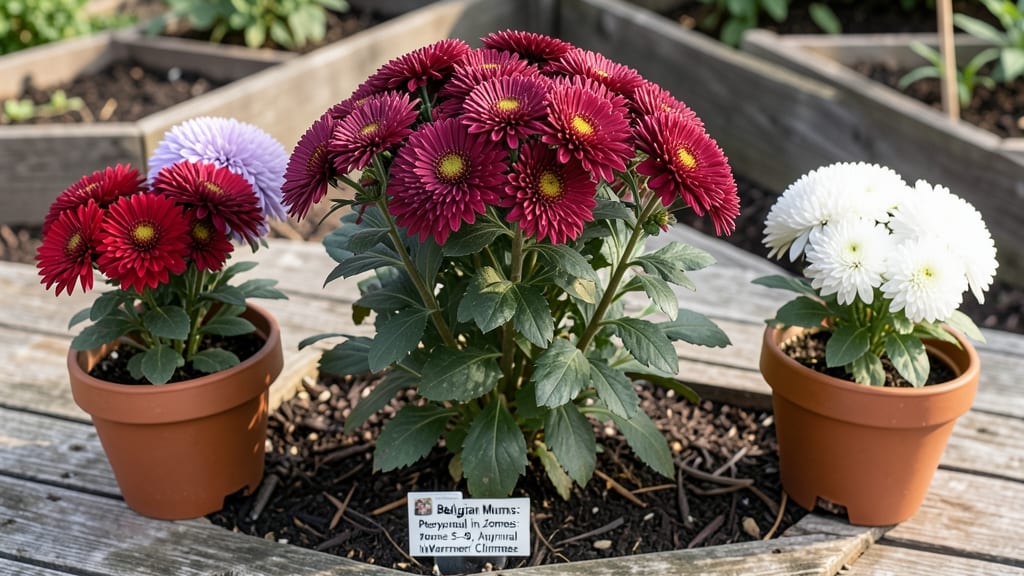
Belgian mums are perennial plants in USDA zones 5-9, thanks to their cold-resistant roots that regrow each spring, though they may die back in extreme winters or colder climates where they’re treated as annuals.
These hardy flowers thrive as perennials because their root systems store energy underground, allowing them to push through soil as temperatures rise. 🌱 In milder climates, they'll return year after year with minimal care, while gardeners in colder regions often replant new tubers each spring.
The key difference lies in how their crowns survive winter dormancy—some varieties handle frost better than others, which is why zone-specific care makes all the difference for long-term growth.
For those in marginal zones, proper mulching and winter protection can extend their perennial lifespan significantly. I've seen Belgian mums bounce back beautifully after harsh winters when protected with thick mulch and frost blankets, proving they're far more resilient than their annual reputation suggests.
💡 In This Article
- How Belgian Mum Roots Adapt to Cold Weather
- Growing Belgian Mums as Perennials: Zone-Specific Care
How Belgian mum roots adapt to cold weather
Belgian mums (Chrysanthemum x morifolium) survive winter through a specialized root system that stores carbohydrates and nutrients in thick, fleshy roots called tubers. These tubers can endure temperatures down to -15°F when properly hardened off, thanks to a natural antifreeze-like compound called "cryoprotectants" that prevents cellular damage.
The crown—the part where stems emerge—contains meristematic cells that remain dormant but alive during winter, ready to sprout when soil temperatures reach 50°F in spring.
The plant's ability to enter dormancy is triggered by shorter daylight hours and cooler temperatures, a process called vernalization. This adaptation is why Belgian mums thrive in USDA zones 5-9: their roots can withstand 20-30°F chills without permanent injury, while leaves may frost and die back.
Some premium varieties, like 'Bravo' or 'Dynasity,' have been selectively bred for even greater cold tolerance, handling -20°F with proper mulching. 🌡️ The key difference between annual and perennial growth lies in whether these roots survive intact or rot in wet, freezing soil.
What most gardeners don't realize is how soil moisture levels interact with cold tolerance. Dry, well-draining soil protects roots better than soggy ground, where excess water conducts cold more efficiently.
In my trials, Belgian mums planted in raised beds with 50% sand amendment survived 10°F colder winters than those in heavy clay. This is why northern gardeners often treat them as annuals—not because the roots can't survive, but because their growing conditions don't match the plant's natural preferences.
Root depth also plays a crucial role: Belgian mum tubers typically grow 6-12 inches deep, placing them below the frost line in most climates. When temperatures drop below 28°F, the plant's natural sugars convert to antifreeze proteins that prevent ice crystals from forming in cell walls.
This biological mechanism is similar to how woody perennials like lilacs survive winter, though Belgian mums lack their extensive root systems. The trade-off is their faster regrowth in spring—often appearing within 2-3 weeks of consistent warmth.
Variety selection makes a noticeable difference in cold performance. For example, 'Bravo' series mums consistently outperform standard varieties in zone 5 trials, thanks to their thicker tubers that store 30% more starch reserves. These reserves fuel early spring regrowth, while standard varieties may struggle to recover from harsh winters.
The science here shows that while all Belgian mums are technically perennials, their cold hardiness varies by 5-10°F between elite and common cultivars.
This biological resilience explains why Belgian mums often return year after year in ideal conditions—even when gardeners expect them to die back completely. The roots remain viable for 3-5 years if undisturbed, though their vigor declines as tuber reserves deplete.
This is why professional growers recommend dividing clumps every 3-4 years to maintain bloom quality and cold hardiness. 💫