
Flowers
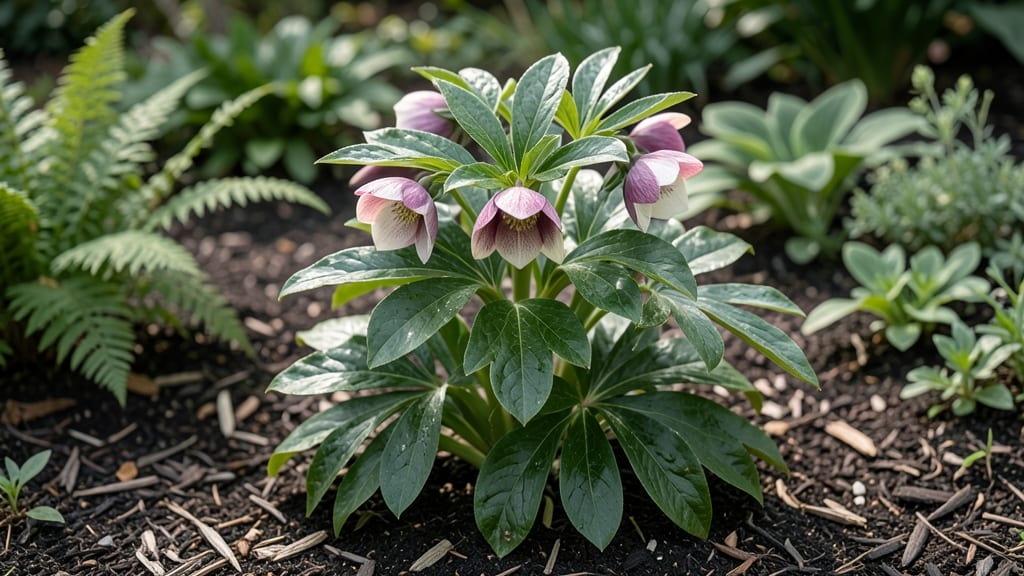
Hellebore is a perennial plant with hardy roots that survive winter dormancy and regrow each spring, thriving in shaded garden conditions with minimal care. Its evergreen foliage often persists year-round in mild climates, while flowers bloom early in the season before most perennials emerge.
Hellebore earns its reputation as a perennial powerhouse thanks to its unique underground structure—a thick, corm-like root system that stores nutrients and energy.
Unlike annuals that die back completely each winter, hellebore roots remain dormant but alive beneath the soil, ready to push new growth when temperatures rise. 🌱 This makes it one of the first plants to brighten gardens in late winter or early spring, often flowering before daffodils or tulips even appear.
The secret lies in its natural cold hardiness, allowing it to thrive in USDA zones 4 through 9 without special winter protection.
What truly sets hellebore apart is its low-maintenance nature—once established, it requires little more than occasional watering and protection from slugs. The plant's ability to self-seed and spread gradually over time means you'll enjoy its beauty for decades with minimal effort.
Many gardeners consider it a "forever plant" precisely because it returns year after year with minimal intervention, making it perfect for shaded areas where other perennials might struggle.
💡 In This Article
- How Hellebore Roots Survive Winter Dormancy
- Planting and Caring for Hellebore as a Long-Term Garden Perennial
How hellebore roots survive winter dormancy
The secret to hellebore's perennial success lies in its specialized corm-like root system, which functions like a natural storage battery. These thick, fleshy roots store starches and sugars during the growing season, converting sunlight into chemical energy that fuels winter survival.
Unlike bulbs (like tulips), hellebore roots don't shrink dramatically in winter—they maintain a consistent size while entering a state of physiological dormancy, where metabolic activity slows to just 5-10% of normal levels. 🌱 This adaptation allows them to survive temperatures as low as -25°F (-32°C) in protected microclimates, though most varieties thrive in zones 5-9 with mulch protection.
What makes hellebore uniquely resilient is its ability to regulate moisture loss through thick, waxy root coatings that prevent dehydration. Studies show these roots can maintain viability with as little as 15% moisture content during dormancy—far drier than most garden perennials.
Compare this to hostas, which typically require winter mulching to prevent root heave, or ferns, which often die back completely in harsh winters. Hellebore's roots also develop a protective callus layer at the base where they meet the soil, acting like a natural insulation barrier against freezing temperatures.
The plant's early spring emergence (often as early as February in mild climates) is directly tied to its root system's ability to sense temperature changes. When soil temperatures reach 40-45°F (4-7°C), the roots begin producing growth hormones that trigger shoot development.
This timing advantage means hellebore often flowers 4-6 weeks before traditional spring perennials like peonies or irises—giving it the nickname "Lenten rose" in many regions. The flowers themselves contain antifreeze proteins similar to those in winter wheat, which help protect delicate tissues during late frosts.
One fascinating adaptation is hellebore's ability to photosynthesize even in low light, thanks to specialized chlorophyll structures in its evergreen leaves. While most perennials go completely dormant, hellebore maintains 10-20% of its leaf mass throughout winter, allowing it to capture sunlight for limited energy production.
This partial activity explains why established plants often show new growth by late January in southern climates—long before other shade plants stir.
The trade-off is that this winter activity makes young plants (1-2 years old) more vulnerable to cold damage, which is why gardeners often recommend waiting until spring to plant them.
Consider this comparison between hellebore and other shade perennials:
- Hellebore: Corm-like roots with 15-20% moisture retention during dormancy, 4-6 week earlier flowering than most perennials
- Hostas: Rhizomatous roots needing 30-40% moisture to prevent winter dieback, 2-3 week later emergence
- Ferns: Fibrous roots that completely dry in winter, requiring spring mulch protection
The key takeaway is that hellebore's perennial nature isn't just about surviving winter—it's about strategic energy conservation combined with early-season advantage.
This dual capability explains why established plants can live for 20-30 years with proper care, while also making them one of the most reliable early-season bloomers in shaded gardens. 💫