
Flowers
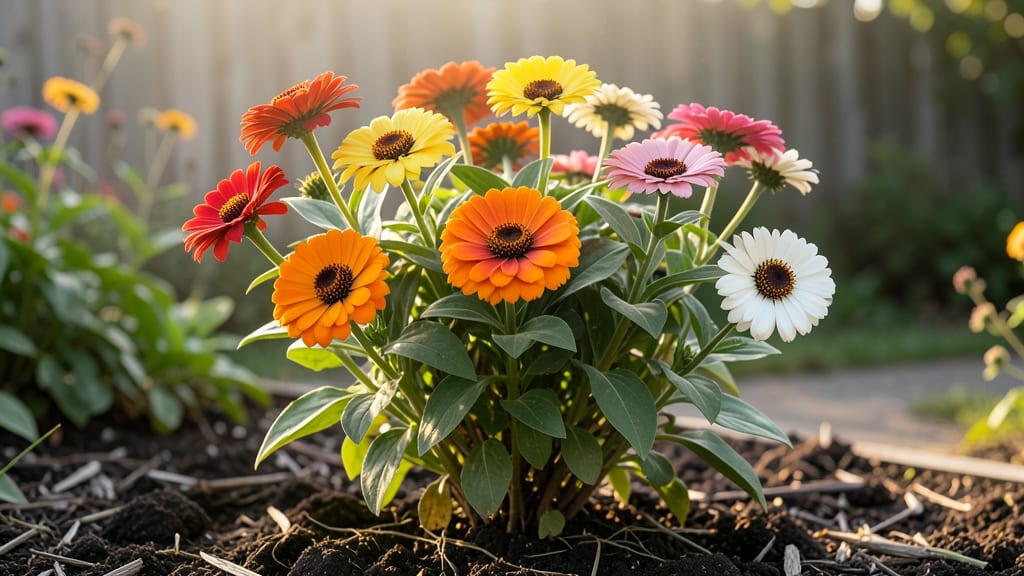
Zinnia flowers are not perennials in most climates; they die back annually after frost and are typically grown as tender annuals. However, in warm U.S. hardiness zones (9-11), they may self-seed or persist as short-lived perennials with proper winter care.
Most zinnias behave like annuals because they can't survive freezing temperatures—their delicate stems and foliage turn mushy when frost hits. 🌱 The good news? In frost-free zones, they'll often resprout from seeds dropped by the previous year's plants, creating natural regrowth.
Even in cooler areas, gardeners can trick zinnias into lasting longer by saving seeds or overwintering cuttings indoors.
What sets zinnias apart from true perennials like coneflowers is their shallow root system, which struggles to store enough energy to regenerate after winter. That's why they typically need replanting each spring unless you're in their native tropical comfort zone.
💡 In This Article
- Why Zinnias Die Back in Cold Climates
- Extending Zinnia Lifespan in Cold Regions
Why zinnias die back in cold climates
Zinnias succumb to cold because they originate from Mexico and Central America, where temperatures rarely drop below 50°F. Their thin, herbaceous stems lack the woody structure of true perennials like coneflowers, which can withstand -20°F winters.
When frost hits, the plant's cellular membranes rupture from ice crystal formation, causing irreversible damage within 24 hours. 🌱 This rapid dieback explains why zinnias are classified as tender annuals in most U.S. regions.
The real vulnerability lies in their shallow root systems, which typically extend only 6-12 inches deep. Unlike coneflowers that develop thick, carbohydrate-rich roots to survive winter, zinnias store minimal reserves. Their energy is focused on rapid above-ground growth during the growing season rather than underground storage.
Even a light frost (32°F) can kill the entire plant, leaving no chance for regeneration.
Comparing zinnias to true perennials reveals their fundamental difference: hardy plants like black-eyed Susans produce deep taproots filled with starches that act as winter food reserves. Zinnias, however, rely on quick reproduction through seeds rather than persistent vegetative growth.
This biological trade-off explains why they thrive as annuals in cooler climates but struggle to persist through freezing winters.
What makes this particularly frustrating for gardeners is how zinnias often look healthy right up until the first frost. Their vibrant blooms and upright growth can fool you into thinking they're more resilient.
The damage occurs at the cellular level—water in the plant's cells expands when freezing, creating microscopic tears that destroy the plant's ability to transport nutrients. This is why you'll see zinnias still standing but completely hollowed out after just one night below 35°F.
Interestingly, zinnias exhibit a survival strategy that's more common in tropical plants: they prioritize seed production over winter survival. When temperatures drop, they focus energy on developing seeds rather than strengthening roots.
This explains why you often see zinnias self-seeding prolifically in warm zones—they're designed to propagate through seeds rather than persistent growth.
For gardeners in zones 3-8, this means zinnias will never become true perennials without human intervention. Their natural lifecycle is tied to warm seasons, and any attempt to overwinter them requires creating artificial conditions that mimic their tropical origins.
The key difference between zinnias and perennial flowers like lavender is that zinnias simply weren't evolved to survive freezing temperatures—they're biological annuals at heart.