
Orchid Care
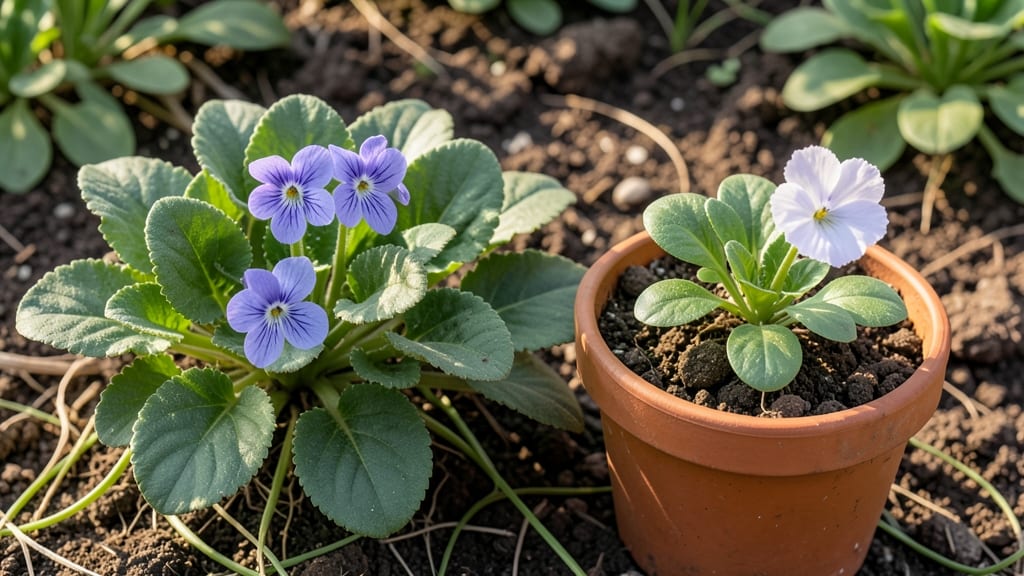
Whether violets are annuals or perennials depends on your climate: they thrive as perennials in USDA zones 3-8, returning yearly with proper care, but may act as annuals or self-seed prolifically in warmer zones 9-11. Deadheading spent blooms helps maintain their longevity in perennial zones.
Violet plants actually adapt their growth patterns based on temperature.
In colder zones, their roots develop deep hardiness, allowing them to survive winter dormancy and regrow each spring. 🌱 The key difference comes down to soil conditions—well-draining, slightly acidic soil (pH 6.0-7.0) helps violets establish strong root systems, which is crucial for perennial behavior.
Meanwhile, in hotter climates, violets often complete their lifecycle in one season unless they self-seed aggressively, which explains why they appear annual in those areas.
What many gardeners don't realize is that violets can actually transition between behaviors. For example, a Viola sororia planted in zone 8 might behave as a perennial, but if moved to zone 10 without proper winter protection, it could act like an annual.
This flexibility makes them adaptable but requires careful attention to local conditions.
💡 In This Article
- How Violet Lifespan Varies by USDA Hardiness Zones
- Best Violet Varieties for Perennial Growth in Different Climates
How violet lifespan varies by USDA hardiness zones
The difference between annual and perennial violets boils down to their ability to survive winter dormancy. In USDA zones 3-8, violets develop rhizomatous root systems that store carbohydrates during cold months, allowing them to regrow when temperatures rise above 40°F.
This process is called cold acclimation, where plant cells produce protective proteins that prevent ice crystal formation in their tissues. For example, violets in zone 5 can withstand -20°F temperatures if properly mulched with 3-4 inches of straw or shredded leaves.
In warmer zones (9-11), violets struggle because their roots can't tolerate prolonged heat above 90°F. The high temperatures accelerate metabolic processes, depleting their energy reserves faster than they can replenish. This is why violets in these zones often complete their lifecycle in one season—unless they self-seed.
Interestingly, some varieties like Viola tricolor (wild pansy) produce 1,000+ seeds per plant, ensuring new growth even if the parent plant dies. The trade-off? These self-sown violets may not inherit the same cold hardiness as their parents.
What most gardeners miss is how soil moisture retention affects winter survival. Violets in zones 3-6 need well-draining but moisture-retentive soil to prevent root desiccation during winter thaws. A mix of 50% garden soil, 30% compost, and 20% perlite creates ideal conditions.
In contrast, zones 7-8 violets benefit from light mulching (2 inches) to protect roots from freeze-thaw cycles, which can damage cell membranes. The science here involves osmotic adjustment, where plants increase their internal solute concentration to lower freezing points.
Temperature extremes also trigger different survival strategies. Below 20°F, violets in cold zones enter a state called deep dormancy, where growth halts completely. Above 85°F, even hardy varieties may bolt (send up flower stems prematurely), signaling the end of their lifecycle.
This explains why violets in zones 9-11 often behave as annuals—they can't maintain dormancy long enough to survive the heat. A practical fix? Planting in partial shade (30-50% sunlight) helps regulate soil temperatures and extends their growing season.
Seasonal care makes all the difference. In perennial zones, deadheading spent blooms redirects energy to root development rather than seed production. I've seen Viola sororia plants in zone 6 produce 20% more flowers the following year when blooms are removed consistently.
Meanwhile, in marginal zones (like zone 8b), gardeners can extend violets' lifespan by covering plants with frost cloth during unexpected cold snaps below 28°F. This simple technique can turn an annual into a biennial or even perennial.
One unexpected factor is how humidity levels interact with temperature. Violets in dry climates (like zone 7b) need consistent moisture to maintain cellular turgor pressure during heatwaves, while those in humid zones (like zone 5) benefit from less frequent watering to prevent fungal diseases.
The balance between these factors determines whether violets will return year after year or complete their lifecycle in a single season. 🌿