
Plants
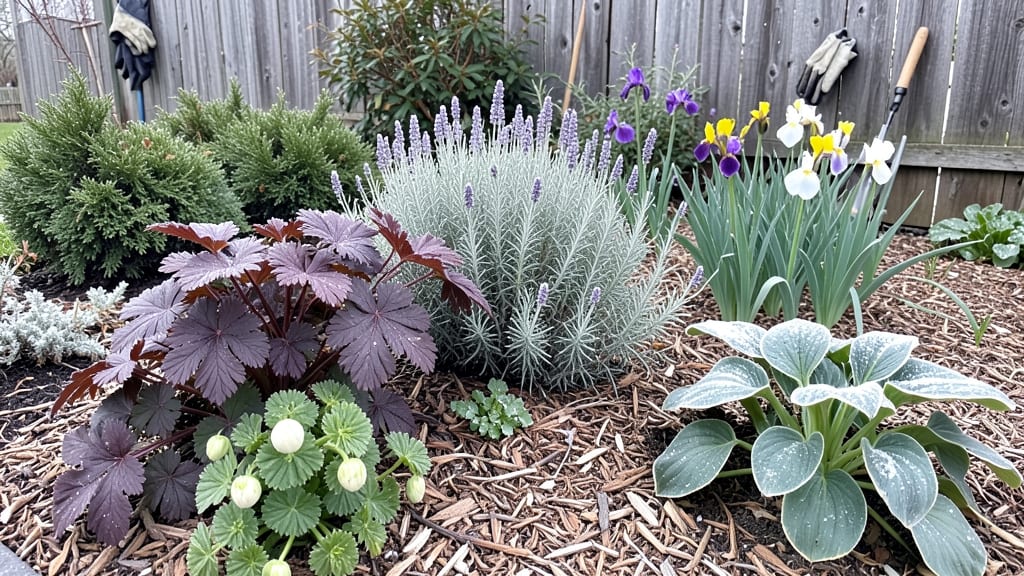
Perennials aren't year-round plants in the traditional sense, but their deep root systems store energy and nutrients underground, allowing them to regrow above ground each spring after winter dormancy.
While perennials don't produce foliage or flowers continuously like annuals, their underground structures—such as rhizomes, tubers, and crowns—act as natural energy banks.
These roots store carbohydrates and water during the growing season, then use them to fuel new growth when temperatures rise. 🌱 For example, peonies and hostas rely on thick, fleshy roots to survive harsh winters, while daylilies use their crowns to regenerate quickly in spring.
The key difference from annuals is this built-in resilience: perennials simply enter a dormant phase rather than dying back completely each year.
This biological adaptation explains why perennials dominate long-term gardens—they require less replanting and often become more robust with age. However, their success depends on proper winter care, including mulching and selecting varieties suited to your climate zone.
For instance, lavender thrives in Mediterranean climates but may struggle in cold northern regions without protection.
💡 In This Article
- How Perennial Root Systems Survive Winter Dormancy
- Choosing Perennials for Year-Round Garden Success
How perennial root systems survive winter dormancy
Perennial plants have evolved specialized underground structures that act like biological batteries, storing nutrients and water during warm months to fuel regrowth when conditions improve.
The most common storage organs include rhizomes (horizontal stems like in iris), tubers (thickened roots like in dahlias), and crowns (short stems at soil level like in daylilies). These structures contain high concentrations of starches and sugars—up to 30-50% of their dry weight—which serve as winter energy reserves.
For example, a single peony root can store enough nutrients to support 10-15 years of growth.
The survival mechanism involves multiple adaptations. First, these roots produce antifreeze proteins that lower their freezing point by 2-5°C, preventing cell damage in subzero temperatures.
Second, they enter a state called endodormancy, where growth hormones like auxin are suppressed while stress hormones like abscisic acid increase—similar to how deciduous trees prepare for winter. The root cells also accumulate proline, an amino acid that protects cellular structures from freezing damage.
This explains why perennials like coneflowers can survive -30°F (-34°C) winters while still blooming vigorously the following spring.
What's fascinating is how these roots detect seasonal changes. Photoperiod (day length) triggers hormonal shifts that signal dormancy onset, while temperature fluctuations fine-tune the timing. For instance, hostas begin storing carbohydrates in their thick, fleshy roots when night temperatures drop below 50°F (10°C) for several weeks.
The roots then enter a secondary dormancy phase where they remain metabolically inactive until spring warmth stimulates bud break. This precise biological clock ensures perennials emerge at optimal times for their local climate.
Not all perennials use the same storage strategy. Some, like asparagus, develop corms (solid underground stems), while others like ferns rely on rhizomes that spread horizontally to create new growth points.
The key similarity is that all these structures maintain living cells throughout winter, ready to resume growth when conditions improve. This contrasts with annuals, which complete their entire life cycle in one season and produce seeds for the next generation rather than relying on stored energy.
Understanding these mechanisms helps explain why perennials often become more vigorous with age. Each year, their root systems expand and store additional nutrients, creating a compound growth advantage.
For example, a five-year-old lavender plant can have roots extending 3-4 feet deep, giving it access to water and nutrients that younger plants can't reach. This deep root system also makes perennials more drought-tolerant once established, as they can tap into moisture from lower soil layers during dry periods.
There's a practical implication here for gardeners: when selecting perennials, consider both their cold hardiness ratings (USDA zones) and their root type. Plants with thick, fleshy roots like peonies handle cold better than those with fibrous roots like many ornamental grasses.
Additionally, perennials with multiple growth points (like daylilies) are more resilient to damage than those with single stems (like delphiniums), which may need staking for winter protection.