
Flowers
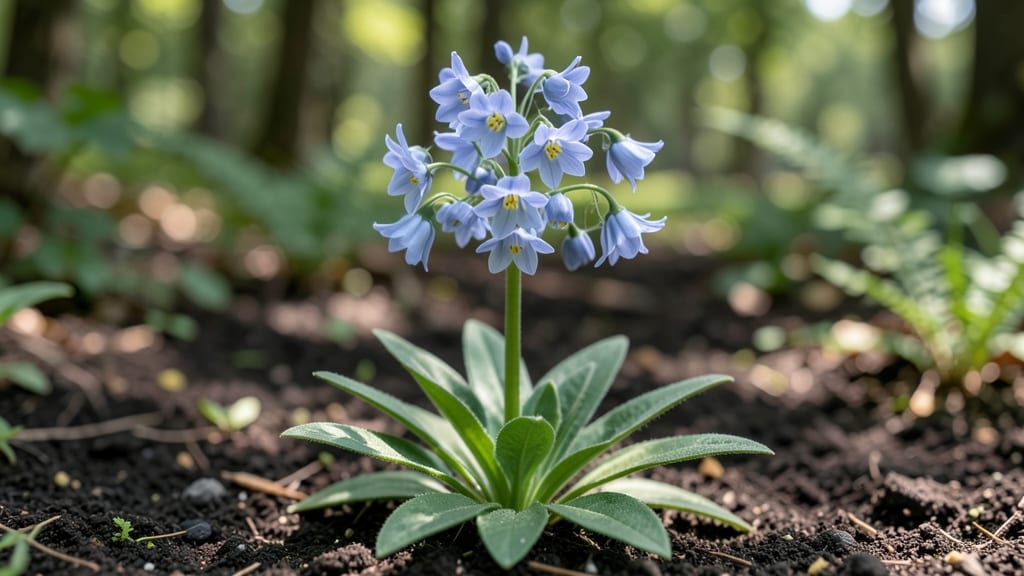
Are forget-me-not flowers perennials? No—they're usually annuals or biennials with one to two-year lifespans. In colder regions, they may survive winter but rarely rebloom reliably, often requiring annual replanting for continuous garden displays.
Forget-me-nots thrive best as seasonal plants because their roots and stems aren't built to endure harsh winters in most climates. 🌱 While they can push through light frost, the cold often weakens their structure, leading to poor reblooming.
Gardeners in Zone 4 or colder typically treat them like annuals, replanting fresh seeds each spring for vibrant summer blooms. The key difference? True perennials like hostas or coneflowers regrow from the same root system year after year—something forget-me-nots rarely do outside their native Alpine habitats.
What changes this behavior? Mulching heavily in fall and choosing hardier varieties (like Myosotis sylvatica) can sometimes extend their lifespan, but even then, consistent blooms require annual attention. For gardeners who love their delicate blue flowers, treating them as annuals actually guarantees more reliable color—no waiting for uncertain reblooms.
💡 In This Article
- Forget-Me-Not Growth Habits in Different Climates
- Tips for Treating Forget-Me-Nots as Annuals in Cold Gardens
Forget-me-not growth habits in different climates
Forget-me-nots (Myosotis spp.) thrive best in temperate climates (Zones 3-8), where they behave as annuals or biennials because their root systems lack the deep hardiness of true perennials.
Their delicate stems and shallow roots freeze back in Zone 4 and colder, where winter temperatures drop below -20°F (-29°C).
In milder zones (like Zone 7), they may self-seed prolifically, creating the illusion of perennial behavior—but this is actually new plants emerging from dropped seeds, not the same roots reblooming.
The key difference lies in their cold tolerance thresholds. Native Alpine forget-me-nots (Myosotis alpestris) can survive -30°F (-34°C) when fully dormant, but garden varieties rarely match this hardiness.
Their leaves yellow and die back at 32°F (0°C), and stems blacken in frost—unlike perennials like heuchera, which remain evergreen or regrow from protected crowns. 🌡️ Even in Zone 5, forget-me-nots often produce weak second-year growth, with flowers that are smaller and less vibrant than their first-year display.
Seasonal dormancy patterns explain this behavior. Forget-me-nots store minimal energy in their roots compared to perennials. While they may survive winter in protected microclimates (like under evergreen trees), their energy reserves are typically exhausted by late summer.
This is why gardeners in cold climates see no reliable reblooming—the plant's resources are focused on seed production rather than regrowth. In contrast, true perennials like black-eyed Susans allocate 30-50% of their energy to root storage, ensuring stronger returns the following year.
Soil moisture plays a critical role too. Forget-me-nots prefer consistently moist but well-drained soil—a condition that breaks down in winter freeze-thaw cycles. When soil freezes and thaws repeatedly, it creates air pockets that suffocate shallow roots.
This is why forget-me-nots often disappear entirely in harsh winters, even when protected by mulch. In Zone 6 and warmer, their annual lifecycle becomes more predictable, with blooms lasting 4-6 weeks in spring if deadheaded regularly.
What most gardeners don't realize is that forget-me-nots' native Alpine habitat (where they grow as perennials) has short, cool summers and long, cold winters—but with minimal temperature swings. The rapid freeze-thaw cycles of Midwestern winters mimic extreme alpine conditions, which their garden varieties simply can't handle.
For reliable color, treating them as annuals in cold zones actually works better—fresh seeds each spring guarantee vibrant, disease-free plants rather than struggling second-year survivors.
Here's the science: Forget-me-nots lack secondary growth (the ability to thicken stems/roots year after year). Their growth is monocarpic—meaning they focus all energy on flowering and seeding in their first or second year, then die.
This is why you'll never see a 10-year-old forget-me-not plant in a garden, unlike hostas or peony roots**, which can live for decades. 🌱