
Orchid Care
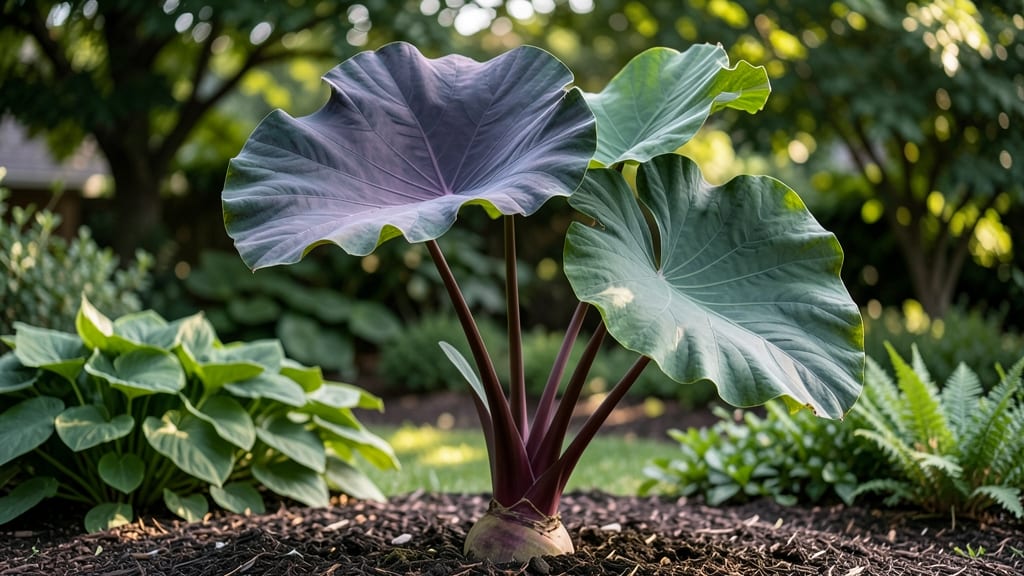
Whether elephant ears are perennial or annual depends on your climate: they thrive as perennials in USDA zones 9-11 but must be dug up and stored like annuals in colder regions, since their tuberous roots freeze in frost.
Elephant ears' growth habits hinge on their tuberous root system, which stores energy underground.
In frost-free zones, these roots naturally regenerate each spring, making the plants true perennials. 🌱 However, when temperatures drop below 32°F, the tubers suffer irreversible damage, forcing gardeners in colder areas to treat them as annuals.
This explains why you'll see them sold yearly at nurseries in zones 3-8—it's not a limitation of the plant, but of winter conditions.
For those in colder climates, the key to success lies in proper tuber storage over winter. After the first frost blackens the foliage, dig up the tubers, cure them in a dry place, then store them in a cool, dark spot until spring.
This simple process lets you enjoy their dramatic foliage season after season, even if they don't survive winter in the ground.
💡 In This Article
- Elephant Ears Root System: How Tubers Determine Perennial vs. Annual Growth
- Climate-Specific Care: Overwintering Elephant Ears in Cold Regions
Elephant ears root system: how tubers determine perennial vs. annual growth
Elephant ears (Colocasia and Alocasia species) rely on thick, starchy tubers to survive between growing seasons. These tubers function like underground batteries, storing carbohydrates and nutrients that fuel new growth each spring.
In warm climates (USDA zones 9-11), the tubers remain dormant but viable through mild winters, allowing the plant to regenerate annually from the same root system.
The key difference from true perennials like hostas lies in their frost sensitivity—while hostas develop hardy crowns that survive freezing, elephant ear tubers contain up to 80% moisture, making them prone to freezing damage.
The depth of these tubers plays a crucial role in their hardiness. Most elephant ear tubers grow 6-12 inches deep in well-drained soil, but their shallow placement leaves them vulnerable to temperature fluctuations near the surface.
When soil temperatures drop below 32°F, the cell walls in the tubers rupture, causing irreversible damage.
This explains why you'll see elephant ears flourish as perennials in Florida or California but require annual replanting in Minnesota or New York. 🌿 The plant itself isn't the limiting factor—it's the climate interacting with its tuber-based survival strategy.
What makes this root system fascinating is its rapid regeneration capability. A healthy tuber can produce new shoots within 2-3 weeks of being planted in warm soil, demonstrating why gardeners in frost-free zones can enjoy their dramatic foliage year after year.
The trade-off is that this same system makes them vulnerable to rot if not planted in well-draining soil, as tubers can't tolerate waterlogged conditions for more than 48 hours without suffering fungal damage.
For comparison, true perennials like daylilies develop fibrous root systems that spread horizontally, while elephant ears concentrate their energy in a single tuber. This centralized growth strategy makes them more efficient at storing energy but less resilient to cold.
The tuber's surface also contains protective cork layers that help prevent pathogen entry in warm climates, but these defenses fail when exposed to freezing temperatures. This biological difference explains why you'll never see elephant ears naturalizing in wild gardens outside their native tropical ranges.
Gardeners in transitional zones (8-9) sometimes attempt to overwinter elephant ears by mulching heavily, but even 12 inches of mulch may not provide sufficient insulation against prolonged freezes. The most reliable method remains digging and storing tubers, which preserves the plant's genetic potential for next season's growth.
This approach mirrors how potato farmers handle their crops, though elephant ear tubers are generally more delicate and require careful handling to prevent physical damage during storage.
One surprising fact about these tubers is their ability to produce multiple shoots from a single tuber if cut properly. When dividing tubers for propagation, gardeners can create 3-5 new plants from one original tuber by making clean cuts through the "eyes" (growth nodes).
This cloning capability means that even if you lose some tubers over winter, you can often recover the entire plant from a single surviving piece. 💡 This makes them particularly rewarding for gardeners willing to invest in proper overwintering techniques.