
Plants
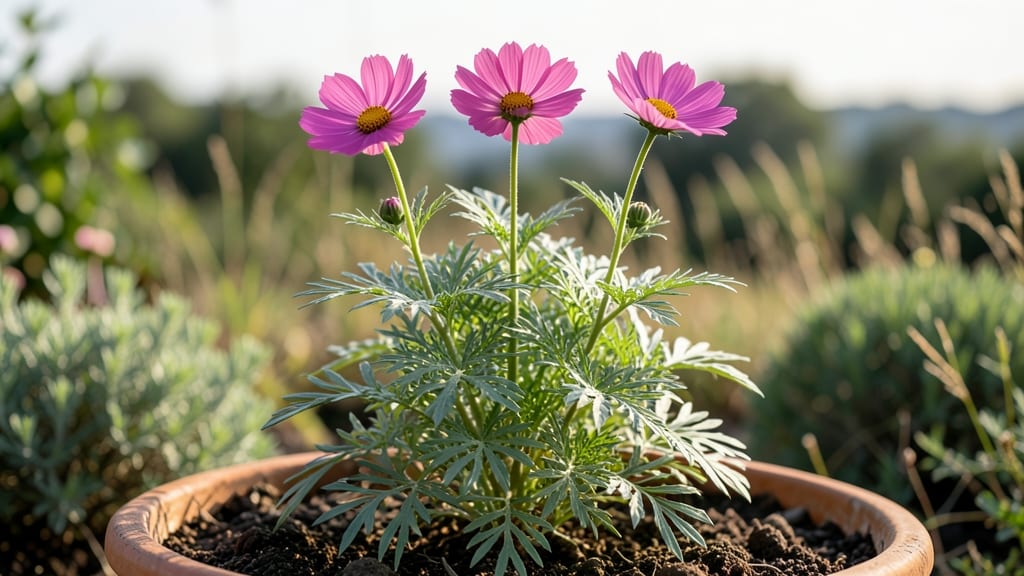
Whether cosmos plants are annuals or perennials depends on your climate: they act as annuals in colder regions but function as tender perennials in USDA Zones 9-11, where their roots endure mild winters and regrow each spring. Freezing temperatures usually kill them back to the ground, though some varieties reseed prolifically in warmer areas.
Cosmos plants' lifecycle hinges on temperature thresholds—below 20°F, their roots rarely survive, forcing them to regrow from seed each year. In frost-free zones, however, their deep taproots persist through winter, making them behave like perennials. 🌱 The key difference lies in their hardiness: while they won't survive harsh winters, certain varieties (like 'Bright Lights') show remarkable resilience in borderline zones, often returning stronger after mild winters.
For gardeners in transitional climates, mulching with straw or leaves can protect roots during light frosts, while choosing cold-tolerant cosmos varieties (like 'Sensation Mix') increases your chances of perennial-like behavior. The self-seeding habit of cosmos also helps maintain continuous blooms—simply leave spent flowers on the plant to scatter seeds naturally.
💡 In This Article
- How Cosmos Plant Lifecycles Adapt to Climate Zones
- Gardening Tips for Extending Cosmos Growth Year-Round
How cosmos plant lifecycles adapt to climate zones
Cosmos plants exhibit a fascinating dual nature because their lifecycle hinges on root hardiness and temperature sensitivity. In colder climates (USDA Zones 3-8), their fibrous roots typically succumb to freezing temperatures below 20°F, forcing them to regrow from seed each spring.
This annual behavior is hardwired into their genetics—cosmos plants prioritize rapid growth and flowering during warm seasons, allocating minimal energy to root survival in freezing conditions.
The magic happens in warmer zones (USDA 9-11), where mild winters rarely drop below 30°F.
Here, cosmos roots—particularly the deep taproots—can persist through winter, storing enough energy to regrow foliage and flowers the following spring. 🌱 This perennial-like behavior isn't true perennials (like lavender), but it's close enough that gardeners often treat them as such.
The key difference lies in their cold tolerance threshold: while they won't survive harsh freezes, their roots can endure light frosts and brief cold snaps.
What makes this adaptation even more interesting is how cosmos plants balance energy allocation. In colder regions, they invest heavily in seed production (explaining their prolific self-seeding), while in warmer zones, they prioritize root development to survive winter.
This dual strategy ensures their survival whether they're treated as annuals or perennials—making them incredibly adaptable to different climates.
Scientifically, this behavior stems from their C4 photosynthetic pathway, which allows them to thrive in hot, dry conditions while still being sensitive to cold.
Their roots contain natural antifreeze compounds (like certain sugars and proteins) that protect cellular structures during mild winters, but these defenses break down when temperatures drop below 25°F. This explains why even "perennial" cosmos in Zone 9 may die back if an unexpected freeze occurs.
Consider this comparison: In Zone 5, cosmos plants will always grow as annuals, completing their entire lifecycle in one season. But in Zone 10, the same plant might return for 3-5 years before finally succumbing to age or disease.
This adaptability is why cosmos are beloved by gardeners—they offer the best of both worlds: annual reliability in cold climates and near-perennial convenience in warm ones.
For those in transitional zones (like Zone 8), the difference between annual and perennial behavior often comes down to microclimate protection. A well-mulched patch might survive winters that would otherwise kill unprotected plants, creating a hybrid lifecycle that blurs the annual/perennial line.
This is where gardening techniques—like strategic planting locations and winter mulching—can turn annual cosmos into semi-perennial powerhouses.