
Orchid Care
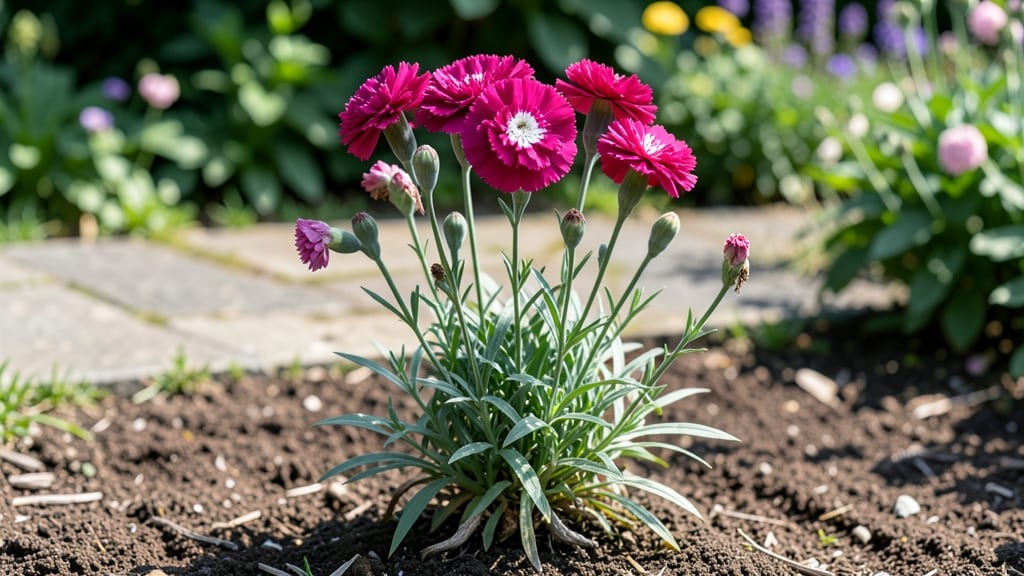
Whether carnations are annuals or perennials depends on your climate—botanically they're perennials, but cold winters often kill them back, forcing gardeners to replant yearly unless they take protective measures.
Carnations are perennials in warmer climates where they naturally survive multiple growing seasons. 🌱 However, their deep root systems freeze in colder zones, causing them to die back completely each winter. This explains why gardeners in northern regions typically treat them as annuals.
The key difference lies in their root structure—woody roots store energy for regrowth, but only if temperatures stay mild enough. In frost-prone areas, even well-established plants may fail to return without winter mulching or greenhouse protection.
For gardeners in transitional zones (like USDA 6-8), the solution often lies in strategic pruning and soil insulation. A thick layer of straw or leaves around the base can protect roots down to 20°F, while cutting back stems to 6 inches in late fall reduces winter stress.
In warmer regions, these same plants may bloom continuously for years with minimal care, proving that classification isn't fixed—it's a climate-based decision.
💡 In This Article
- Carnation Root Systems and Lifespan Factors
- Growing Carnations as Perennials: Climate-Specific Care Tips
Carnation root systems and lifespan factors
Carnations belong to the Dianthus genus, which naturally produces woody root systems designed for perennial growth. Unlike annuals that complete their lifecycle in one season, carnations develop a taproot that stores nutrients and energy for regrowth.
This root system can extend 12-18 inches deep, allowing the plant to access moisture and nutrients even during dry spells. The woody nature of these roots is what gives carnations their potential for long-term survival—similar to how peonies or daylilies establish themselves for years.
The critical factor determining whether carnations act as annuals or perennials is their cold hardiness threshold. Most varieties can tolerate brief exposures to 20-25°F, but prolonged freezing below 15°F damages the root system's ability to regenerate.
In northern climates (USDA zones 3-5), the roots often freeze solid, causing the entire plant to die back. This is why gardeners in these areas replant carnations each spring—what appears to be an annual lifecycle is actually a survival adaptation to harsh winters. 🌡️
What makes this even more interesting is how carnation roots behave differently based on age. Younger plants (under 1 year old) have shallower, more delicate root systems that freeze more easily, while mature plants develop thicker, more insulated root structures.
This explains why established carnations in milder climates (zones 6-10) can survive winters with proper protection, while newly planted ones may fail. The root's ability to store carbohydrates also plays a role—healthy roots can sustain the plant through 3-4 months of dormancy if conditions are right.
Another key mechanism is the plant's ability to produce new growth from the crown (the base where stems meet roots). When temperatures drop but don't kill the crown, carnations can sprout fresh foliage as soon as soil warms in spring.
This regenerative capacity is what allows them to function as perennials in suitable climates. In contrast, annual carnations (like those grown from seed in cold regions) complete their entire lifecycle in 90-120 days without this regenerative potential.
The difference comes down to whether the plant's energy reserves are preserved or depleted by winter conditions.
Consider this comparison: A carnation in Zone 8 might produce 3-4 flushes of blooms annually with minimal care, while an identical plant in Zone 4 would need winter protection just to survive. The root system's resilience isn't just about temperature—it's also about moisture retention.
Carnations in arid climates develop deeper roots to access groundwater, while those in humid regions spread more horizontally. This adaptability is why their classification shifts based on growing conditions rather than being fixed by species.
For gardeners curious about extending carnations' lifespan, understanding these root behaviors is essential. The plant's ability to return year after year depends on whether its energy reserves remain intact through winter.
In colder zones, this often requires human intervention—like mulching—to mimic the natural insulation carnations would experience in their native Mediterranean habitats. The 2-3 inch layer of organic mulch can raise soil temperatures by 5-10°F, making the difference between survival and death for these otherwise hardy perennials. 🌿