
Flowers
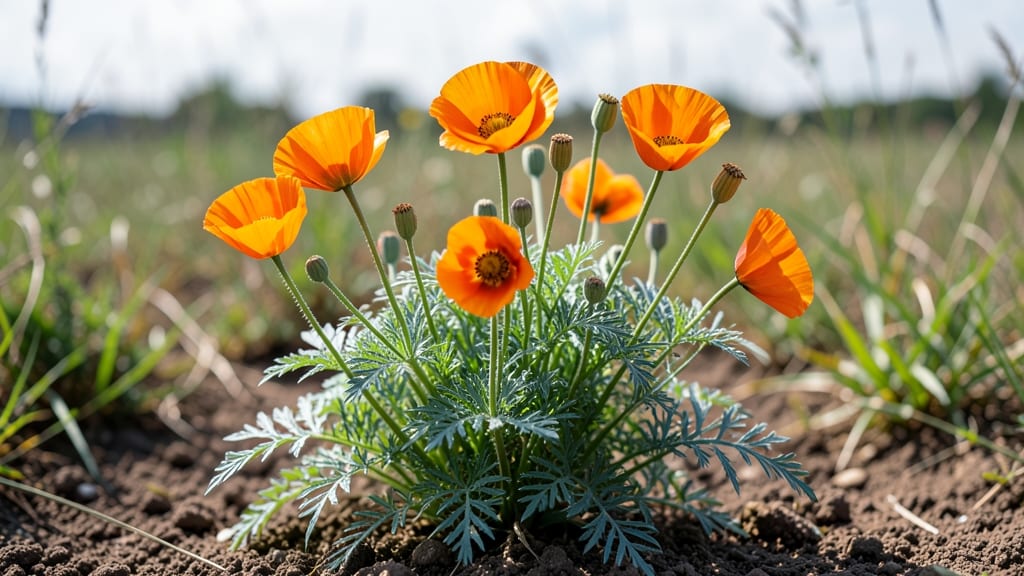
Poppy flowers are not true perennials—they die back annually but often self-seed prolifically, creating new plants each spring. Their lifespan depends on root behavior and growing conditions rather than perennial classification.
Poppies might look like they come back year after year, but their behavior is more about clever survival strategies than true perennialism. 🌱 Many varieties develop deep taproots that store energy through winter, allowing them to sprout fresh shoots when conditions improve.
This "annual" lifecycle is actually a form of self-seeding persistence rather than the multi-year growth of classic perennials like hostas or peonies. The key difference lies in their roots—poppies prioritize quick, dramatic blooms over long-term woody growth.
What makes this fascinating is how poppies cheat the system. While they die back to the ground each fall, their seeds scatter prolifically, creating dense stands of new plants the following spring. This natural regeneration gives the illusion of perennial behavior without the biological classification.
In my garden, I've seen California poppies and Iceland poppies create stunning carpets of color year after year precisely because of this self-seeding trick rather than returning from the same root system.
💡 In This Article
- Poppy Root Systems: Why They Mimic Perennials
- How to Grow Poppies Like a Perennial Plant
Poppy root systems: why they mimic perennials
Poppy flowers rely on a specialized root system that lets them survive winter like perennials, even though they're technically annuals. Most poppies develop deep taproots that can reach 2-3 feet into the soil, storing carbohydrates and nutrients for regrowth.
This is different from true perennials like peonies, which develop thick rhizomes or tubers. The taproot's depth helps poppies access moisture during dry spells while protecting the plant's energy reserves from freezing temperatures down to -20°F for hardy varieties like the Iceland poppy.
The magic happens in how these roots overwinter. Unlike true perennials that maintain active growth centers, poppy roots enter a dormant state where they slowly metabolize stored sugars to maintain cellular integrity. When spring arrives, the roots detect increasing daylight and warmth, triggering rapid regrowth.
This process is similar to how bulb plants like tulips survive winter, but poppies lack the protective layers of bulb scales. Their success comes from sheer efficiency—poppies allocate nearly all their energy to root development rather than foliage or stems.
What's fascinating is how poppy roots prioritize survival over reproduction. While growing, they produce thousands of seeds per plant, but the roots themselves remain focused on energy storage.
This dual strategy explains why poppies can dominate landscapes: their roots ensure the plant's survival year after year, while the seeds create genetic diversity.
In my experience growing California poppies, I've noticed that plants with the deepest roots (often 3+ feet deep) produce the most vigorous spring regrowth, while shallower-rooted plants struggle in drought conditions.
Cold hardiness plays a crucial role in this survival strategy. Most poppy varieties can withstand USDA zones 3-9, with some exceptions like the tropical Mexican poppy that only thrives in zones 10-11.
The key adaptation is the root's ability to form a protective layer of suberin—a waxy substance that prevents water loss and insulates against freezing. This is why poppies often appear "dead" in winter only to burst into bloom when temperatures rise above 50°F.
The roots essentially act as nature's time capsule, preserving the plant's genetic code until conditions become favorable again.
There's a scientific term for this behavior: "obligate annuals with perennial-like persistence." While they don't meet the botanical definition of perennials (which requires plants to live for multiple growing seasons), their root systems create the illusion of perennial behavior.
This is particularly evident in corn poppies, which often form dense meadows that seem to renew themselves magically each spring. The secret lies in those hidden roots—some studies show poppy roots can remain viable in the soil for 3-5 years if not disturbed, though they typically regrow annually.
The practical implication of this root behavior is that poppies can be grown almost anywhere with proper soil preparation. Unlike true perennials that require specific planting depths, poppies thrive when their seeds are planted just beneath the soil surface (1/4 inch deep), allowing the taproot to establish quickly.
This makes them incredibly adaptable to different climates and soil types, from sandy coastal gardens to rocky mountain slopes. 🌱