
Orchid Care
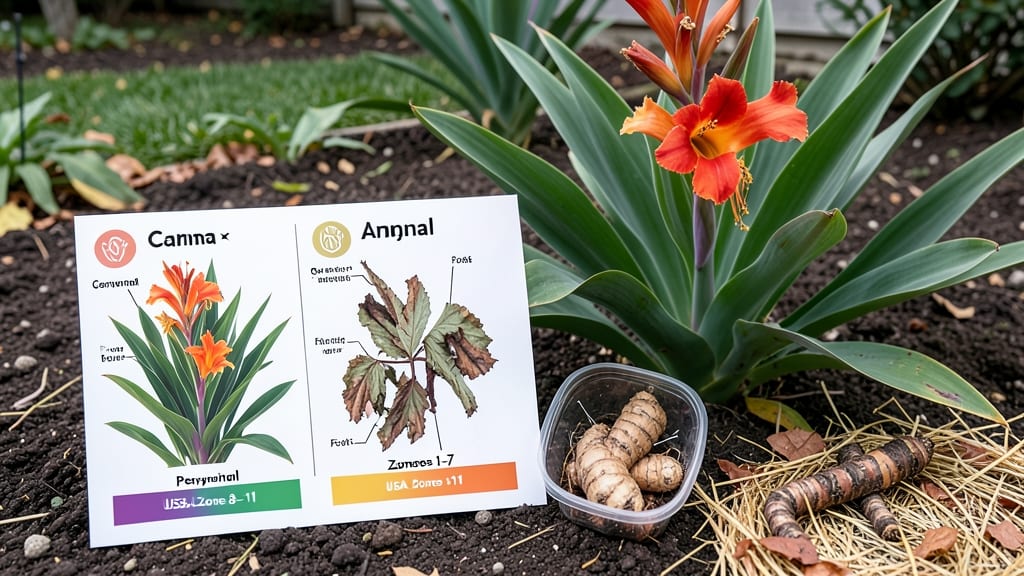
Whether canna lilies are annuals or perennials depends on your climate—perennials in USDA Zones 8-11, but treated as annuals in Zones 7 and colder, where their rhizomes must be dug up and stored indoors over winter.
Canna lilies thrive as perennials in frost-free regions where temperatures rarely drop below 20°F, but their survival hinges on your local winter conditions. 🌱 In colder zones, the underground rhizomes—thick, starchy roots—can't withstand prolonged freezing, so gardeners must lift and store them like tender bulbs.
This explains why they're often sold as annuals in nurseries outside their native range, even though they can regrow from the same roots year after year with proper care.
What sets canna lilies apart is their adaptability: a single rhizome can produce multiple shoots, making them resilient once established.
The key difference between perennials and annuals in this case isn't biology but geography—your last frost date determines whether you'll enjoy their dramatic foliage and tropical blooms season after season or need to replant fresh tubers each spring.
💡 In This Article
- How Canna Lily Cold Tolerance Determines Their Lifespan
- Overwintering Canna Lilies in Cold Climates: Step-by-Step Guide
How canna lily cold tolerance determines their lifespan
The canna lily's survival strategy revolves around its specialized rhizome system, which stores energy and nutrients to endure seasonal challenges. These thick, starchy roots can survive brief exposure to 20-30°F temperatures, but prolonged freezing (15°F or lower) causes irreversible cell damage.
The rhizome's ability to regenerate new shoots from dormant buds explains why canna lilies persist as perennials in frost-free zones—each winter, the plant remains alive underground, ready to burst forth when temperatures rise. 🌱
USDA Zone classification directly correlates with this cold tolerance. In Zones 8-11, where winters rarely drop below 20°F, canna lilies thrive as true perennials, returning year after year without human intervention. However, in Zones 7 and colder, the extended cold periods (often 15°F for weeks) push the plant's limits.
The rhizomes enter a survival mode but can't sustain themselves indefinitely, which is why gardeners must intervene to protect them. This biological mechanism mirrors other tropical plants like dahlias, which also rely on underground storage organs for overwintering.
What makes canna lilies unique is their rapid regrowth capability. A single healthy rhizome can produce 3-5 new shoots within 4-6 weeks of spring planting, thanks to the stored energy in its corms.
This resilience explains why they're often sold as annuals in colder climates—without proper storage, gardeners assume they'll die back completely. The plant's ability to regenerate from just a small piece of rhizome (as little as 2 inches) further demonstrates its adaptability when given the right conditions. 💫
The transition between perennial and annual behavior isn't just about temperature but also about the duration of cold exposure. Even in Zone 7, some gardeners successfully overwinter canna lilies by providing mulch protection, but the risk of failure increases dramatically.
The 30°F threshold serves as a critical dividing line: above it, the plant can survive winter; below it, it requires human protection to persist. This explains why nurseries in colder regions often recommend treating canna lilies as annuals—they want to manage expectations about winter survival rates.
Consider the contrast with hardy perennials like hostas, which can survive -20°F winters through specialized adaptations like antifreeze proteins in their cells. Canna lilies lack these advanced cold-hardiness mechanisms, which is why their perennial status depends entirely on climate.
In their native tropical environments (Central and South America), canna lilies experience no winter dieback, but when transplanted to temperate zones, their biology becomes a seasonal puzzle that gardeners must solve through careful storage techniques. ✨
The science behind this involves the plant's water content and cell structure. Canna rhizomes contain 70-80% water when dormant, which makes them vulnerable to freezing. When ice crystals form in the cells, they rupture the membranes, leading to irreversible damage.
This is why proper overwintering techniques focus on maintaining just enough moisture to prevent desiccation while avoiding conditions that would allow freezing. The balance between hydration and cold protection becomes the gardener's primary challenge in colder climates. 🔥
Understanding this biological mechanism helps explain why canna lilies flourish in warm climates but require special care elsewhere. The plant's entire lifecycle revolves around its ability to store and regenerate from its rhizomes—a strategy that works beautifully in frost-free environments but becomes a seasonal challenge in colder regions.
This dual nature makes canna lilies fascinating case studies in plant adaptation and gardening ingenuity. 💛