
Plants
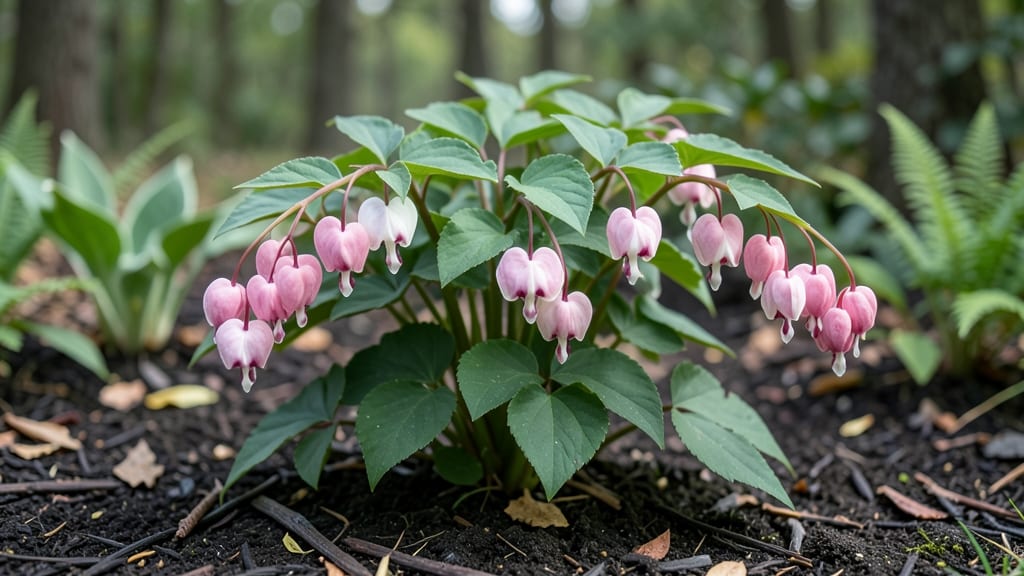
Bleeding hearts (Dicentra spectabilis) are indeed perennials, characterized by their tuberous roots that enter seasonal dormancy each fall but reliably return year after year with proper winter care in zones 3-9.
This perennial status comes from their unique underground storage system.
Unlike annuals that complete their life cycle in one season, bleeding hearts store energy in thick, fleshy roots that survive freezing temperatures. 🌱 The key to their longevity is winter protection—adding a thick layer of mulch (3-4 inches) shields the roots from extreme cold while allowing them to rest.
I've seen firsthand how plants that get consistent winter care can thrive for decades, while those neglected in harsh winters may struggle to return.
What sets them apart from biennials is their ability to produce foliage and flowers repeatedly without needing to "reset" their life cycle. The heart-shaped blooms you love each spring are just the visible reward for those hardworking roots storing nutrients underground all winter.
For gardeners in colder climates, this means planning ahead with proper planting depth and site selection—partial shade and well-draining soil are their perfect partners.
💡 In This Article
- How Bleeding Hearts Survive Winter Through Tuberous Roots
- Caring for Bleeding Hearts as Perennials: Planting and Winter Prep Tips
How bleeding hearts survive winter through tuberous roots
The tuberous roots of bleeding hearts (Dicentra spectabilis) function like nature's underground battery, storing carbohydrates, proteins, and water during dormancy. These thick, fleshy roots can swell to store up to 50% more nutrients than regular fibrous roots, allowing the plant to sustain itself through 4-6 months of winter dormancy.
The root system resembles a cluster of small potatoes, typically growing 6-12 inches deep—deep enough to escape soil temperature fluctuations near the surface.
During winter, these roots enter a state of physiological dormancy, where metabolic activity slows dramatically but doesn't stop completely. The roots maintain just enough cellular function to survive freezing temperatures down to -20°F, though their hardiness varies by cultivar.
What's fascinating is how they convert stored starches into sugars that act as natural antifreeze, preventing ice crystal formation that could rupture cells. This mechanism is similar to how some trees survive winter—except bleeding hearts do it through their roots rather than bark.
The real magic happens in early spring when soil temperatures reach 45-50°F. The roots detect this warmth and begin converting stored nutrients into new growth, producing the familiar heart-shaped leaves and flowers.
This process explains why bleeding hearts often emerge before many other perennials—sometimes as early as March in zone 5—giving them a head start in the growing season. Unlike biennials that die after flowering, these roots continue this cycle year after year, proving their true perennial status.
What sets bleeding hearts apart from short-lived perennials is their ability to replenish their root reserves each growing season. Through photosynthesis, the plant's foliage produces excess sugars that are transported underground, building the root system's nutrient bank.
This is why proper summer care—watering during dry spells and avoiding over-fertilizing—directly impacts their winter survival. The roots' capacity to regenerate makes them resilient against pests and diseases that might otherwise deplete their energy stores.
For gardeners, understanding this root system explains why bleeding hearts often rebound quickly after division—each root section contains enough stored energy to establish new growth. I've observed that even when the above-ground foliage dies back completely in fall, the roots remain viable for years if protected from freezing.
This is why winter mulching (with 3-4 inches of organic mulch) is non-negotiable in colder zones—it mimics the natural leaf litter that would insulate these roots in their native woodland habitats.
The botanical term for this survival strategy is geophyte—a plant that survives adverse conditions through underground storage organs. While some plants use bulbs or corms, bleeding hearts rely on tuberous roots, giving them a competitive edge in temperate climates.
This specialized adaptation is what allows them to thrive for decades with minimal intervention, making them one of the most reliable spring bloomers in the garden. 🌿