
Orchid Care
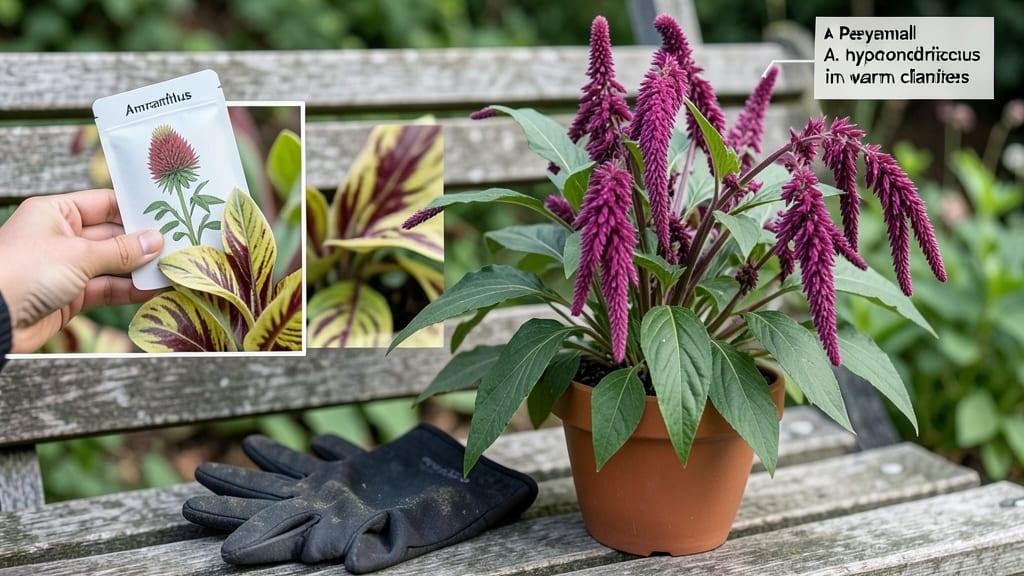
Deciding whether amaranthus is annual or perennial depends on climate: it's usually an annual completing its life cycle in one season, but some varieties act as short-lived perennials in frost-free zones thanks to their deep taproots that can regenerate if left undisturbed. Most types die back after seeding unless conditions stay consistently warm year-round.
This distinction comes down to the plant's root system and environmental conditions. 🌱 Amaranthus typically grows as an annual because it completes its life cycle—from seed to flower to seed production—in just one growing season.
However, in tropical or subtropical climates where frost never occurs, certain varieties develop deep taproots that can persist through dry periods, allowing regrowth when conditions improve.
The key difference lies in how these roots store energy: while most amaranthus plants die after seeding, those in ideal climates may linger for multiple years if their roots remain intact.
For gardeners, this means choosing varieties suited to your local climate. In colder regions, treating amaranthus as an annual is simplest—plant fresh seeds each spring. But in warm zones, you might experiment with overwintering by protecting the base or saving seeds from mature plants that show signs of regrowth.
The ability to act as a short-lived perennial is what makes amaranthus so adaptable across different growing conditions.
💡 In This Article
- How Amaranthus Root Systems Influence Its Lifespan
- Growing Amaranthus as Annual vs Perennial: Climate and Cultivation Tips
How amaranthus root systems influence its lifespan
Amaranthus plants primarily develop a deep taproot system that can extend up to 3-4 feet below the soil surface, distinguishing them from many other annuals that rely on shallow fibrous roots.
This taproot acts as a biological battery, storing carbohydrates and nutrients that fuel regrowth when conditions become favorable again. 🌱 In tropical climates where temperatures rarely drop below 50°F (10°C), these roots can remain viable for years, allowing the plant to resprout from the same rootstock after dieback.
The lifespan difference becomes clear when examining Amaranthus tricolor (garnet amaranth) in frost-free zones like Hawaii or Florida. Here, the plant may appear to "die back" during dry seasons but regrows when rains return, behaving like a short-lived perennial.
The key mechanism is the taproot's ability to maintain metabolic activity through dormancy, unlike annual varieties that exhaust their energy reserves after seeding.
In contrast, most garden amaranthus types—like Amaranthus hypochondriacus—complete their life cycle in 90-120 days and die after seed production because their roots lack sufficient stored energy to survive winter.
Temperature triggers this behavior: frost temperatures (32°F/0°C) kill amaranthus tops but often leave roots intact. However, the roots can't regenerate shoots if they've been disturbed (like during harvest) or if soil temperatures remain below 55°F (13°C) for extended periods.
This explains why amaranthus rarely persists as a true perennial in temperate climates—its root reserves simply can't sustain regrowth through multiple cold seasons. 💫 The exception occurs when gardeners protect the base with mulch or grow amaranthus in containers that can be moved indoors during winter.
Root depth also plays a critical role in water access. Taproots enable amaranthus to tap into deep moisture reserves, which is why it thrives in drought-prone regions. This adaptation gives it a survival advantage over plants with shallow roots when faced with dry spells.
However, this same trait becomes a liability in cold climates where deep roots freeze solid, making overwintering nearly impossible without artificial protection.
Consider the case of Amaranthus caudatus (love-lies-bleeding), which has been documented to regrow from roots in Peruvian highlands where nights drop to 40°F (4°C) but days reach 75°F (24°C).
The plant's ability to store energy in its taproot during the cooler months allows it to resume growth when temperatures rise. This natural mechanism explains why some amaranthus varieties can persist for 2-3 years in ideal conditions—though they're still technically annuals by botanical definition.
For gardeners, understanding this root behavior means recognizing that amaranthus' perennial-like tendencies are climate-dependent. In regions with consistent warmth, protecting the root zone can extend the plant's life, while in colder areas, treating it as an annual is more practical.
The deep taproot's ability to regenerate makes amaranthus uniquely adaptable, but only when environmental conditions remain within its narrow comfort zone. ✨