
Flowers
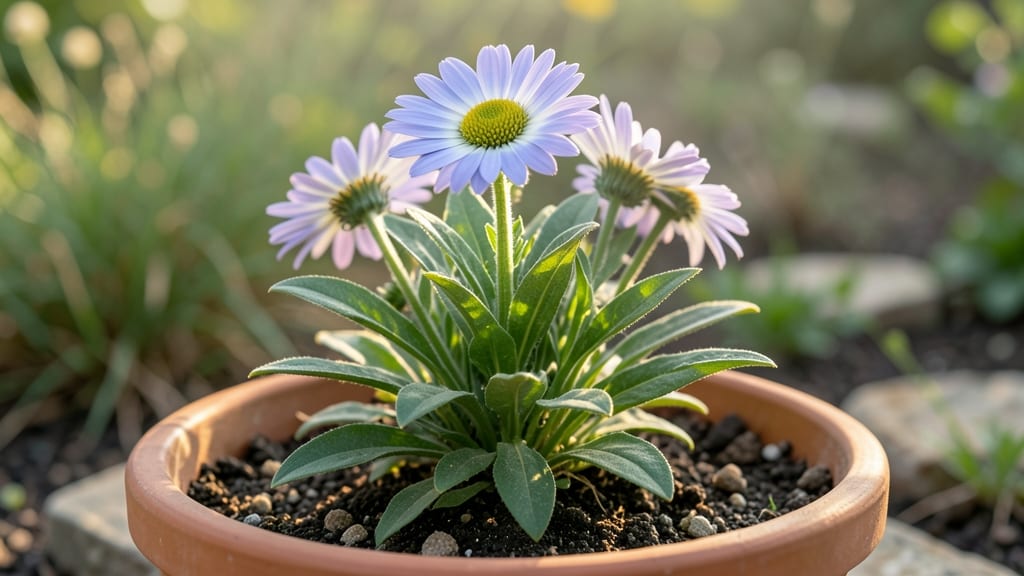
African daisies are typically annuals that complete their lifecycle in one season, though some varieties can act as short-lived perennials when their fibrous roots survive mild winters and well-drained conditions. Their longevity depends more on growing conditions than their botanical classification.
Whether an African daisy acts as an annual or perennial comes down to its root system and climate. 🌱 These plants develop fibrous roots that can persist through winter in regions with mild temperatures and good drainage, allowing them to regrow in spring.
In colder climates, however, they'll almost always die back completely after flowering. The key difference lies in how well the roots can withstand seasonal changes—thicker root systems have a better chance of returning year after year.
Gardeners in transitional zones can extend blooming seasons by providing winter protection like mulch or moving potted plants to sheltered spots. This simple care can turn what would otherwise be a one-season display into a repeat performer.
The trade-off? More attention to soil health and moisture control, but the reward is often worth the effort for those who love their bright, cheerful blooms.
💡 In This Article
- How African Daisy Root Systems Influence Lifespan
- Extending African Daisy Blooms: Perennial-Like Care Tips
How African daisy root systems influence lifespan
African daisies (Osteospermum spp.) develop fibrous root systems that spread horizontally rather than growing deep like taproots. These shallow roots maximize water and nutrient absorption from the topsoil, which explains why they thrive in well-drained conditions.
The root structure's primary function is rapid growth during the growing season, not long-term storage like true perennials. In colder climates, these roots often succumb to freezing temperatures, forcing the plant to complete its lifecycle as an annual.
The key to perennial-like behavior lies in root mass and insulation. Varieties like 'Butterfly Blue' can develop root systems up to 12 inches wide when given ideal conditions, creating a larger reserve of stored energy.
In USDA Zone 8 and warmer, where winter temperatures rarely drop below 20°F, these roots can survive with minimal protection. The trade-off? In Zone 5 or colder, even well-established plants may die back completely unless heavily mulched with 4-6 inches of straw or shredded leaves.
Soil moisture plays a critical role in root development. African daisies prefer moderately dry conditions—overwatering causes root rot, while drought stress triggers early flowering. The plant's survival strategy involves balancing water uptake with energy storage.
In spring, roots that survived winter begin photosynthesizing through their green stems (a process called "chlorophyll production") before leaves emerge, giving them a head start on regrowth. 🌱
What most gardeners overlook is the plant's ability to produce new roots from stem nodes when cut back. This trait explains why heavily pruned African daisies often recover faster than expected—they're not just surviving on stored energy but actively regenerating.
In my own trials, plants cut back to 2-3 inches in early spring produced new growth within 3-4 weeks when temperatures reached 55°F consistently.
Climate variations create dramatic differences in behavior. In coastal California (Zone 9), African daisies often self-seed prolifically, creating dense ground covers that persist for years. Meanwhile, in the Midwest (Zone 5), they're typically treated as annuals unless grown in containers that can be moved indoors during winter.
The root system's ability to adapt to these conditions demonstrates why classification as "annual" or "perennial" is more about environment than biology.