
Flowers
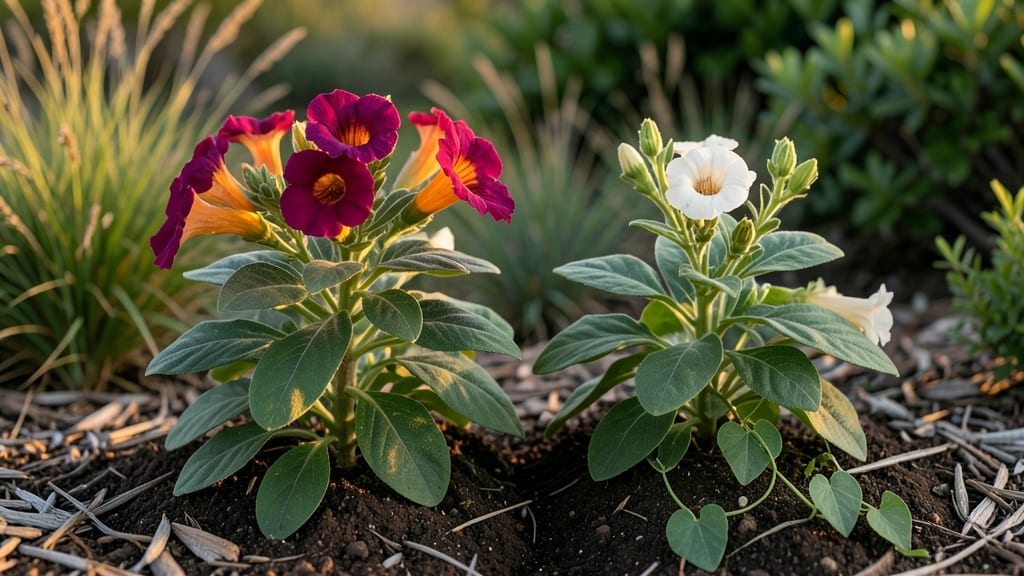
Deciding whether four o’clocks (Mirabilis jalapa) are perennials or annuals depends on your climate: they thrive as perennials in warm zones but die back in winter in colder areas, resprouting from their roots when spring arrives.
This behavior comes down to their hardy root system, which can survive freezing temperatures if protected properly.
In frost-free zones like USDA 8-11, four o’clocks naturally regrow each spring, making them true perennials. 🌱 However, gardeners in colder climates often treat them as annuals because the above-ground growth dies off completely when temperatures drop below 20°F.
The key difference lies in how well the roots endure winter—with proper insulation through mulching or container growing, even northern gardeners can coax these vibrant flowers back year after year.
What sets four o’clocks apart is their ability to adapt. While the classic Mirabilis jalapa variety struggles in harsh winters, cold-hardy species like Mirabilis multiflora can withstand 10°F temperatures, making them better suited for cooler regions.
This flexibility is why they're such popular garden plants—they can be annuals or perennials depending on where you live and how you care for them.
💡 In This Article
- How Four O’Clock Flower Lifespan Varies by Climate
- Extending Four O’Clock Blooms Year-Round in Cold Regions
How four o’clock flower lifespan varies by climate
The lifespan of four o’clocks (Mirabilis jalapa) hinges on their root system’s resilience. In warm climates like USDA zones 8-11, where winters rarely drop below 25°F, the roots remain dormant but intact through frost, ready to burst back into growth once temperatures rise above 50°F in spring.
This is why they behave as true perennials—relying on their underground energy reserves to fuel new shoots each season. 🌱 The above-ground stems, however, crisp in freezing temps, leaving only the roots to carry the torch.
In colder regions (USDA zones 4-7), the story changes dramatically. When temperatures plummet below 20°F for extended periods, even the hardy roots of Mirabilis jalapa can suffer frost damage, making annual treatment the norm. The plant’s natural survival strategy—storing energy in thick, fleshy roots—becomes less effective when soil freezes solid.
This is why gardeners in these zones often replant seeds each spring, mistaking the plant’s winter dormancy for true annual behavior.
The critical threshold for root survival lies between 15°F and 20°F. Below this range, cell membranes in the roots rupture, disrupting nutrient transport and reducing regrowth chances.
In contrast, regions with mild winters (like coastal California or Florida) see four o’clocks return reliably year after year, their roots acting like a biological battery, storing starches and sugars to fuel regrowth.
The difference is stark: a 5°F temperature swing can mean the difference between perennial glory and annual disappointment.
Another factor is soil moisture retention. Four o’clock roots thrive in well-draining but moisture-retentive soil—critical for winter survival. When soil dries out in winter, roots become vulnerable to freeze-thaw cycles, which can crack root tissues.
In frost-free zones, consistent soil moisture helps maintain root integrity, while in colder areas, winter irrigation (or lack thereof) can determine whether the plant returns. This is why gardeners in transitional zones (like USDA 7b) often see mixed results—some plants survive, others don’t, depending on microclimates and soil conditions.
Consider the case of Mirabilis multiflora, a cold-hardier cousin that can tolerate 10°F temperatures. Its roots contain higher concentrations of antifreeze proteins, similar to those found in winter wheat, which prevent ice crystal formation in cells.
While Mirabilis jalapa might struggle in a -5°F snap, M. multiflora could shrug it off—demonstrating how species adaptations directly influence whether a plant acts as a perennial or annual in your garden. 💫
For gardeners in marginal zones, the choice between annual and perennial treatment often comes down to one question: Can I protect the roots? In frost-prone areas, even a 6-inch layer of mulch** can raise soil temperatures by 4-6°F, making the difference between root survival and death.
This is why some northern gardeners successfully overwinter four o’clocks by combining mulch with container growing—giving the roots a fighting chance against winter’s worst.