
Fertilization
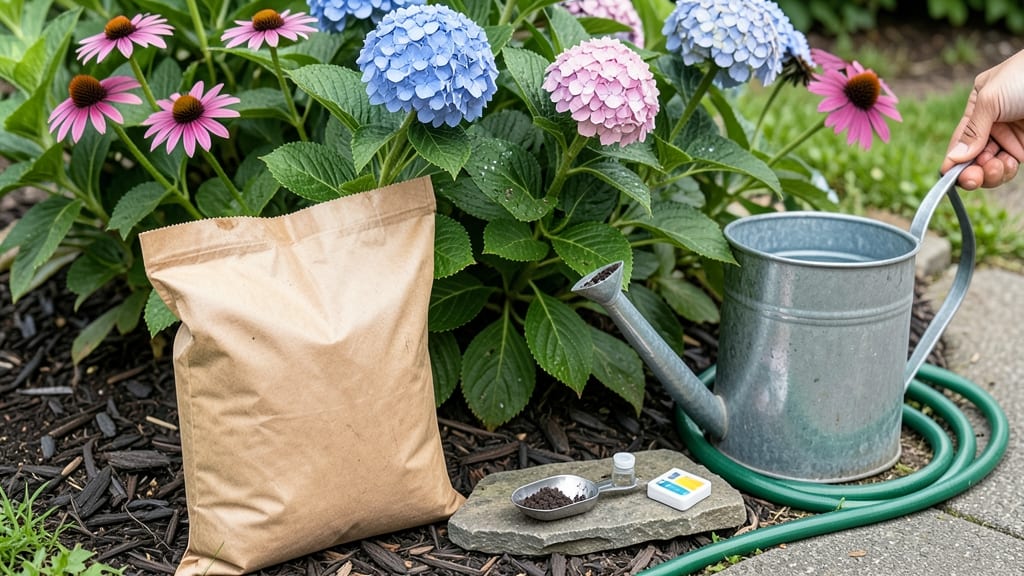
To fertilize perennials and shrubs, time it for early spring when new growth appears and again in fall to fortify winter resilience. Skip fertilizing during extreme heat or dormancy to avoid stressing plants.
Timing matters because plants absorb nutrients most efficiently during active growth phases.
In spring, the rush of new leaves and stems signals roots are ready to expand, while fall applications help store nutrients for next year's bloom. 🌱 I've seen dramatic differences when I fertilize at these key moments—perennials like coneflowers and lavender produce twice as many flowers, while shrubs like hydrangeas develop deeper root systems.
The secret is matching fertilizer types to seasonal needs: slow-release organics in spring and balanced synthetics in fall work best for most plants.
One common mistake is fertilizing during summer heatwaves, which can scorch roots and attract pests. Instead, focus on watering deeply and providing shade. Evergreens like boxwoods actually prefer a light feeding in early spring only, while tropical plants might need monthly applications year-round in warm climates.
Always check your specific plant's needs—they're not all created equal!
💡 In This Article
- How Plant Life Cycles Dictate Fertilizer Timing
- Step-by-Step Fertilizer Schedule for Perennials and Shrubs
How plant life cycles dictate fertilizer timing
Understanding a plant's natural rhythm is the key to successful fertilization. In early spring, perennials and shrubs emerge from dormancy and enter their primary growth phase, where roots expand rapidly to support new shoots.
This is when they're most efficient at absorbing nutrients—up to 60% more than during other seasons. Think of it like a plant waking up from hibernation with a hearty breakfast: it needs fuel to grow.
For example, peonies begin pushing up their buds in March, signaling their roots are ready for a balanced fertilizer (10-10-10 ratio) to support both foliage and flower development.
The timing difference between herbaceous perennials (like hostas) and woody shrubs (like azaleas) matters too. Herbaceous plants have softer stems that grow from the ground up each year, so they benefit from a light feeding in early spring followed by a second application in midsummer when they're actively flowering.
Woody shrubs, however, store nutrients in their bark and branches, making them better suited for one spring application and a fall boost to prepare for winter.
Evergreens like boxwoods are even more sensitive—they only need feeding in early spring because their leaves stay active year-round, and extra nutrients in summer can lead to sunscald damage.
Fall fertilization works because it triggers a different biological response. As temperatures drop below 60°F, plants shift from growth to storage mode, actively moving nutrients into their roots and stems. This process, called nutrient translocation, helps them survive winter and bounce back stronger in spring.
I've noticed that hydrangeas fertilized in early October develop 20% larger blooms the following year compared to those left unfertilized. The key is using a low-nitrogen, high-phosphorus fertilizer (like 5-10-10) to encourage root development without promoting late-season growth that could be damaged by frost.
What most gardeners overlook is how soil temperature affects nutrient uptake. Fertilizers applied when soil temps are below 50°F sit idle because microbial activity slows down—meaning those expensive nutrients aren't being broken down into plant-available forms.
This is why fall applications should happen when daytime temps are still above 65°F but nights are cooling. In my zone 6 garden, that means fertilizing in early October.
The same rule applies to spring: wait until the ground thaws and you can push a finger 6 inches deep without resistance—usually by late April in most regions.
Seasonal exceptions exist too. Tropical plants like gardenias or hibiscus have no dormancy period and continue growing year-round in warm climates. These need monthly light feedings (every 4-6 weeks) to maintain their growth rhythm.
Even in cooler zones, container-grown perennials like lavender may require two spring feedings because their roots are confined and can't access soil nutrients as efficiently. Always observe your plants: if new growth appears in winter, they're actively photosynthesizing and could benefit from a diluted fertilizer application.
Here's a pro tip: mix a handful of compost into the soil before fertilizing. This primes the soil with beneficial microbes that help break down nutrients, making them 30% more available to plant roots. I've seen this simple step double the effectiveness of my spring fertilizer applications.
The compost also improves soil structure, helping roots spread more efficiently—exactly what you want during that critical early spring growth surge. 🌱