
Flowers
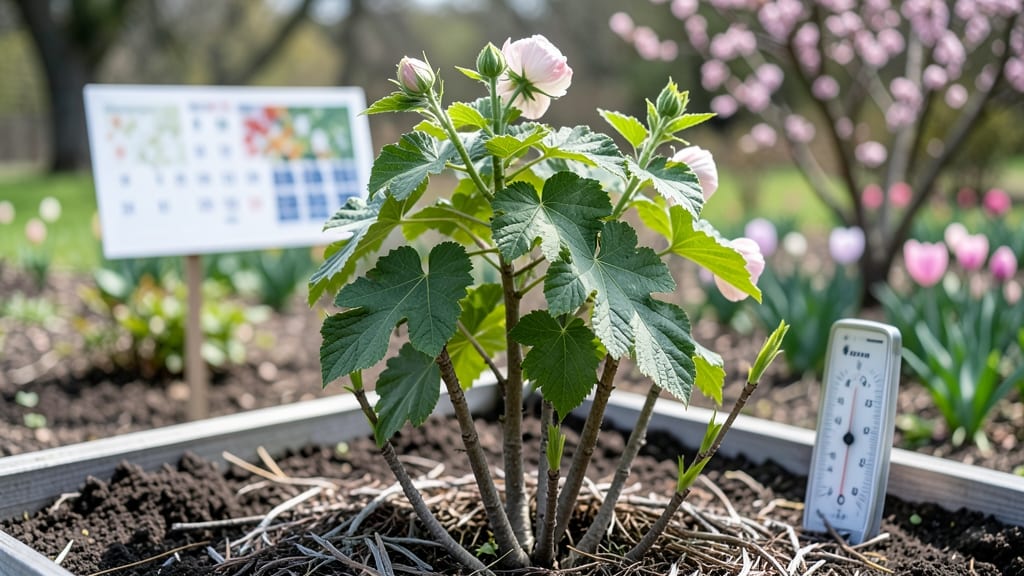
Perennial hibiscus come back in late spring to early summer, usually between late April and June, with warmer climates seeing new growth as early as March and colder areas waiting until June or July.
Your local climate dictates when these tropical beauties reappear after winter dormancy. 🌿 Perennial hibiscus are sensitive to frost—most varieties won't sprout until soil temperatures consistently stay above 55°F for at least a week.
In USDA Zone 8 and warmer, you might spot fresh leaves by March, while Zone 5 gardeners often wait until late May or June. The key is monitoring frost-free dates in your area, which typically align with the plant's natural regrowth window.
What's fascinating is how hibiscus respond to temperature shifts: they'll often push through mulch when soil warms, sometimes weeks before air temperatures cooperate. This makes mulching depth (3-4 inches) and winter pruning (cutting back to 6-12 inches above ground) critical for encouraging faster spring recovery.
I've seen plants in Zone 7 burst into growth within days of removing winter protection when soil temps hit that sweet spot.
💡 In This Article
- Climate Zones and Frost Timing for Hibiscus Regrowth
- Pruning and Care to Speed Up Perennial Hibiscus Recovery
Climate Zones and frost timing for hibiscus regrowth
The regrowth of perennial hibiscus is triggered by a combination of soil warmth and frost-free conditions. These plants enter dormancy when nighttime temperatures drop below 40°F, but they won't wake up until soil temperatures consistently stay above 55°F for at least 7-10 days.
This threshold explains why you'll see growth in USDA Zone 9 as early as February, while Zone 6 gardeners might wait until late May.
Frost timing is the critical factor separating early and late bloomers. Perennial hibiscus can survive light frosts down to 20°F if dormant, but any frost after buds form will kill new growth.
In Zone 8, where average last frost dates fall around March 15, hibiscus often begin sprouting by early April. Compare that to Zone 5, where frosts linger until May 15, delaying regrowth until June.
The plant's internal clock also responds to daylight length—longer days after the spring equinox accelerate metabolic activity.
Here's what's happening below ground: The root system remains active through winter, storing energy in rhizomes. When soil temperatures rise, these roots send out new shoots at a rate of about 1-2 inches per week under ideal conditions.
The first leaves appear as small, deep green buds that unfurl over 3-5 days. In colder climates, this process can take 2-3 weeks longer due to slower microbial activity in cooler soils.
Consider these climate-specific patterns when planning your garden:
- Zones 9-11: Regrowth begins February-March as soil warms above 60°F consistently
- Zones 7-8: New growth emerges March-April when soil hits 55°F for 10 days
- Zones 5-6: Expect sprouting May-June after last frost dates pass
The plant's response to temperature isn't just about warmth—it's about stability. Hibiscus need at least 5 consecutive frost-free days before committing to full regrowth. This explains why you might see sporadic sprouts in early spring only for them to die back with late frosts.
The plant's survival strategy is to wait for reliable conditions before investing energy in new growth.
What most gardeners don't realize is how mulch thickness affects this timing. A 4-inch layer of organic mulch can delay soil warming by 1-2 weeks in spring, while too thin a layer (1 inch) offers little protection against winter temperature swings.
The ideal balance is 3-4 inches—enough to insulate roots but not so much that it creates a cold microclimate.