
Blooming
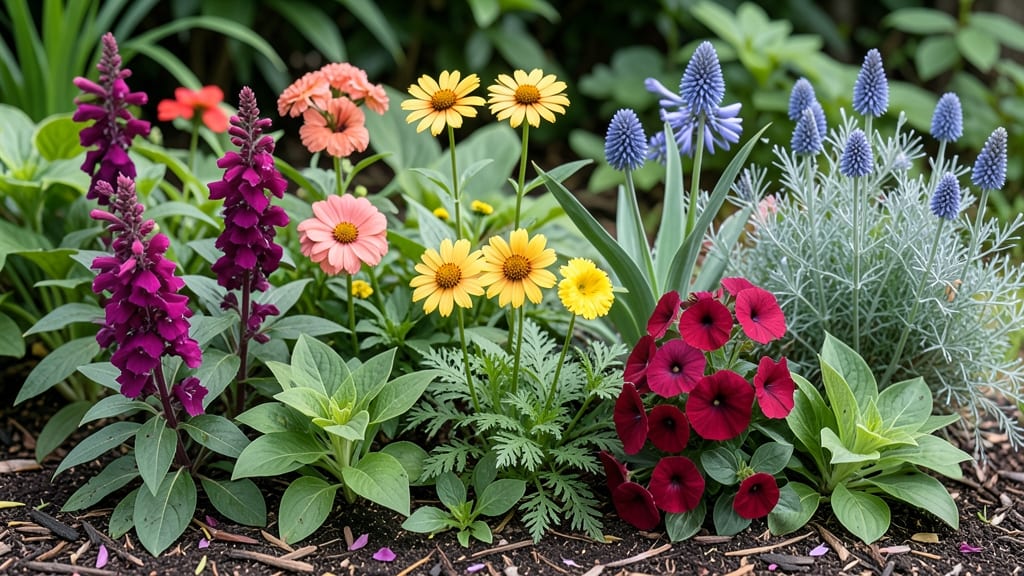
Perennial flowers that bloom all year need frost-free climates like Zones 9-11, with tropical picks like hibiscus and bougainvillea delivering bold color, while hardy lavender and salvia stretch their seasons through smart pruning and mulching.
Year-round blooming isn't just about the right plants—it's about creating conditions that mimic their natural habitats. 🌿 In warmer climates, these perennials thrive because they evolved in environments where frost never interrupts their growth cycles.
For example, bougainvillea's vibrant bracts burst forth continuously when given full sun and well-draining soil, while salvia's spikes keep producing flowers if you deadhead regularly. Even in cooler microclimates, strategic mulching and seasonal pruning can coax extra blooms from hardy varieties like coreopsis or gaillardia.
What sets these standouts apart is their ability to balance growth and flowering through different seasons. The tropical varieties rely on consistent warmth, while the hardier types have built-in dormancy periods that reset their energy for another round of blooms.
This dual approach means you can mix and match species to create a garden that stays lively from spring through fall—and sometimes even winter—with minimal extra effort.
💡 In This Article
- Climate and Care Secrets for Year-Round Blooming Perennials
- Top 12 Perennial Flowers for Nonstop Color by Season
Climate and care secrets for year-round blooming perennials
The key to perennial flowers blooming continuously lies in their natural growing conditions. Tropical varieties like hibiscus and bougainvillea thrive in Zones 9-11 because they evolved in environments where temperatures stay above 50°F year-round.
Their root systems develop shallow but extensive networks that absorb moisture quickly, while their waxy leaves reduce water loss—critical adaptations for arid climates. 🌵 In contrast, hardy perennials like salvia and lavender can handle cooler nights (40-50°F) but still require consistent warmth to trigger continuous flowering.
Microclimates play a huge role in extending bloom seasons. Coastal areas with mild winters often see 2-3 extra months of flowering compared to inland regions, thanks to ocean breezes that moderate temperatures.
For example, plumbago thrives in 6-8 hours of sun daily but can tolerate partial shade in hot afternoons, making it perfect for coastal gardens where humidity is high.
In desert zones, species like lantana and gaillardia prefer full sun exposure but need well-draining soil to prevent root rot from sporadic monsoon rains.
Seasonal pruning is the secret weapon for prolonging blooms. Deadheading spent flowers—removing them before they form seed heads—tricks the plant into redirecting energy toward new growth. With salvia, for instance, cutting back one-third of the plant in early spring stimulates fresh shoots that bloom 4-6 weeks earlier than unpruned plants.
Mulching with 2-3 inches of organic matter (like straw or wood chips) also helps maintain soil temperature and moisture, which is especially critical during summer droughts in Zone 10.
Soil composition matters just as much as climate. Tropical perennials like hibiscus prefer slightly acidic soil (pH 6.0-6.5) with high organic content, while desert-adapted varieties like coreopsis thrive in alkaline, sandy soils (pH 7.0-8.0).
Testing your soil and amending it with compost or lime can make the difference between sporadic blooms and a 12-month display. For example, adding 1 cup of bone meal per square foot in early spring provides phosphorus, which directly supports flower production.
Watering strategies vary by region but follow one golden rule: deep, infrequent watering encourages stronger root systems. In coastal climates, watering 2-3 times per week during dry spells keeps tropical perennials lush, while desert plants need once-weekly deep watering to prevent shallow root growth.
The result? Plants that stay healthy enough to bloom continuously without stress. 💧
Even in cooler microclimates, you can coax extra blooms from hardy perennials. For instance, lavender benefits from a light trimming after the first flush of flowers in spring, which encourages a second bloom cycle in late summer.
The same technique works for catmint, where cutting back 50% of the plant in early summer triggers a 6-week extension of its purple blooms.