
Vegetables
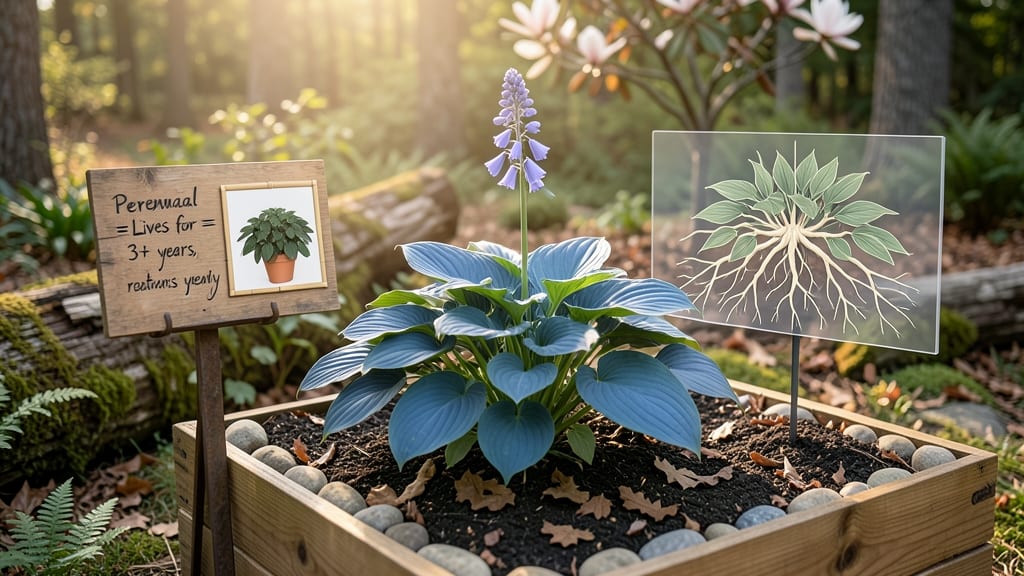
"Per" in perennial means lasting the entire year, defining plants that regrow annually from the same root system rather than dying back after one season. This prefix sets them apart from annuals or biennials, ensuring they return with foliage or blooms each growing cycle.
The prefix "per-" in perennial comes from Latin perennis, which literally means "through the year." 🌱 This isn't just about longevity—it describes a plant's biological strategy to persist through seasonal changes using specialized structures like bulbs, tubers, or deep root systems.
Unlike annuals that complete their life cycle in one season, perennials rely on these storage systems to survive winter and regrow when conditions improve.
Think of it like a plant's built-in survival kit. Peonies, for example, store energy in thick roots, while lavender uses woody stems to endure dry summers. This adaptability is why perennials dominate gardens—they reward gardeners with years of blooms and foliage with minimal replanting.
💡 In This Article
- The Botanical Meaning of 'Perennial' and Its Latin Roots
- How Perennial Plants Thrive Year After Year: Growth Strategies
The botanical meaning of 'perennial' and its Latin roots
The word "perennial" traces back to the Latin perennis, a compound of per- (meaning "through" or "completely") and -ennis (derived from annus, "year").
This linguistic structure reveals its core definition: plants that persist through the entire year, not just during a single growing season. 🌿 Unlike annuals that complete their life cycle in one season or biennials that take two, perennials rely on specialized structures to survive seasonal dormancy and regenerate.
In botanical terms, the prefix per- functions as a temporal indicator, emphasizing continuity. For example, permanent means lasting indefinitely, while permeable describes something allowing passage through.
In perennials, this prefix signals an unbroken cycle—roots, bulbs, or rhizomes store nutrients during winter to fuel regrowth when conditions improve. 🌱 This is why peonies return every spring with the same vigor, while marigolds (annuals) must be replanted yearly.
The distinction between perennials, annuals, and biennials hinges on their root systems. Annuals like zinnias die after flowering because they invest all energy into seed production. Biennials like carrots focus on leaf growth first year, then flowering second year.
Perennials, however, allocate resources to underground storage organs (e.g., hostas use rhizomes, tulips use bulbs) that act as biological batteries, ensuring survival through drought, frost, or heat.
This Latin root also explains why perennials dominate landscapes. The word perennis implies resilience—plants like lavender or black-eyed Susans thrive for decades with minimal intervention. Their ability to "live through" harsh conditions (literally per- + annus) makes them low-maintenance compared to annuals that require yearly replanting.
Gardeners often confuse "perennial" with "long-lived," but the key difference lies in the mechanism: perennials regrow from the same root system annually, while long-lived plants (like some shrubs) may persist but don't necessarily regenerate from identical structures. 🌿 For instance, a 90-year-old peony returns each spring because its roots remain intact, while a 50-year-old oak tree grows continuously but isn't classified as perennial.
Understanding this etymology clarifies why perennials are the backbone of sustainable gardening.
The prefix per- isn't just decorative—it encodes a plant's survival strategy, making "perennial" a precise term in horticulture. 💡 This linguistic precision helps gardeners select plants that align with their maintenance goals, whether seeking low-effort ground covers or long-blooming showstoppers.