
Flowers
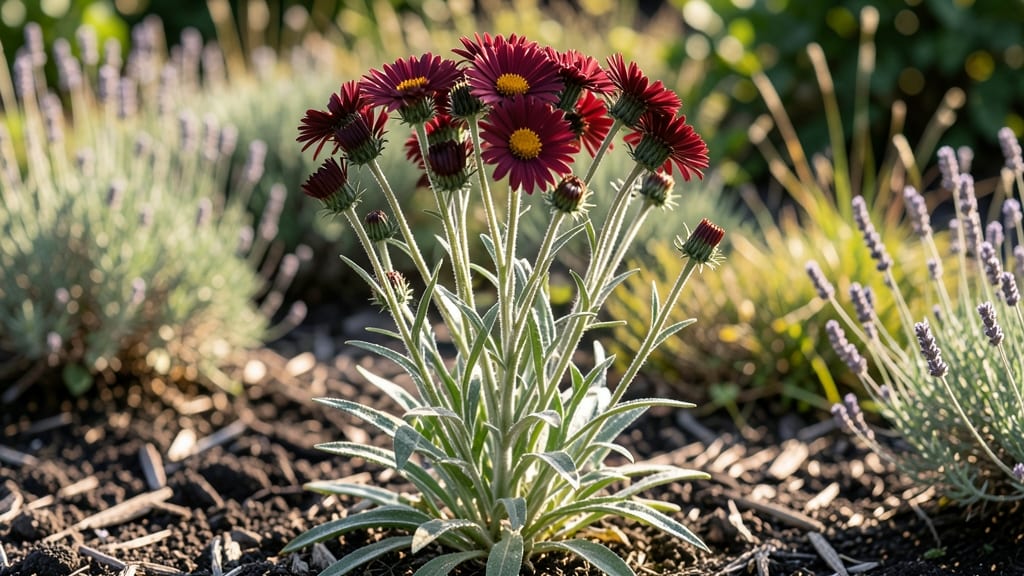
Straw flowers are technically annuals, though they behave like perennials in mild climates by producing deep, woody roots that regrow each season. Their lifespan depends on winter temperatures and soil conditions, not true perennial classification.
Straw flowers might seem like perennials because they often return year after year in warmer zones, but their classification hinges on their root system and cold sensitivity. 🌱 Unlike true perennials, which survive harsh winters through specialized underground structures, straw flowers rely on their fibrous roots to regrow from the base each spring—if temperatures don’t drop below 20°F.
This makes them more resilient than many annuals but still vulnerable in freezing climates. The key difference? Their ability to regenerate depends entirely on environmental conditions rather than inherent hardiness.
For gardeners in colder regions, this means straw flowers act like annuals—they complete their life cycle in one season unless protected. In milder areas, though, their deep roots allow them to persist for years, creating that perennial-like appearance.
The trick is mimicking their natural habitat: well-draining soil, winter mulch, and strategic pruning to encourage robust regrowth.
💡 In This Article
- How Straw Flower Roots Survive Year-Round
- Climate and Care Tips for Long-Term Straw Flower Growth
How straw flower roots survive year-round
Straw flowers (Helichrysum bracteatum) develop a specialized root system that lets them persist across seasons—though not through true perennial hardiness. Their roots grow 12-18 inches deep into the soil, forming a dense network of fibrous roots that store carbohydrates.
This underground structure acts like a natural battery, fueling regrowth in spring. Unlike true perennials (like hostas or peonies), which have thick rhizomes or tubers designed for winter survival, straw flowers rely on these stored reserves to sprout new growth when temperatures rise above 40°F. 🌱
Their survival strategy hinges on winter dormancy rather than cold resistance. When frost hits, the above-ground stems die back completely, but the roots remain alive—if protected from extreme cold (20°F or lower).
This is why straw flowers thrive in USDA zones 8-11, where winters rarely drop below 25°F. In colder zones, the roots often freeze, forcing the plant to restart its life cycle annually. The key difference?
True perennials have specialized tissues (like cambium layers) that insulate against freezing, while straw flowers depend entirely on environmental conditions to preserve their root systems.
What makes their behavior fascinating is how quickly they regenerate. In ideal conditions, new shoots emerge within 2-4 weeks of spring thaw, reaching 2-3 feet tall by summer. This rapid growth is powered by the stored energy in their roots—a process called geophyte regrowth.
The deeper the roots penetrate, the more resilient the plant becomes against drought and temperature fluctuations. Gardeners in marginal climates (like zone 7b) can sometimes coax regrowth by providing winter mulch, but without protection, the roots simply won’t survive freezing soil.
Another critical factor is soil composition. Straw flowers prefer well-draining, slightly alkaline soil (pH 6.5-7.5) that prevents root rot—a common issue in heavy clay or waterlogged conditions. Their fibrous roots spread horizontally as they grow, creating a dense mat that stabilizes the plant and competes with weeds.
This root structure also explains why straw flowers often appear "perennial" in garden beds: the roots persist underground even when the stems die back, ready to sprout again when conditions improve.
For comparison, consider true perennials like lavender (Lavandula), which have woody stems and deep taproots that survive -10°F winters. Straw flowers lack this hardiness but compensate with their aggressive regrowth strategy. The trade-off?
While lavender might live for decades with minimal care, straw flowers require consistent warmth and protection to return year after year. This makes them more like "pseudo-perennials"—plants that mimic perennial behavior without the biological adaptations.
Understanding this root behavior is the secret to extending their lifespan. In warmer climates, their deep roots allow them to thrive for 3-5 years with minimal intervention, while in cooler areas, they’ll often act like annuals unless given extra care.
The bottom line? Straw flowers don’t play by the perennial rulebook—they’ve evolved a clever workaround that depends entirely on their environment. 💫