
Orchid Care
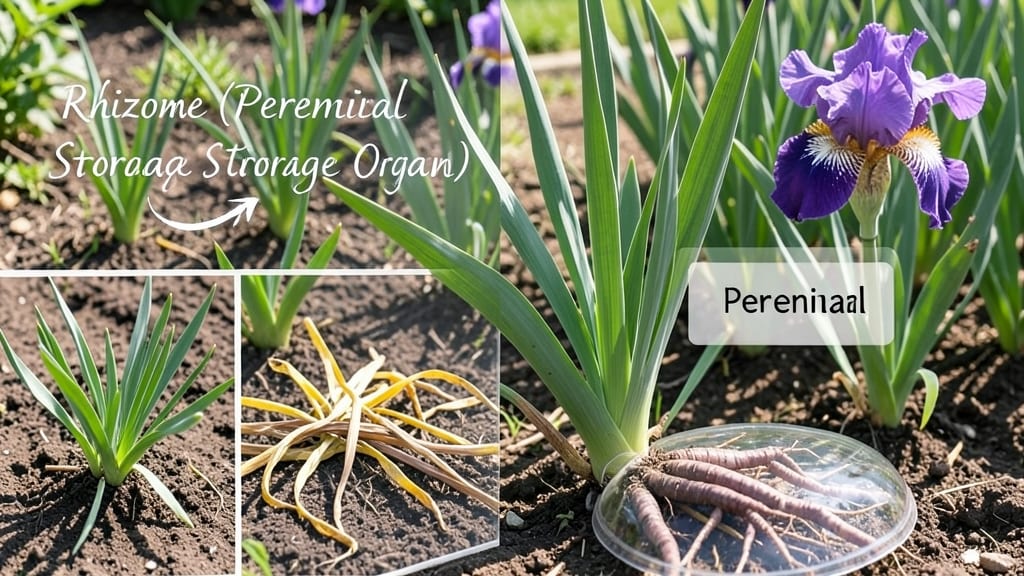
Irises are perennials, not annuals, thriving for multiple years thanks to their hardy underground rhizomes that store nutrients and withstand winter dormancy in most climates.
Understanding why irises return year after year comes down to their unique underground structure. 🌱 These plants grow from thick, horizontal root-like stems called rhizomes, which act like natural storage units—packed with energy reserves to fuel regrowth after winter's dormancy.
Unlike annuals that complete their life cycle in one season, irises develop deep root systems that anchor them through cold snaps, often surviving decades with proper care.
Most gardeners discover this resilience when their irises bloom reliably each spring, even after harsh winters. The key to maintaining this perennial behavior lies in proper planting depth—about 2/3 of the rhizome above soil—and well-draining soil to prevent rot.
In colder regions, adding a layer of mulch can provide extra insulation during dormancy.
💡 In This Article
- How Iris Rhizomes Enable Perennial Growth
- Caring for Perennial Irises: Planting and Winter Survival Tips
How iris rhizomes enable perennial growth
Iris rhizomes function like nature's built-in survival kits, packed with starches and sugars that act as energy reserves. These thick, fleshy underground stems store nutrients throughout the growing season, similar to how potatoes store energy in their tubers.
During winter dormancy, the rhizomes slow metabolic activity to a crawl, conserving energy while maintaining just enough cellular function to survive freezing temperatures down to 10°F (-12°C) in many varieties. This adaptation explains why irises thrive for years while annuals complete their lifecycle in a single season.
The rhizome's unique structure plays a crucial role in this resilience. Unlike bulbs that store nutrients in a compact central core, iris rhizomes spread horizontally with multiple growth points.
This horizontal growth pattern allows them to develop extensive root systems that anchor the plant and access moisture from deeper soil layers. The outer layer of the rhizome is particularly tough, providing protection against both physical damage and fungal pathogens that could compromise the plant's energy reserves. 🌱
What makes iris rhizomes especially remarkable is their ability to regenerate even when damaged. If a portion of the rhizome survives winter, it can often produce new shoots in spring.
This regenerative capacity explains why you might see iris plants return even after severe winters or when gardeners accidentally cut back the foliage too early. The stored nutrients give these rhizomes a remarkable capacity for recovery that annual plants simply don't possess.
Scientifically, this perennial behavior is tied to the iris's C3 photosynthetic pathway, which is more efficient in cooler temperatures than the C4 pathways found in many annual plants. This efficiency allows irises to continue building energy reserves even as temperatures drop, giving them a competitive advantage in temperate climates.
The combination of nutrient storage, tough rhizome structure, and efficient photosynthesis creates a survival package that annuals can't match.
Consider how this compares to annual plants like marigolds, which complete their entire growth cycle in one season and must rely on seed production for continuation. Irises, on the other hand, can live for decades in optimal conditions, with some historic specimens reportedly thriving for over 100 years.
This longevity makes them particularly valuable for gardeners seeking low-maintenance, long-term landscape plants.
The rhizome's position just below the soil surface is also strategic. While this makes them vulnerable to rot in waterlogged conditions, it protects them from extreme temperature fluctuations that occur at the surface.
This shallow-but-protected positioning allows the rhizomes to benefit from soil insulation while still being accessible to spring rains that trigger regrowth. 💫