
Flowers
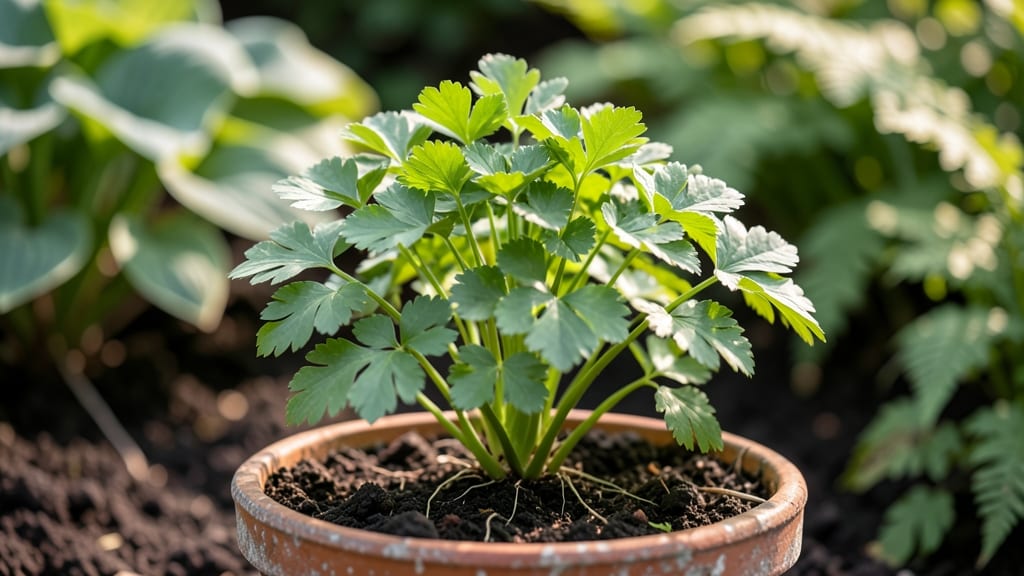
Whether parsley is a perennial or annual depends on your climate—it behaves as a biennial, thriving as a perennial in frost-free winters but dying back each year in colder regions. The plant's root system holds the key to its survival through seasonal changes.
Parsley's growth habits shift dramatically based on temperature and root development.
In warmer zones (USDA 8-11), its deep taproot lets it overwinter as a perennial, returning each spring with minimal care. 🌱 But in colder climates (USDA 3-7), the roots often fail to harden enough, causing the plant to die back—only to resprout from seed the following year.
This biennial behavior means gardeners in frost-prone areas treat it like an annual unless they take protective measures like heavy mulching or container growing.
What makes this interesting is how the plant's second year differs from the first. The first year focuses on leaf production, while the second year prioritizes flower and seed development—meaning parsley's edible lifespan is often just one season unless you intervene.
I've found that in my Zone 5 garden, mulching with straw and covering with burlap through winter gives my parsley a fighting chance to return year after year.
💡 In This Article
- How Parsley’s Root System Decides Its Lifespan
- Climate-Specific Parsley Care for Year-Round Growth
How parsley’s root system decides its lifespan
Parsley’s lifespan hinges on its root structure, specifically whether it develops a deep taproot or stays shallow with fibrous roots. Most garden parsley (Petroselinum crispum) forms a primary taproot that can grow 12-18 inches deep under ideal conditions.
This taproot stores carbohydrates and water, acting like a survival battery during winter. In frost-free climates (USDA Zones 8-11), this root system hardens and insulates the plant, allowing it to persist as a perennial. The deeper the root penetrates, the better it resists freezing temperatures down to 15°F.
The problem arises in colder zones (USDA 3-7), where roots often fail to mature fully before frost. Parsley’s taproot needs at least 60-90 days of warm soil (above 50°F) to develop sufficient cold hardiness. Without this, the root system becomes weak and brittle, unable to withstand sub-freezing temperatures.
Even in Zone 6, where winters dip to 0°F, parsley’s roots typically die back—only to regenerate from seed the next spring, mimicking an annual’s behavior. 🌱
What’s fascinating is how parsley’s second-year growth differs from its first. In its biennial cycle, the plant shifts from leaf production (first year) to flowering and seed development (second year). This means the edible portion—those fragrant leaves—is most abundant in the first year.
If you’re growing parsley for culinary use, this biennial pattern explains why many gardeners treat it as an annual unless they take active steps to protect the roots.
Root depth also affects water uptake and nutrient absorption. Shallow-rooted parsley struggles in dry conditions because it can’t access moisture from deeper soil layers. This is why parsley thrives in moist, well-draining soil with consistent moisture—ideal conditions for taproot development.
In contrast, fibrous-rooted varieties (like some curly parsley cultivars) are less cold-hardy and more prone to winter dieback, reinforcing the importance of root structure in determining parsley’s lifespan.
Here’s a key takeaway: In colder climates, parsley’s root system simply doesn’t have time to mature before winter sets in. The solution? Extend the growing season with row covers or start seeds indoors 8-10 weeks before the last frost to give roots a head start.
This small adjustment can turn a would-be annual into a reliable perennial in your garden. 💛