
Flowers
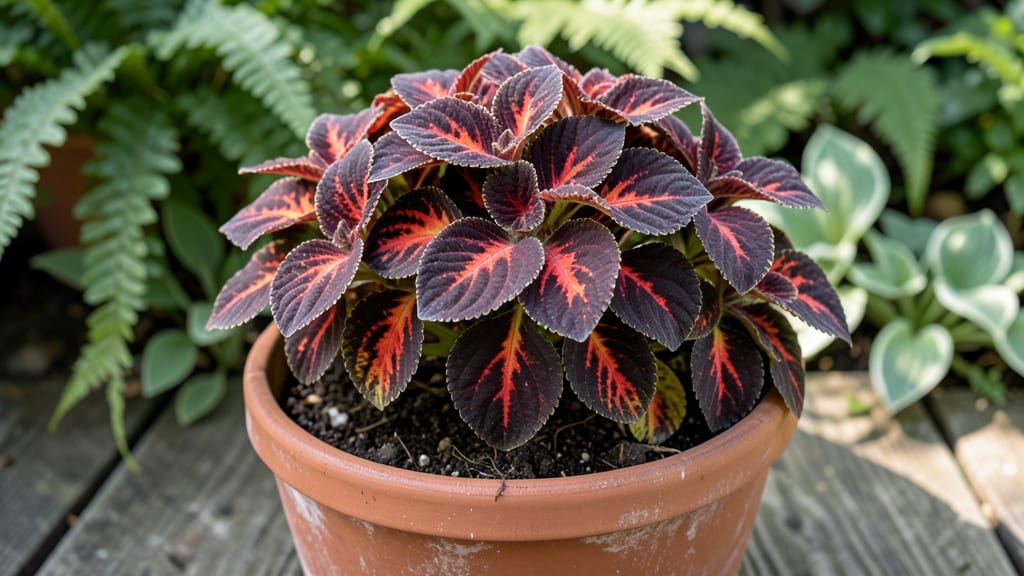
Whether Kong coleus acts as an annual or perennial depends entirely on your climate: in cold regions, it dies back annually due to frost, though its tuberous roots often survive underground to regrow if protected. Warmer zones let it thrive as a true perennial with consistent care.
This behavior comes down to the plant's underground storage strategy. 🌱 Kong coleus stores energy in thick, tuber-like roots that can endure freezing temperatures—often surviving winters if left in the ground, even in zones with light frost.
The key difference between annual and perennial growth lies in how you protect those roots: in colder climates, gardeners must either dig up and store tubers indoors or insulate them heavily to prevent dieback.
Without protection, the above-ground foliage will crisp in frost, making it appear annual, while the roots remain dormant until spring warmth returns.
The plant's adaptability makes it a favorite for gardeners in transitional climates. In USDA zones 9-11, where winters rarely drop below 30°F, Kong coleus naturally returns year after year without intervention. But even in colder zones, with proper overwintering techniques—like mulching heavily or potting tubers—you can coax perennial behavior.
The secret lies in mimicking its native tropical habits by keeping those roots alive through winter's chill.
💡 In This Article
- Why Kong Coleus Dies Back in Winter
- How to Overwinter Kong Coleus for Perennial Growth
Why Kong coleus dies back in winter
Kong coleus undergoes dramatic winter dieback because its tropical origins make it exquisitely frost-sensitive. When temperatures drop below 32°F, the plant's delicate above-ground foliage freezes and turns black within hours, a process called frost necrosis.
This rapid response occurs because the plant's cell membranes contain high levels of unsaturated fats that solidify in cold conditions, rupturing cell walls and causing irreversible damage to leaves and stems. 🌬️
The plant's survival strategy lies entirely underground in its tuberous roots, which can tolerate temperatures down to 25°F when properly insulated. These roots store starches and nutrients that fuel regrowth once spring warmth returns.
The contrast between the plant's annual appearance (dead foliage) and its perennial root system creates the illusion of annual behavior, even though the roots themselves remain alive and dormant. In nature, this adaptation allows Kong coleus to survive seasonal dry periods in its native tropical habitats.
Temperature thresholds are crucial here: foliage damage begins at 35°F but becomes catastrophic below 30°F. This explains why gardeners in USDA zone 8 often see complete foliage dieback while those in zone 9 might experience only partial damage.
The root system's resilience comes from its ability to enter a state of dormancy, where metabolic processes slow dramatically to conserve energy—similar to how potatoes survive winter in the ground.
What most gardeners don't realize is that this dieback pattern mirrors the behavior of many tropical plants that have adapted to seasonal changes in their native environments.
The key difference with Kong coleus is that its tuberous roots are more robust than those of typical annuals, containing specialized cells that can regenerate new shoots when conditions improve. This physiological adaptation explains why the plant can "come back" from what appears to be complete death.
The plant's growth cycle follows a clear pattern: vigorous summer growth (when temperatures stay above 60°F), gradual slowing as days shorten, and complete dormancy when roots detect prolonged cold.
This seasonal rhythm is controlled by plant hormones like abscisic acid, which accumulates in response to cold and triggers the dormancy response. The result is a plant that appears annual but possesses perennial survival mechanisms.
Understanding this process helps explain why Kong coleus thrives as a true perennial in frost-free climates but requires protection in colder regions.
The plant's ability to regenerate from tubers makes it a fascinating study in plant survival strategies, demonstrating how tropical species can adapt to seasonal challenges through specialized root structures. 🌱